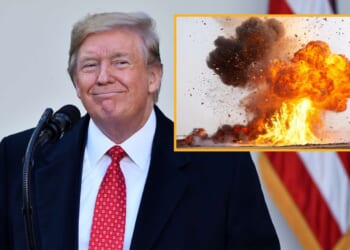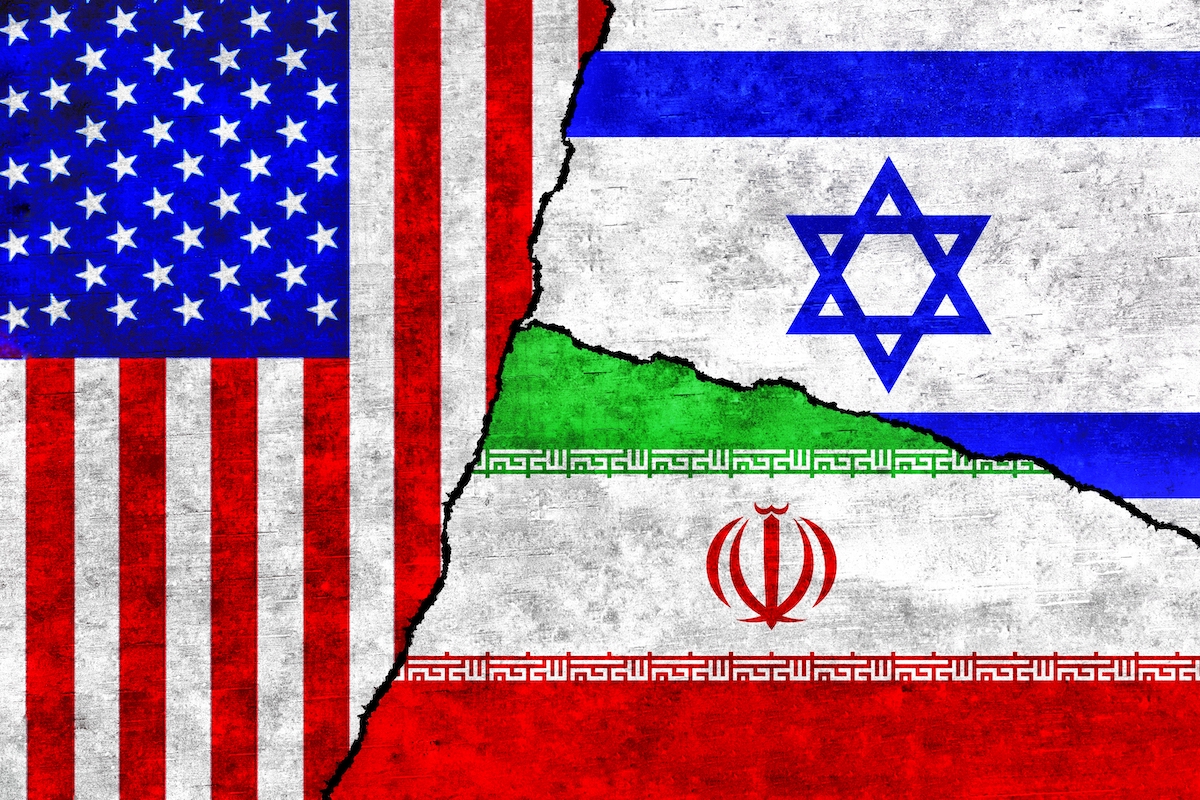
With 90 minutes to go until the world would learn what President Donald Trump meant when he said “a whole civilization will die tonight,” he broke news of a ceasefire agreement regarding the Israel-Iran war. In contrast to past claims of diplomatic interactions between Iran and the United States, in this case both sides were on the same page.
But there’s a third and equally weighty element in the war equation here, and that is Israel, America’s joint military partner. And their response to this agreement — or any agreement regarding this war — matters every bit as much.
According to some reports, Israeli leadership had no say in the ceasefire negotiations — and they are not happy about it. Israeli media are already reporting that Prime Minister Benjamin Netanyahu’s political opposition at home called the truce Israel’s worst-ever “diplomatic disaster.” Netanyahu, however, said on Wednesday that the deal was made “‘in full co-operation’ with Israel.”
Not long after Trump announced the ceasefire on Tuesday, Netanyahu published a statement in support of the deal — sort of. In it, he carved out a caveat that is already beginning to threaten the agreement. “The United States has told Israel that it is committed to achieving these goals, share[d] by the US, Israel and Israel’s regional allies, in the upcoming negotiations,” he said. Then he added the caveat that “the two-weeks ceasefire does not include Lebanon.”
Israel’s Attack on Lebanon
Sure enough, on Wednesday Israel launched not just an attack, but “the largest coordinated strike across Lebanon since the start of Operation Roaring Lion.” That comes right from the Israeli Defense Forces (IDF), which said the strike targeted more than 100 “Hezbollah headquarters, military arrays, & command-and-control centers in Beirut, Beqaa and southern Lebanon.”
Lebanese authorities said the attacks killed more than 250 people and injured over 1,000.
Iranian Foreign Minister Abbas Araghchi responded Wednesday by saying that America must choose between “ceasefire or continued war via Israel.” It cannot have both, he added. “The world sees the massacres in Lebanon. The ball is in the U.S. court, and the world is watching whether it will act on its commitments.”
After Israel’s attack, Iran effectively shut down the Strait of Hormuz again. Multiple reports confirm that “Iran has stopped oil tankers passing through the Strait of Hormuz.”
The White House responded. Quoting press secretary Karoline Leavitt, The Telegraph noted that reports of the closure “are ‘completely unacceptable’ and contradict what Tehran has said privately.” Leavitt added that there was an “uptick in traffic” Wednesday, and that Trump believes it will be “reopened immediately.” That intention “has been relayed to him privately.”
Israel entered Lebanon March 16 after the Iranian proxy fired rockets into Israel in solidarity with Iran. Defense Minister Israel Katz later said that Israel intends to permanently occupy a swath of southern Lebanon in order to set up a “security” buffer zone. It has taken similar action in Gaza for identical reasons.
Did the Ceasefire Include Lebanon?
The Lebanon/Hezbollah exception to the ceasefire was reportedly acceptable to the U.S., but out of line with the version of the deal the Pakistani mediators advertised. Pakistani Prime Minister Shehbaz Sharif said the ceasefire would include Lebanon.
Later on Wednesday, Vice President J.D. Vance reiterated that the ceasefire did not include Lebanon. “I think this comes from a legitimate misunderstanding,” Vance said in a statement from Budapest, Hungary. “I think the Iranians thought that the ceasefire included Lebanon and it just didn’t. We never made that promise, we never indicated that was going to be the case. What we said is that the ceasefire would be focused on Iran and the ceasefire would be focused on America’s allies, both Israel and the Gulf Arab States.” He added that he had gotten word that the Israelis were going to try to “check themselves” — meaning tone the attacks down a bit in Lebanon to “set us up for success.”
The Fighting Continues
Israel’s attack has triggered Hezbollah’s increased “determination to resist and confront.” The terrorist group said the bombings are an “expression of the disappointment suffered by the enemy after its catastrophic failure to achieve any of its goals and plans on various fronts,” likely referring to the ceasefire deal.
Iran has also continued lobbing missiles. On Wednesday, Bahrain, the United Arab Emirates, and Kuwait reported new Iranian attacks. In a Wednesday morning press conference, Defense Secretary Pete Hegseth said it will take a little while for the “carrier pigeons” to deliver the message to Iran that a ceasefire is in effect.
The Nuclear Factor
Iran’s 10-point proposal has not been made public. But multiple news outlets are reporting what Iranian state TV claims it entails. Among the demands, the Iranians want to enrich some degree of uranium, and to do so in peace. (At no point has Iran ever conceded to halting all enrichment.) On Wednesday morning, Hegseth reiterated that zero enrichment is the only acceptable term. But, as the Journal pointed out, maybe there’s a way to make both sides happy. “Previous rounds of negotiations have looked at ways that Iran could maintain a symbolic hold on enrichment but with strict limits that reduce its risks.” The paper was likely referring to past proposals that Iran enrich outside the country in a neighboring Gulf State, under strict International Atomic Energy Agency (IAEA) and U.S. monitoring.
Both U.S. intelligence and the IAEA have assessed in the past that Iran has enriched to levels far beyond anything necessary for civilian use. The former director of the National Counterterrorism Center, Joe Kent, said in an interview with Tucker Carlson this is because they want to retain the option of scaling to weapons-grade levels if deemed necessary for self-defense.
Kent also said it was the Israelis who pushed the Washington into the “maximalist” position that no degree of enrichment is acceptable.
Will Israel Kill the Deal?
He posted a message on his social media account shortly after Trump announced the ceasefire Tuesday evening, warning that “it’s absolutely essential that we ensure that the Israelis do not sabotage this two-week ceasefire or, eventually, the lasting peace that we’re trying to achieve with the Iranians.”
Kent has been especially critical of Israel. After resigning from his post, he told multiple high-profile podcasters that Israel basically bamboozled Trump into attacking Iran by presenting him with “intelligence” that Iran was more dangerous than he believes they were.
His claims that Israel dragged the U.S. into this war have been corroborated repeatedly, from transparent comments by top Cabinet officials, to a slew of reports, to the self-evident observation that no other foreign head of state has visited the White House more than Israel’s prime minister, who has been yelping about Iran’s quickly approaching nuclear proliferation since the 1990s.
Israel wants regime change in Iran more than the U.S. wants to fight for it. Despite statements by U.S. officials that the regime is essentially “new” because many of the old leaders have been killed, everyone knows there’s been no regime change. The new supreme leader is the younger, more radical son of the former, who was killed on the first day of the war. The Islamic Revolutionary Guard Corps, the nation’s muscle, remains intact. But if the Israelis want true regime change, they will have to keep the war going hoping that something will give and Trump will send American boots on the ground.