Trump dares Iran to test Hormuz blockade, warns of strikes after New Year
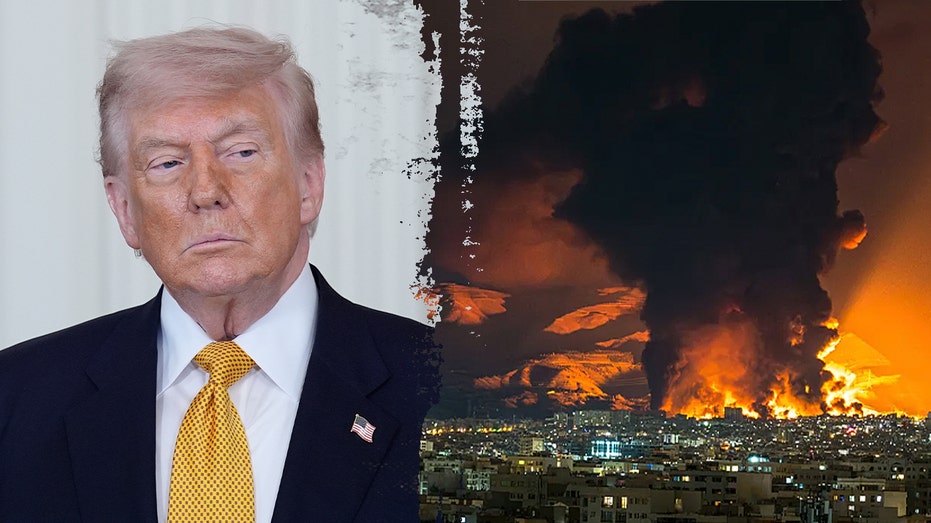
President Trump said Iranian ships trying to break the U.S. naval blockade would end up at the bottom of the sea and signaled renewed strikes if talks fail.
The full story
Here is the full story. President Donald Trump warned Iran on Sunday that he is inclined to order new military strikes after the New Year if Washington and Tehran fail to strike an agreement, and he dared Iranian forces to try to break the U.S. naval blockade of the country's ports. "I hope they do, they'll all be at the bottom of the sea like the rest of the navy," he told Fox News chief foreign correspondent Trey Yingst, when asked about reports that Iran was preparing to test the blockade. He also said he expects tit-for-tat strikes between American and Iranian forces to go on.
Trump had little patience for the ongoing talks. He described Iran's negotiators as "professional tap dancers" who talk constantly without offering anything of substance, and he used a blunter word for it that is best left out of a morning read. "They're more aggressive now than before the election," he said. In a Truth Social post later on Sunday, he wrote that "Iran has launched more drones and missiles in the last week than at any time for over a year," since the November 3 midterm elections, adding that all of them had been intercepted and caused no damage. He said Iran's leaders saw Democrats as "weak, ineffective, and Country destroying" and had become bolder after their election wins. "I won't let that happen!" he wrote. In the same post he accused the Iranian government of killing 81,000 protesters. Asked about new anti-government demonstrations in several Iranian cities, he had a short message for the people on the streets: "Keep protesting."
The blockade sits at the centre of the standoff. U.S. Central Command marked 130 days of the renewed blockade on Saturday, and it has brought Iran's crude exports close to a halt. On Wednesday the United States widened it to cover ships that take on Iranian cargo through transfers at sea. Under the new guidance, American forces may stop, board, divert or seize such vessels even if they never entered Iranian waters, and ships that refuse lawful orders could face force. Treasury Secretary Scott Bessent said on Friday that "the regime has exhausted its seaborne oil supply" and added: "The ship is sinking." Inside Iran, rolling power cuts, fuel shortages and disrupted factories have deepened public frustration. Iranian President Masoud Pezeshkian told a capital markets conference in Tehran on Saturday that the country was in "a silent war that is far more difficult than one in which missiles are launched," calling it an economic war and "no easy battle," according to the state news agency IRNA.
Tehran has answered with threats of its own. Mohsen Rezaei, who heads Iran's Supreme National Security Council, said last week he had been instructed to quickly end the country's long state of "neither peace nor war." Foreign Minister Abbas Araghchi then said Iran meant to break the blockade, and Deputy Foreign Minister Kazem Gharibabadi called it an "act of war" on Saturday, while saying Iran was still willing to negotiate through mediators such as Qatar. More than 14 Iranian oil tankers are reported to have gathered near Kharg Island, the main crude export terminal, ready for a possible run through the Strait of Hormuz toward China. Iranian media have promoted a plan called "Operation Fereydoun," in which the tankers would sail openly under Iranian flags, and television discussions have floated putting journalists, civilians and antiwar activists on board. Iran has threatened to strike energy facilities in Saudi Arabia, the United Arab Emirates and Qatar if U.S. forces try to stop the ships. Still, there is no confirmation that Iran's leaders have ordered the convoy to sail.
The military exchanges have already widened. Iranian drones have targeted U.S. military facilities in Bahrain, home of the Navy's Fifth Fleet, and an Iranian strike hit a civilian industrial site there, which Qatar condemned. After one drone attack on a U.S. base in Bahrain, American fighter jets struck a Revolutionary Guard missile site on Qeshm Island. Army spokesman Brig. Gen. Mohammad Akraminia said on Saturday that the Strait of Hormuz remained under Iranian control and that any new attack would get an immediate response that "will not be limited to a specific geographical area." Parliament Speaker Mohammad Bagher Ghalibaf called on Sunday for "lasting deterrence," as Revolutionary Guard commanders showed off a new dual-missile launcher at an underground base.
What comes next depends partly on the calendar. CENTCOM commander Adm. Brad Cooper wrapped up a weeklong trip on Sunday, meeting leaders in Israel, Qatar and Saudi Arabia and visiting some of the roughly 50,000 U.S. troops in the region. Trump has said Iran's proposed terms are unacceptable, though his administration is still pursuing a deal. For now it is leaning on the blockade and sanctions, with any decision on a wider military campaign signaled for after the New Year.
Reported by
Get this email every day
Want the day's top story in your inbox every morning? Sign up here for free.
Other news / Full articles
 Trump says it would be hard to work with Schumer as Senate majority leader
 Mexican forces arrest Beltrán Leyva leader 'Chapo Isidro' after gun battle in Sinaloa
 Senate passes permitting overhaul that would limit environmental lawsuits
 Officials clash over causes of nationwide tech outages as lawmakers raise cybersecurity alarm
 Federal judge bars Agriculture Secretary Rollins from sending religious holiday emails to staff
 FBI investigates reported hack of National Crime Information Center database