Army cleared to detonate degraded explosives at Iowa ammunition plant after appeals ruling
A federal appeals court lifted a pause on the Army's plan to blow up 68 barrels of unstable lead azide near Middletown, Iowa, clearing a Wednesday detonation.
The full story
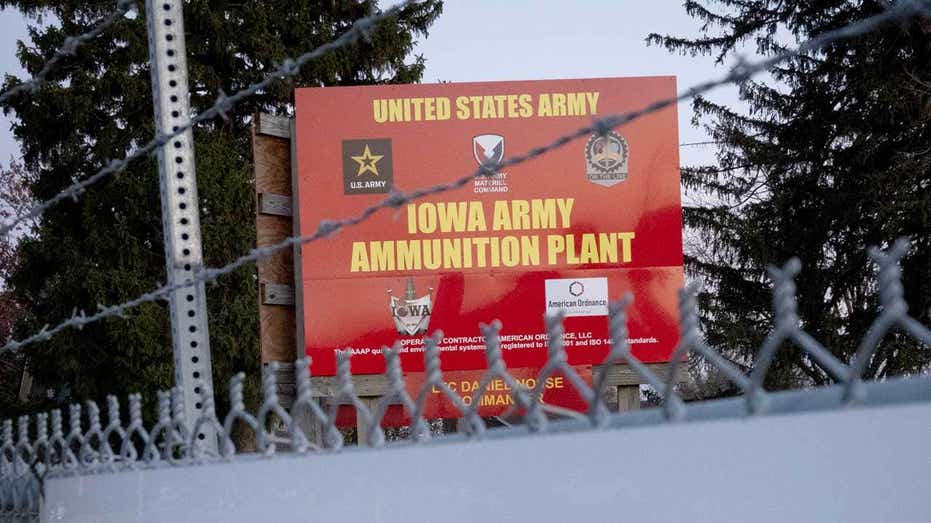
Here is the full story. The U.S. Army plans to detonate 68 barrels of deteriorating lead azide at the Iowa Army Ammunition Plant near Middletown on Wednesday morning, November 25, after a federal appeals court cleared the way. A three-judge panel of the 8th U.S. Circuit Court of Appeals lifted a temporary pause and rejected an emergency request from the Iowa Environmental Council and the Sierra Club to block the operation. In a statement late Monday, Army officials said they would carry out the controlled blast in coordination with state, local and federal authorities.
The judges found that the Environmental Protection Agency had built adequate safeguards into its emergency permit to limit the spread of lead dust. "Here we are faced with a situation in which the risk is between a controlled detonation and an unplanned explosion, not between the risk of a controlled detonation and no explosion at all," the court wrote. Acting Army Secretary Adam Telle called it "a consensus decision" on social media, saying every expert agency agreed and that both Iowa's current and incoming governors say the call belongs to the experts.
The material at the center of the fight is nearly five tons of hazardous waste containing lead azide, a volatile compound used to detonate military munitions. It has been stored at the World War II-era plant, which covers roughly 19,000 acres in southeastern Iowa's Des Moines County, near a community of about 400 residents. According to the Army, the lead azide has deteriorated during long storage and recrystallized inside its containers, raising the chance of an accidental explosion. Munitions specialists warned in court filings that falling temperatures make an accidental, fatal blast more likely if the material is left alone. The Army spent months weighing other methods, including chemical neutralization. It awarded a contract in March to Georgia-based MuniRem Environmental, which specializes in chemically neutralizing munitions, then canceled it two months later, citing safety concerns. In a September letter, Amy L. Borman, deputy assistant secretary of the Army for Environment, Safety and Occupational Health, wrote that military and federal explosive safety authorities agreed in-place detonation was "the only safe method of treatment."
The road to Wednesday has been bumpy, and the operation has already been postponed three times amid public worry about toxic lead dust. The EPA issued an emergency permit effective November 13 allowing continued storage and a controlled detonation, with requirements for public notice, environmental monitoring, cleanup and reporting. The Army had planned to detonate the drums on November 20 and asked nearby residents to evacuate. The environmental groups challenged the permit, citing possible lead contamination, weak safeguards and other disposal options, and the court granted an emergency stay on November 19. On Sunday, November 22, government attorneys asked the court to lift it, writing that "there is an immediate risk that the lead azide at the Facility will spontaneously explode." The Justice Department also argued that EPA rules let the Army respond to an immediate explosives emergency without a permit at all. On the other side, retired EPA environmental health scientist Mark J. Thomas said in a sworn statement that, to his knowledge, the Army had not published data showing how forecast temperatures would affect the material's sensitivity.
Politics entered the picture on Monday. President Donald Trump wrote on Truth Social that he had ordered the military not to proceed until the Eighth Circuit agreed and until Democratic Gov.-elect Rob Sand approved. He said that if Sand or the courts did not agree, he would be "forced to hold the incoming Governor responsible for any and all death or destruction." A flight carrying Army officials left Joint Base Andrews for Iowa just before the post went up. Sand, who takes office in January, declined Monday evening to either approve or reject the blast. He posted on X that the Trump administration should make the decision based on the experts it brought in months ago, and he urged federal officials to make their briefing details public.
According to an Army public advisory, Wednesday's operation will produce two rapid detonations, ground vibrations and a dust plume expected to hang around for no more than an hour. The Army has said the plume will contain some lead. People living near Middletown, some of whom have already sealed their windows and doors, are advised to stay indoors and to wash outdoor surfaces with water afterward. "The health and safety of all Americans has and always will be our first priority," the Army said.
Reported by
Get this email every day
Want the news delivered with a smile each morning? Sign up below to get this email every day.
Other news / Full articles
 Rep. Jimmy Gomez to resign after House Ethics report finds sexual misconduct
 Nvidia brings back Jensen Huang as CEO after Trump pushes board
 Chuck Hubbard unseats Virginia Foxx after recount, widening Democrats' House majority
 Nvidia reinstates Jensen Huang as CEO amid China chip smuggling and spy inquiries
 Trump to appear with victims' families to oppose Newsom's plan to commute death sentences
 Trump dares Iran to test Hormuz blockade, warns of strikes after New Year