Trump to appear with victims' families to oppose Newsom's plan to commute death sentences
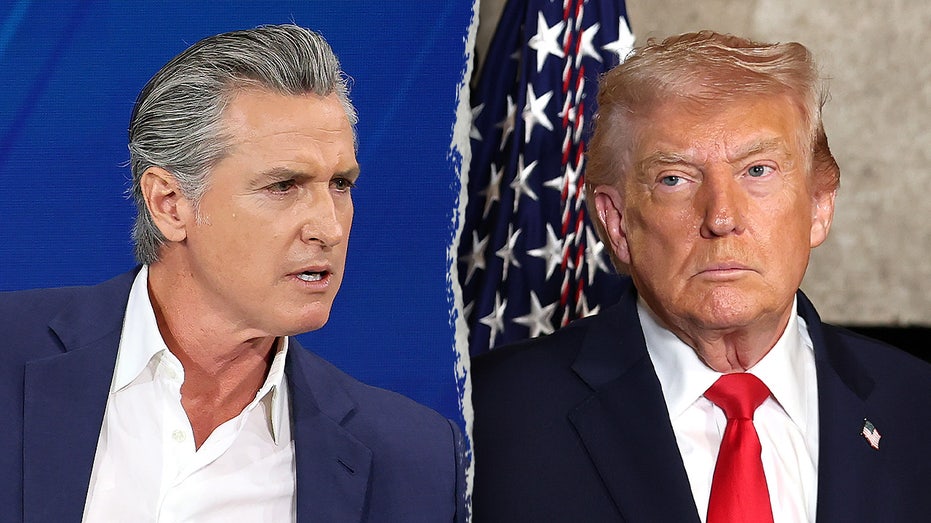
President Trump plans a Monday event at the Justice Department with murder victims' families to condemn Gov. Gavin Newsom's plan to commute all 548 California death sentences.
The full story
Here is the full story. President Donald Trump plans to appear at the Department of Justice on Monday afternoon alongside families of murder victims to condemn California Gov. Gavin Newsom's plan to spare everyone on the state's death row from execution. Attorney General Todd Blanche and FBI Director Kash Patel are expected to be there too, and the White House has confirmed the event. The families' stories are to be the focus as the administration challenges Newsom's effort to replace all 548 death sentences in California with life imprisonment without the possibility of parole.
White House spokeswoman Lauren Bis accused the governor of failing victims and their families by refusing to carry out justice against what she called "barbaric child killers and serial killers." She said Newsom "must stop playing politics with public safety." The White House also circulated a list of 20 convicted killers who would benefit from the clemency plan, with crimes involving murdered children, sexual violence, torture and serial killings.
Among the cases the event is set to highlight is that of Polly Klaas, the 12-year-old who was kidnapped from a sleepover at her Petaluma home in 1993 and murdered by Richard Allen Davis. Her father, Marc Klaas, earlier told CNN that the governor's decision was "a shiv in my back," adding that some of those on death row had killed several people, shot police officers and murdered little girls. Another is the case of 8-year-old Gabriel Fernandez, tortured and killed in Los Angeles County in 2013 by his mother and her boyfriend, Isauro Aguirre, who was sentenced to death in 2018. Investigators said Aguirre beat the boy because he believed he was gay; Gabriel was found with a fractured skull, a dozen broken ribs and burns. Relatives of Placer County Sheriff's Detective Michael Davis Jr., killed in 2014 by Luis Enrique Monroy-Bracamonte, and of Army veteran Sam Herr, murdered in 2010 by Daniel Patrick Wozniak, are also expected to attend.
Others on the White House list include Marcus Wesson, convicted of murdering nine members of his own family in Fresno; serial killers Charles Ng, convicted of 11 murders, and Randy Kraft, known as the "Scorecard Killer," convicted of killing 16 men; Chester Turner, convicted of murdering 14 women in Los Angeles; Cary Stayner, convicted of four murders near Yosemite National Park; Ramon Salcido, who killed seven people in Sonoma County including his wife and two young daughters; and Vincent Brothers, who murdered his wife, three children and mother-in-law in Bakersfield.
Newsom announced his intention on Nov. 5 in a published letter. "State-sanctioned killing is incompatible with California's values, undermines the foundations of our legal system and diminishes each of us," he wrote. He acknowledged that voters had chosen to keep the death penalty and said he respected that, but argued that the state constitution gives every governor clemency power for moments when the law as applied "cannot be squared with justice," and that this was such a moment. Asked about the individual cases, his office pointed back to that letter. Newsom has acknowledged that some victims' families strongly oppose the decision, while his office has noted other survivors who support ending capital punishment. Under the plan, the inmates would stay in prison for life with no chance of parole, but the possibility of execution would be gone for good.
Prosecutors have been sharply critical. San Luis Obispo County District Attorney Dan Dow said he was "sickened" on behalf of crime victims, and Orange County District Attorney Todd Spitzer accused Newsom of showing mercy to "the wolves" while being cruel to "the sheep." Last week a coalition of prosecutors and victims' advocates asked the California Supreme Court to stop the plan, arguing that victims and families were not given a chance to be heard.
None of the commutations has taken effect. Because 382 of the inmates have multiple felony convictions, the state constitution requires a recommendation from the state Supreme Court before their sentences can be commuted, and Newsom's administration has said it will not move on any of them until the court acts. The court has invited additional briefs through Tuesday, Nov. 24, and Newsom has asked the justices to decide before his term ends in January. Plenty of homework, and a firm deadline to match.
The fight sits against a long history. California voters rejected abolishing the death penalty in 2012 and again in 2016. The state has not executed anyone since 2006, and Newsom put a formal moratorium on executions shortly after taking office in 2019. Trump has gone the other way, ordering the Justice Department on his first day back in office to prioritize seeking and carrying out lawful death sentences. In April, the department reinstated its previous lethal injection protocol and expanded the available execution methods.
Reported by
Get this email every day
Want the news delivered with a smile each morning? Sign up below to get this email every day.
Other news / Full articles
 Trump dares Iran to test Hormuz blockade, warns of strikes after New Year
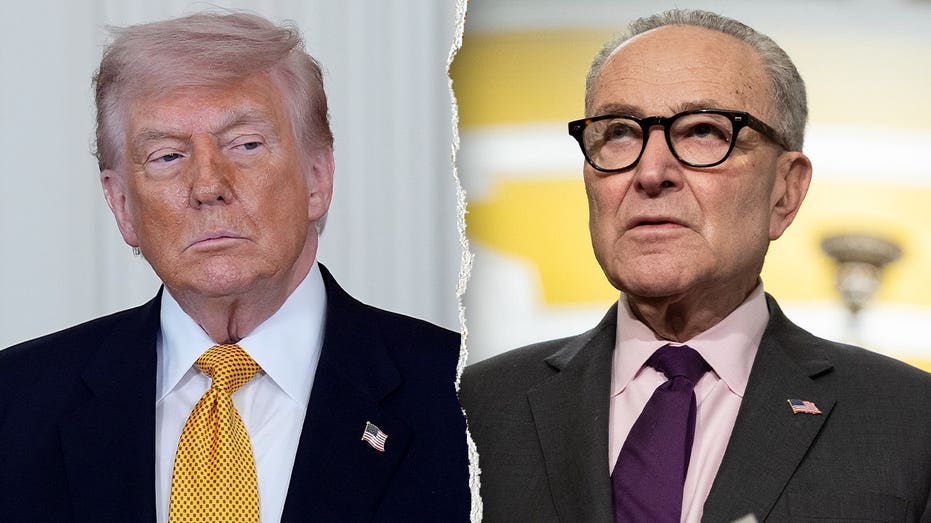 Trump says it would be hard to work with Schumer as Senate majority leader
 Mexican forces arrest Beltrán Leyva leader 'Chapo Isidro' after gun battle in Sinaloa
 Senate passes permitting overhaul that would limit environmental lawsuits
 Officials clash over causes of nationwide tech outages as lawmakers raise cybersecurity alarm
 Federal judge bars Agriculture Secretary Rollins from sending religious holiday emails to staff