If you were born sometime in the last century, you’re undoubtedly familiar with “the story of the lovely lady, who was bringing up three very lovely girls.” As it was, their four lives managed to intersect with “a man named Brady, who was busy with three boys of his own.”
They married and formed a family – “and that’s how they became the Brady Bunch.”
Beginning on September 26, 1969, and continuing until March 8, 1974, the fictional Brady family lived in a four-bedroom house at 4222 Clinton Way. It was supposed to be in an unspecified suburb of Los Angeles.
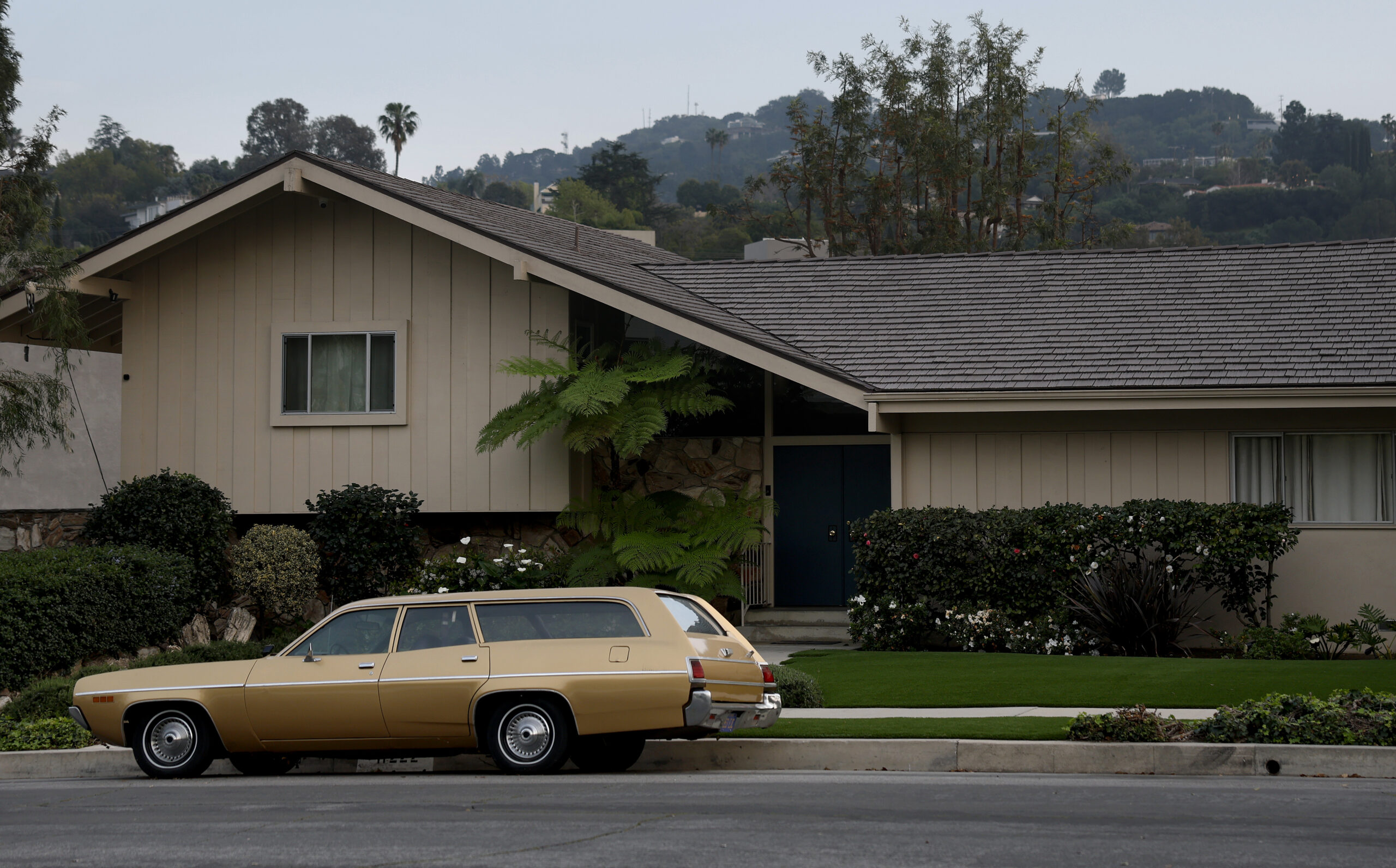
In reality, the show was filmed on Stage 5 at Paramount Studios in Hollywood, California. But the exterior footage of the Brady house we’re all familiar with was of a real place located at 11222 West Dilling Street in Studio City, California. Unlike the premise of the television show, which claimed the father, Mike Brady, designed the place, the Contemporary Ranch style residence was the brainchild of Harry M. Londelius. He built it for the Carson family – who sold it to George and Violet McCallister, who raised their family there.
After the series ended unceremoniously and because of a contract dispute with Robert Reed, a.k.a. Mike Brady, the “Brady Bunch” became a staple in rerun syndication. If you were a child growing up in the 1970s and 1980s, you almost inevitably watched every episode, and probably more than once or even twice.
It was the Irish novelist John Banville who observed, “The past beats inside me like a second heart.” Nostalgia can be wistful, even memories of watching fictional television programs filmed inside fictional homes depicting fictional family life.
For many, the draw and allure of watching the Brady Bunch was that they were witnessing what everything a middle-class youngster could possibly want – happily married, loving and understanding parents, (mostly) good-natured siblings, a housekeeper – even a yard where the grass was always green and mowed.
There were plenty of problems inside and outside the Brady home, but they were usually silly and humorous, and every one was resolved within thirty minutes – minus the vacation to Hawaii and the ancient tiki idol. But the family was still getting to go to Hawaii!
As real American families began to struggle and splinter throughout the 1970s and 1980s, and as the innocence of childhood began to give way to the complexities of adulthood, watching the Brady Bunch became almost therapeutic for many. It was an escape. It was a source of comfort.
Fast forward to 2018. HGTV decides to purchase the home on Dilling Street for $3.5 million and make it the showcase of a special series, “A Very Brady Renovation.” Acknowledging that the inside of the real house looked nothing like the television version, the property was then gutted and recreated to replicate the interior of the fictional home on Clinton Way – all with the help of the now grown-up Brady Bunch actors, of course. They expanded the house from 3,000 to 5,000 square feet.
In 2023, HGTV sold the house to Tina Trahan, a “super fan” of the show, who decided to treat the place as a pop-culture tourist attraction. She paid $3.2 million. Last month, the Los Angeles City Council unanimously voted to designate the property as a “Historic Cultural Monument.”
So now, the house on West Dilling Street sits empty – complete with a 1971 Plymouth Satellite Custom Wagon parked at the curb.
If you read about the sequence of events, journalists treat the story as most every other – here are the facts, plus the feel-good vibes of a show we all loved. You can now go visit yourself and step inside your childhood memories. But these sentences in The New York Times point to something that should give us all pause.
Writes the Old Grey Lady:
“Birds chirp in the backyard, but no one plays on the fake grass or balances on the red teeter-totter … there is no clutter of junk mail inside, no smell of the supper Peter Brady made into a national catchphrase: pork chops and applesauce.”
Just an empty station wagon – and a monument and a museum to a family, albeit a fictional one.
Yet what’s happening there is a representation sadly of what’s happening everywhere – bigger homes but smaller families. The sound of animals – but not the squeals and laughter of children. There is order – but not the happy chaos of lots of people doing lots of things.
It seems we like the happily married mother and father, all the kids and all the shenanigans – the broken vase and bruised nose from playing ball in the house and the exploding school project volcano on the patio – but we’d rather watch it than live it.
One of the reasons the Babylon Bee resonates so well is because nearly all the satire they create contains a nugget (and sometimes more) of truth. Earlier this week, Seth Dillon and his crew published a story with the following headline:
Couple Worries Having A Baby Could Cut Into Time They Spend Sitting On The Couch Staring At Their Phones
Fictional stories of families can set up unfair and unreasonable standards, but there’s no denying we need more bunches in America – married families with bunches of kids navigating life with all its challenges, and yes, dinners with pork chops and applesauce, too.



![Hegseth Demands Fitness Requirements, Says 'Fat Troops' 'Not Who We Are' [WATCH]](https://teamredvictory.com/wp-content/uploads/2025/09/Hegseth-Demands-Fitness-Requirements-Says-Fat-Troops-Not-Who-We-350x250.jpg)