The Soviets tried creating ape-human hybrids and embraced Lysenkoism, which held that acquired traits could be inherited. Nazi academics, such as Philipp Lenard, promoted the idea that science itself had racial character. Looking back on such pseudo-science, we now just shake our heads. Yet those who shake their fists at the heavens of research objectivity haven’t disappeared; they’ve just rebranded.
In 2024, for example, the Biden administration announced that its bureaucracies could soon incorporate “indigenous knowledge” into their research. What could possibly go wrong? Try this on for size:
Now even a flute may be treated as “human remains” owing to Biden-era rules. The consequences of such thinking?
Museum displays are being shuttered around the country. Researchers’ ability to reconstruct the past is being kneecapped. It’s even leading to what leftists long claimed was verboten: discrimination against female scientists.
But, hey, if Indian taboos say menstruating women must be kept away…
Lamenting these developments is Elizabeth Weiss, professor emeritus of anthropology at San José State University. As she reports today at the New York Post:
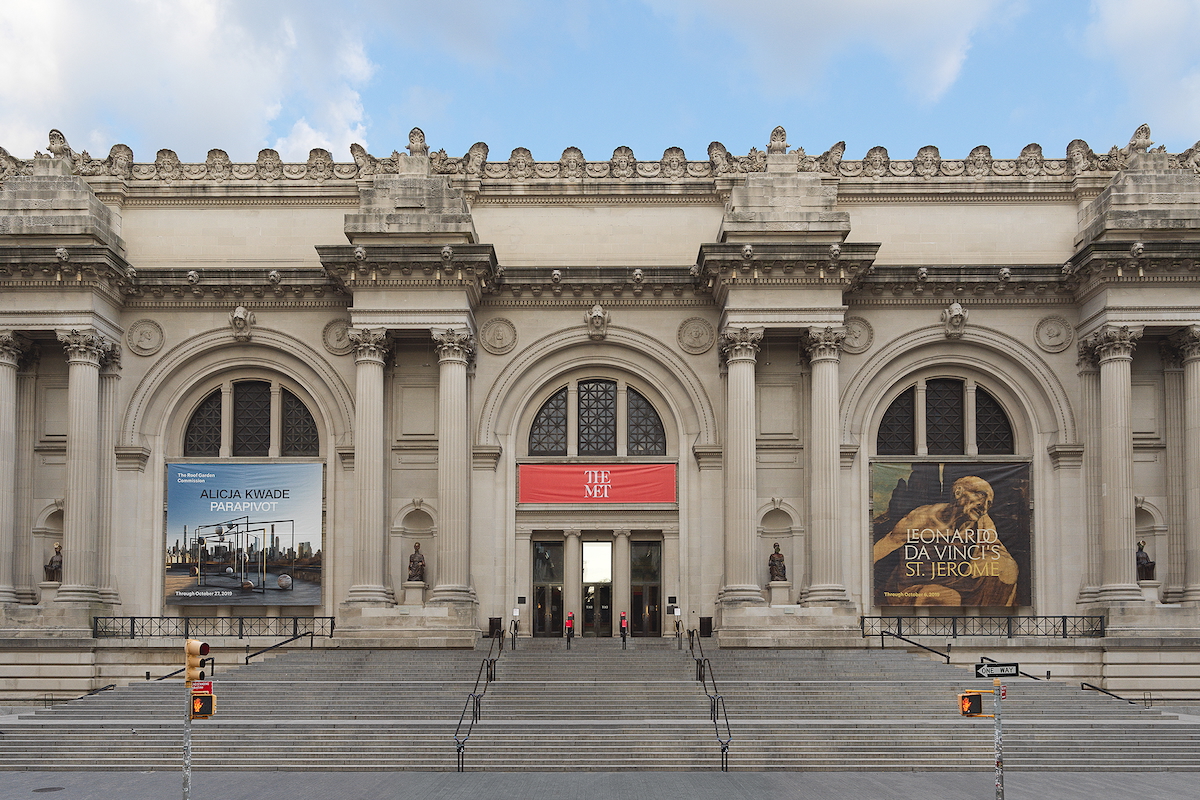
At the Metropolitan Museum of Art, even a flute can now be treated as human remains, as it indicated in a peculiar notice in the Federal Register last week.
The Met announced that a decorated bone flute — long identified as animal bone — had been reclassified as the remains of a Native American.
Excavated near Malibu, Calif., the flute came to the Met through Nelson Rockefeller’s collection in 1979. Until 2024, the object was understood to be animal bone.
Then a museum consultation with the Santa Ynez Band of Chumash Mission Indians produced a startling new finding: The flute was made from human bone.
The public notice cites no evidence that the Chumash, or any other California tribe, used human bones to make flutes.
Nor does it identify any independent scientific test to support the claim.
In fact, there is no archaeological evidence that any California tribe ever made flutes out of human remains.
If this were in fact a human bone flute, it would be the only one ever discovered in California.
So now a museum object once available for study will vanish from public view — not because archaeology proved it failed to qualify for exhibition, but because the Biden administration’s rewrite of the Native American Graves Protection and Repatriation Act, or NAGPRA, transformed a 1990 repatriation law into a system that elevates tribal consultation over science.
The Moral Thing to Do?
There’s an unmentioned irony here, too. If the flute were made of human bone, it might very well be some hapless adversary’s/victim’s remains. So let’s ponder parallel situations.
Indians would once scalp people, sometimes as evidence of martial achievement, and might fashion the remains into pendants. If we recover such an item, are we obligated to give it to the brutal warrior’s descendants?
Some American soldiers and settlers apparently did likewise, too, taking trophies from Indian bodies. And on occasion, we understand, the remains might be fashioned into a lamp or letter opener. (War brings out the worst in certain people.) Now, upon discovering such an item, is it incumbent on us to try to make it some descendants’ inheritance?
Must we say to those people, “Here’s the tool your great-great-great-great grandfather made out of 19-year-old Sequoyah. We thought returning it to you was only the right thing to do!” I’d like to see the headlines reporting on that story.
For that matter (and these were also isolated cases), some Nazis did forge things such as lampshades and book covers out of Jewish death-camp victims’ skin. Anyone suggesting that such items must be given to those Nazis’ children would become a pariah.
Is the flute matter really much different?
(Yes — in one way: The instrument probably isn’t actually made from human bone.)
The Flute Is No Fluke
As mentioned earlier, too, the flute folderol is just the iceberg’s tip. Professor Weiss discovered this after spending an entire year in American Museums. As Weiss, author of On the Warpath: My Battles with Indians, Pretendians, and Woke Warriors, wrote in 2024:
At the American Museum of Natural History’s Northwest Coast Hall, indigenous superstitious beliefs that harm can come from artifacts intended for shamans are treated with complete seriousness.
The exhibit comes with a medical-style warning label: “CAUTION: This display case contains items used in the practices of traditional Tlingit doctors. Some people may wish to avoid this area, as Tlingit tradition holds that such belongings contain powerful spirits.”
Note that this is much as with the “trans” agenda. Millions of people who sense it’s preposterous bow to political pressure and genuflect before the lie. Weiss then continued:
Similar warnings are found behind the scenes in curation rooms used by museum staffers and visiting scholars.
There, pregnant and menstruating women are currently told to stay away from “objects of power” that contain human hair, and everyone is cautioned to not even look at the bird-bone whistles that can summon “supernatural beings.”
…Now, however, nearly all of the museum’s Native American exhibits have been shuttered completely due to the Biden administration’s “Indigenous Knowledge Mandate” and regulatory changes to the [NAGPRA].
These regulations require tribal permissions for display of any Native American artifacts.
…Meanwhile, art museums are increasingly restructuring exhibits around identity politics — leading to confusing displays with no natural organization or flow.
At the Metropolitan Museum of Art, the exhibit “Look Again: European Paintings 1300–1800” focuses on “class, gender, race, and religion,” which in practice means that geographic locations and artists are jumbled throughout the halls.
Furthermore, exhibit curators redrew the border of Europe to include some of Asia and Africa — apparently a clumsy attempt to retrospectively insert diversity into the past where none existed.
In conclusion, a bit more perspective is in order. First, this is just as with “outrage” over the Redskins name. Most people of American-Indian descent likely take no issue with the museum displays in question. They’re living their lives, working, playing, learning, and loving and supporting their families in modern America. The objections come from a very small group of woke activists and their enablers. The even bigger problem, too, is pseudo-elite white leftists who’ve given these ne’er-do-wells veto power over our cultural sphere.
Second, none of these people are actually embracing their remote ancestors’ lifestyle, wearing animal skins and using stone tools. They’re enjoying that modern America, with its cars, computers, refrigeration, and manifold other conveniences and luxuries. They’re relishing the fruits of Western civilization, delivered largely by its science — and yet would imperil that science.
If these activists want to selectively play (ig)noble savage, they can put on an Indian version of a Renaissance fair once a year. But making someone’s atavistic fantasies national policy is a recipe for disaster.