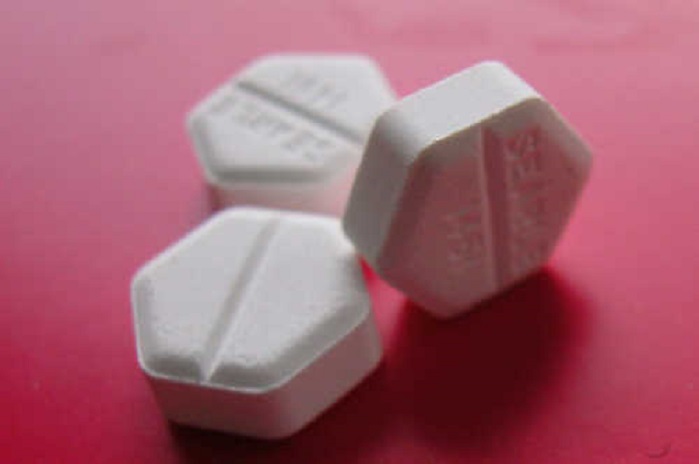
As the number of abortions induced by the abortion drug mifepristone continues to snowball, concerns are growing that the chemicals from the drug that are excreted during the abortion process are tainting the U.S. water supply, which could cause infertility and detrimentally affect the already historically low birth rate.
Last year, an astonishing report was published revealing that the global rate of infertility has surged 84% between 1990 and 2021. It further found that in 2021 alone, over 110 million women suffered from infertility, with about one in 10 women of reproductive age being infertile. The increase in infertility largely coincides with the rollout of the abortion pill, which was first released in Europe in the late ‘80s and early ‘90s and in the U.S. in 2000.
Click here to sign up for pro-life news alerts from LifeNews.com
The problem may be becoming more acute, as use of the abortion drug has soared since the Supreme Court’s Dobbs decision in 2022 that overturned Roe v. Wade, as distribution of mifepristone has spread to all 50 states amid a lack of regulation. The result is that almost two thirds of all abortions are now carried out via the abortion pill.
In the wake of the dramatic increase, experts and state officials are pointing out that there have been no new studies in almost three decades on how mifepristone is affecting the nation’s water supply. Earlier this month, 14 Republican state attorneys general sent a letter to the Environmental Protection Agency (EPA) urging the body to test drinking water for contaminants related to mifepristone and birth control pills.
State lawmakers like Kansas state Rep. Ron Bryce (R) are echoing the call.
“The EPA relied on studies that were done … in 1996, which is 30 years ago, to make sure that the excreted chemicals in the wastewater and the thrown away pills … would not reach a level that would hinder U.S. fertility rates,” Bryce, a practicing physician, pointed out during “Washington Watch with Tony Perkins” Monday. “Since then, that data has become obsolete because now we have up to 63% or more of abortions are done by chemical abortions. Maybe — who knows— a million a year. And so the levels of mifepristone in our wastewater have grown dramatically.”
Bryce further emphasized that a study should be done on the drug’s effects on water in light of the U.S.’s plunging fertility rate.
“[T]he childbirth rate has dropped dramatically in the U.S. and in other Western countries,” he noted. “In about the year 2000, it was something like 70 births per 1,000 women. Now it’s down to 53. … [P]eople are not having babies like they used to. Part of that may be due to the abortion pill in the water. That’s more or less a theory. … [T]here’s no raw scientific data we can rely on, so we really need the EPA to do their job and have some scientific data on it.”
In light of the fact that the EPA has released testing results for 374 different pharmaceuticals on drinking water, many are questioning why the agency has avoided testing water for mifepristone. Bryce argued that bureaucrats inside the agency are likely running interference.
[T]here are also people in the bureaucracies, people at the agencies, people that carry out these things that are constantly putting up roadblocks,” he insisted. “And so my impression is there’s been a push from a large contingency of powerful people who don’t want this study done. They don’t want to know the answer. They want it to be in question because they have an agenda. … [I]n the legislature, I’ve noticed that sometimes one side will be arguing an opinion, other side will be arguing an opinion — we don’t stop and just look at what the facts are. … [T]his is one of those times where we really [should] look at the facts.
Bryce, who serves as vice chairman of the Committee on Health and Human Services in the Kansas House of Representatives, went on to highlight that tests that have been done on mifepristone have produced alarming results.
“[A] study that was done about a year ago on female frogs [found that] when they were exposed to mifepristone that is considered the level that is in our drinking water today, they had half as many babies,” he explained. “And so we’re looking at fertility rates that are very low in the United States and in the Western civilization. The genetics have not changed. The genetic pool is the same as it has been for generations. It’s either environmental factors or it’s behavioral factors. It’s probably a combination of the two. But it’s an existential crisis — the birth rate and the fertility rate that we’re looking at. We really need to get to the bottom of the environmental factors that might be contributing to this, and it’s just obvious that we need to look at the levels of mifepristone in our water.”
LifeNews Note: Dan Hart writes for the Family Research Council. He is the senior editor of The Washington Stand.



![Hegseth Demands Fitness Requirements, Says 'Fat Troops' 'Not Who We Are' [WATCH]](https://teamredvictory.com/wp-content/uploads/2025/09/Hegseth-Demands-Fitness-Requirements-Says-Fat-Troops-Not-Who-We-350x250.jpg)