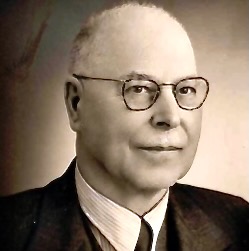
Monday, The Free Press carried a very personal and heartfelt profile of a man recently deceased who had been terribly disabled. The man, Dovie, was completely dependent on others and machinery to live. At one point about a year an a half ago, both failed him, he fell into a coma and passed far more recently. Born Orthodox Jew, Dovie converted to Christianity in 2020 and was baptized into the Roman Catholic Church in 2022. He died quite young, but he lived quite boldly. There is so much to be taken from a story like Dovie’s, but it is how Madeleine Kearns opens her account that moved me so.
Wrote Kearns:
One evening last spring, my husband, Nick, took a picture of our friend Dovie, grinning widely and holding up a copy of the New York Post. Half of the page he held up was occupied by the passionate case Dovie had made against New York’s new assisted suicide bill.
“The logic of assisted suicide leads inevitably to the conclusion that those with doctor-approved expiration dates are living lives not worth living,” Dovie wrote. (The article, first published by UnHerd, was also reprinted in The Free Press.) Dovie’s life—which he often experienced as borrowed time—was a rebuke to that idea. He was a much-beloved son, brother, uncle, and friend to many. He also happened to be disabled.
How often do we conclude a life is not worth living? Dovie could speak personally of his own life, but in doing so he spoke for all the severely disabled. In his recent book, the Vice President reminds us of the case of Terri Schiavo. The entire controversy there was competing judgement about whether her life was worth living. I think of my own mother who suffered deeply from dementia for many years and whose life was judged by many, but not me, to be not worth living long before she passed away. How many of our elderly do we discard as no longer worthy? And then the unborn whose life is deemed unworthy before they are ever given the opportunity to demonstrate one way or the other. We make decisions about the worthiness of life all too often.
And too often, such decisions come down to numbers. It is not cheap to be disabled and it is extremely expensive to raise a child. How many lives do we deem unworthy when they are simply too expensive? How often do insurance companies deny services because in their judgement it is good money chasing bad?
How will AI make such judgements when it is making care decisions? AI is math – that is all it is. It is highly sophisticated math, but it is math nonetheless. It is number juggling.
In his latest Fox column, the host argued for using AI in the college admissions process because “…the college and graduate application process is driven by paper and numbers: test scores, GPAs, essays, resumes and recommendations from tens of thousands of young people all aiming for a prized result. Almost all of the applicants share a hope for a fair process.” His argument is the use of AI in this situation would eliminate bias currently inherent in the system.
But sometimes human bias is a good thing. Truly, the college admissions process is completely askew and deeply biased in all the wrong ways. But I can see where the total reduction to numbers of all decision making could result in a lot of lost potential. I think of my father, the only one of five brothers to get past the 8th grade. He graduated high school, by his own description, “35th in a class of 32.” He then served honorably, but without distinction in the Army and used his G.I benefits to go to college and law school – often doubling up his undergrad and law courses so he completed the entire process in 5 years. His numbers and background were awful. I doubt AI would ever have let him in. Yet he went on to a distinguished business career.
And then I come back to using AI in life and death decisions about insurance coverage, or people just consulting ChatGPT on how to care for their disabled child or dementia-suffering parent. Life is not numbers and AI is. Therefore, AI will never actually be intelligent, because numbers are not human. Numbers cannot love.
Numbers will never truly understand the value and worthiness of life because that is rooted in loving and being loved. We are made in God’s image, AI is made in ours. That degree of separation is a chasm of extreme depth and extraordinary width – it will not be bridged.