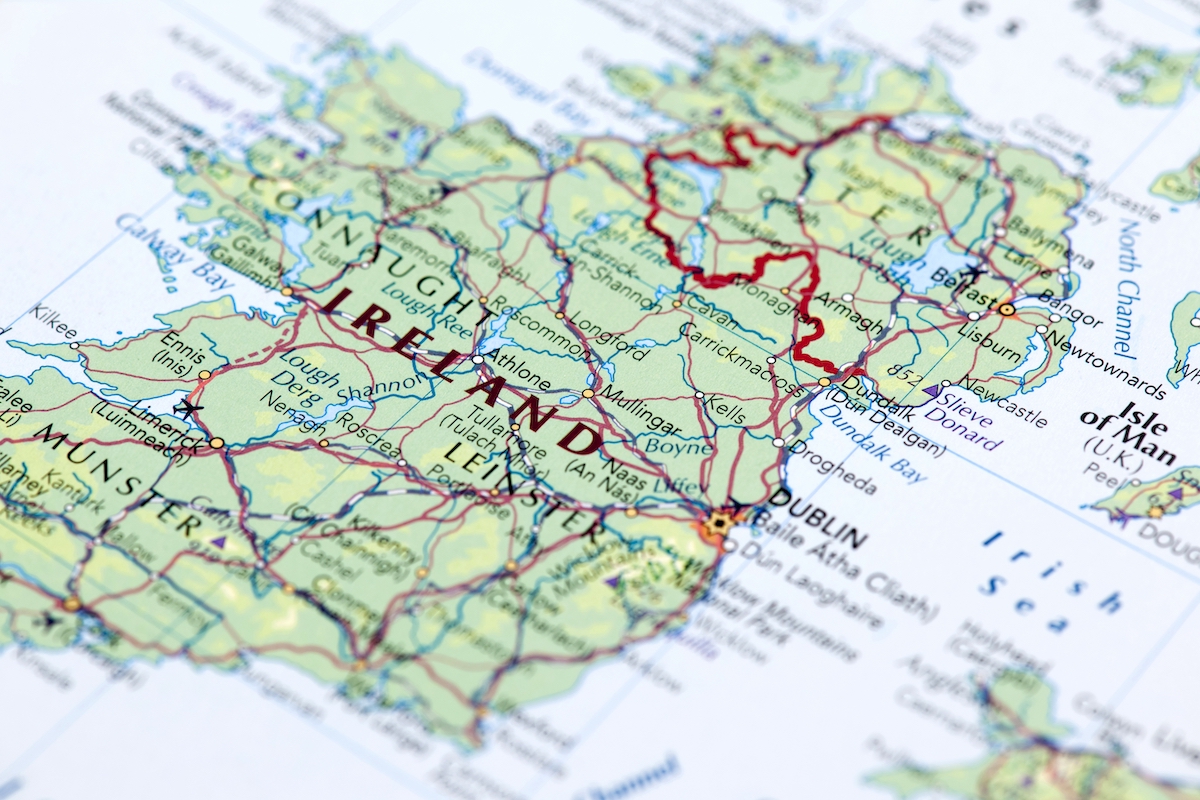
For nearly three decades, American presidents have treated the constitutional status of Northern Ireland as untouchable — the “third rail” of British politics that Washington helped defuse but has since studiously avoided touching again. Then-President Bill Clinton played a central role in brokering the 1998 Good Friday Agreement, which ended 30 years of violent conflict known as the Troubles by establishing that Northern Ireland remains part of the United Kingdom unless voters there, and separately in the Republic of Ireland, choose otherwise. Since then, the unwritten rule for U.S. presidents has been neutrality: Encourage peace, praise the agreement, and say nothing about which way the constitutional question should ultimately go.
Trump Breaks the Silence
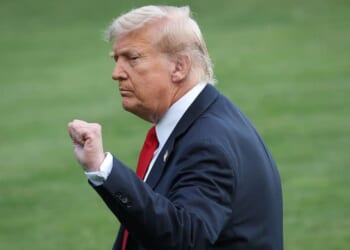
U.S. President Donald Trump broke that pattern recently. Appearing alongside Prime Minister Micheál Martin in Dublin on Saturday, September 12, Trump was asked directly about Irish reunification and did not hedge. “I don’t want to cause any problems, but I will tell you, I’d love to see it unified,” he said. “It’s going to happen eventually…. I think it would be a fantastic thing.” Asked about the U.K.’s likely objections, he added, “The U.K. will have something to say about it obviously, but I think it would be a great thing, I mean, how can it be bad?” He repeated the sentiment on September 13, calling a united Ireland “one of the naturals of all time.”
Mixed Reaction
The reaction split along predictable lines. Sinn Féin president Mary Lou McDonald said Trump’s remarks showed that the debate had shifted and called on the Irish government to begin actively preparing for reunification. Democratic Unionist Party leader Gavin Robinson countered that Northern Ireland’s future would be decided by its own people, “not by commentary in London, Dublin or Washington.” Downing Street quickly reaffirmed that British Prime Minister Andy Burnham’s position is unchanged: A border poll remains “off the table,” with no current evidence of majority support in Northern Ireland for leaving the U.K.
That reassurance from London was tested on September 14, when an unprecedented political alignment convened in Cardiff. John Swinney (Scottish National Party, First Minister of Scotland), Rhun ap Iorwerth (Plaid Cymru party, First Minister of Wales), and Michelle O’Neill (Sinn Féin, First Minister of Northern Ireland) met at St David’s Hotel in Cardiff Bay, joined by Sinn Féin president McDonald. Notably, all three ministers attended in their capacity as party leaders rather than as heads of government — a distinction meant to keep the declaration separate from official state policy while still carrying the weight of each nation’s most senior elected figure.
The party leaders held a joint press conference following the meeting, announcing that “Westminster’s time is coming to an end” and issuing a memorandum asserting that no central U.K. government has the right to “block democracy.” They called for independence, formally demanding that Westminster’s Parliament “prepare, plan, and facilitate constitutional change.” Ironically, they also called for re-entry into the European Union.
Irish Prime Minister Martin criticized the memorandum, calling it a tactical error that could “set back Irish unity” by alienating voters. Welsh conservatives and others said the three had “no mandate for independence.”
This article is part of The New American’s weekly online newsletter Insider Report, which is emailed to TNA subscribers each week. Click here to subscribe to The New American to receive the Insider Report and access exclusive content.