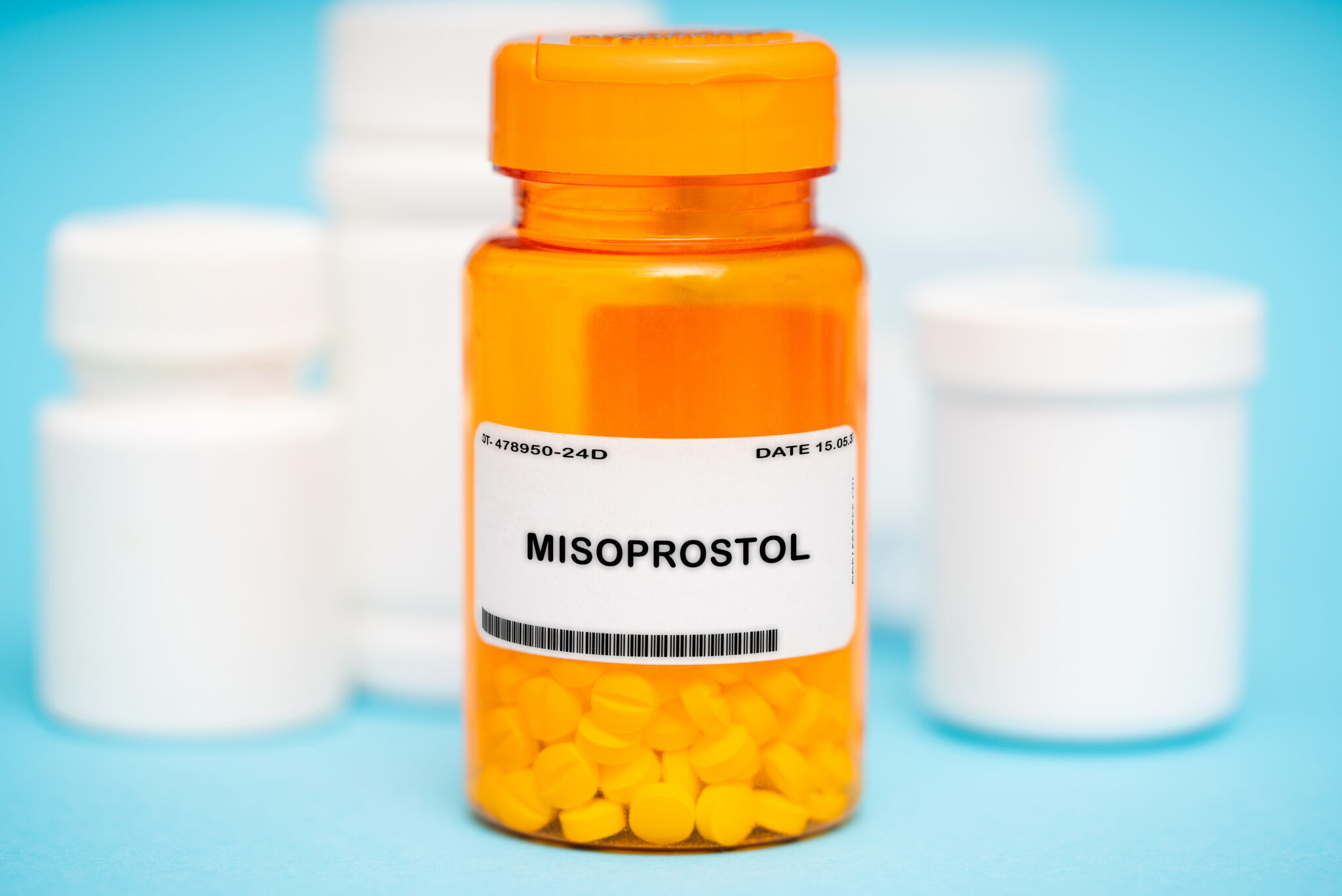
A concerning trend has been noted from abortion advocates and their media allies in the face of any perceived threat to “abortion access.” As abortion limitations were implemented in many states in the wake of the Supreme Court’s Dobbs decision overturning Roe v Wade in 2022, medication abortion utilizing the FDA approved regimen of mifepristone and misoprostol was increasingly promoted, often in violation of state laws, and was estimated to induce nearly two-thirds of abortions in the U.S by 2023.[1]
Following the Food and Drug Administration’s 2023 decision to remove mifepristone’s in-person dispensing requirement, allowing these drugs to be prescribed by telemedicine or on-line and delivered via mail-order pharmacies,[2] use of these drugs has increased still further.[3] We and many others have expressed concern that medically unsupervised provision of these drugs without standard pre-abortion testing, or in-person informed consent counseling, jeopardizes the health and lives of women self-managing their abortions in this way.[4]
HELP LIFENEWS SAVE BABIES FROM ABORTION! Please help LifeNews.com with a donation!
In response to these legitimate concerns, the 5th U.S. Circuit Court of Appeals recently ruled that the in-person dispensing requirement should be reinstated while the FDA performs additional safety testing,[5] although this ruling was stayed by the U.S. Supreme Court as the case proceeds.[6] The knee-jerk response to the appeals court decision from many abortion promoting organizations was not to return to the method of prescribing and distribution that was widely utilized prior to the Covid-19 pandemic, when all women obtained the drugs in-person from the abortion provider. Instead, the response was to uniformly pivot toward an even more dangerous method of medication abortion, the “one-drug regimen” of misoprostol alone.
The abortion industry has utilized this playbook before. In response to staffing shortages, when few ob/gyns were willing to perform surgical abortions and abortion clinics had trouble hiring and retaining surgeons, the industry began promoting medication abortions over surgical abortions, even though studies demonstrate that approximately four times as many complications occur following mifepristone and misoprostol abortion compared to surgical aspiration abortion.[7]
Why not return to the use of mifepristone and misoprostol under safer in-person protocols? Apparently, the goal of immediately accessible abortion trumps the protection of women obtaining abortion. The industry is not willing to give up any “gains” it has made in “abortion access.” Thus, once again, just as it did when transitioning from surgical abortions to medication abortions, it appears ready to pivot from mifepristone and misoprostol abortions, which it deceptively calls “safe and effective.”[8] to an even more unsafe regimen, as will be discussed.
For background, however, it should be noted that even the current FDA abortion drug regimen approved for less than 10 weeks’ gestational age has been documented to result in ongoing living pregnancy in 1.5% of cases,[9] retained tissue requiring surgical completion in 4.8-6.2%[10] and emergency room evaluation in up to 10.2%.[11] If used at later gestational ages, failures may occur in up to half of women.[12]
Due to the REMS limitations on mifepristone, albeit weakened over time, misoprostol can be more readily obtained. It is commonly prescribed for preventing and treating gastric ulcers, so it may be prescribed by any physician, not just those who have achieved REMS certification as required by the FDA when prescribing mifepristone.[13] Additionally, unregulated pharmacies in other countries are sometimes willing to sell misoprostol without a prescription or on-line, and women in Texas frequently obtain the drug from pharmacies across the Mexican border.[14]
In 2024, the influential New England Journal of Medicine, through the pen of abortion-advocate Heidi Moseson, promoted this “one drug regimen” with the transparent explanation that the Supreme Court’s actions limiting abortion “strengthened the case for leveraging all evidence-based strategies to protect and expand access to abortion care, including misoprostol-only regimens.”[15]
This month, as the abortion industry addressed the possibility of a temporary pause in mail-order mifepristone abortion, its media advocates loudly reactivated the previous recommendations for misoprostol alone. NPR updated a 2023 article on May 4, 2026, to erroneously state, “There’s lots of research that shows the misoprostol-only protocol is as safe as the two-medication protocol – but it does tend to cause more side effects. Even though the two-drug protocol is still preferred when possible, there’s ample evidence that misoprostol alone is a very effective alternative, according to the Society of Family Planning, an abortion research organization.”[16] This suggestion has been echoed by many other abortion advocacy organizations.[17] Even women’s journals have weighed in, with Cosmopolitan giving explicit directions for self-managing a misoprostol abortion with pills obtained from any available source, before adding the CYA directive, “As always, be sure to consult your medical provider on dosing and how to take the medication.”[18]
Yet, evidence from around the globe demonstrates that misoprostol alone is a poor abortifacient and much more likely to cause injury to women than mifepristone and misoprostol abortion.
A 2010 study documented that misoprostol alone led to a 23.8% failure rate requiring surgery because misoprostol failed to completely empty the uterus of the remains of the child. The embryo or fetus continued to survive in 16.6% of the pregnancies. In contrast, there were 3.5% failures and 1.5% continuing pregnancies in the mifepristone and misoprostol comparison group.[19]
Likewise, a 2013 study demonstrated 38.8% failures when misoprostol was used vaginally and 29.8% when used sublingually (under the tongue).[20]
Similarly, a 2000 randomized trial documented that 35% of women using unmoistened vaginal misoprostol had failures requiring surgery.[21]
A 2019 systematic review of more than 12,000 misoprostol abortions found 22% required surgical completion and 6.8% had ongoing living pregnancies.[22] Unfortunately, there was no uniformity of dosing or route of administration in these misoprostol-only studies, leading to difficulty in comparisons or determination of the most effective way to provide misoprostol. Nonetheless, the review demonstrated conclusively that misoprostol alone failed far more frequently than mifepristone and misoprostol combined regardless of the dose or administration used.
A 2023 updated systematic review by the same authors of over 16,000 misoprostol abortions documented only slightly improved data, with treatment failures in 15% and ongoing pregnancies in 6% of the over 9,000 women for whom this outcome was reported.[23]
Surprisingly, despite these significant failure rates, the pro-abortion authors of these systematic reviews published a 2023 protocol for providing misoprostol only to induce abortion. Although they acknowledged that failure rates were far higher than for mifepristone plus misoprostol abortion, they implied that misoprostol-only abortions were necessary because of the recent Supreme Court Dobbs decision. They documented that limited evidence is available on how long symptoms may last or how follow-up should be provided, but they dismissed any concern over these limitations.[24]
Importantly, many women who obtain an abortion with misoprostol alone have a miserable experience, as gastrointestinal side effects are frequent after misoprostol. A 2007 study comparing different methods of misoprostol administration documented that sublingual administration, although more effective, was associated with more side effects, such as nausea, vomiting, and hypothermia. Vaginal administration was next in efficacy (although other sources have documented more infections with this route[25]), and oral administration was considered to be the least effective.[26]
With the vague recommendations from many abortion advocates, a woman in crisis may be left to figure out how to administer a misoprostol abortion on her own. Mail order delivery may place twelve misoprostol tablets on a woman’s doorstep, leaving her to “self-manage” how to use them, and guess whether her horrifying bleeding or severe pain necessitates ER evaluation, or is merely an expected side effect of the drug.
Women who obtain misoprostol from unregulated websites may have no idea of the quality of the medications they have obtained. One study on the feasibility of obtaining abortion drugs from international distributors over the internet found in some cases misoprostol tablets contained only 17% of the advertised amount of medication.[27] Using one sixth of the recommended amount is unlikely to produce contractions sufficient to evacuate the child and all the pregnancy tissue from the woman’s uterus, increasing the risk of failure.
Three additional concerns are often ignored by those who promote unsupervised use of this drug.
Misoprostol is known to produce birth defects such as Moebius Syndrome, associated with severe craniofacial and limb abnormalities, leaving these children at risk if the pregnancy continued to birth.[28] Continuing living pregnancies occur 6-16%[29]of the time when these drugs are taken, so if the drug exposure occurs during the critical period in the first trimester when the baby’s organs are forming, and if a woman subsequently gives birth, there is potential the child will suffer from devastating congenital anomalies.
Misoprostol has other obstetric uses: for cervical ripening, labor induction and to treat obstetric hemorrhage. But sometimes a woman’s uterus will respond too strongly to the medication, producing powerful and frequent contractions. On rare occasions, especially if a woman has one or more prior uterine scars from c-section, myomectomy or other uterine surgery, these tetanic contractions could cause the uterus to rupture, leading to future infertility or even maternal death.[30]
Misoprostol’s action in inducing uterine contractions is the mechanism by which it causes abortion. Unlike mifepristone, which blocks progesterone receptors usually leading to the death of the embryo or fetus, misoprostol does not have a direct mechanism to cause the death of the unborn child. Thus, if the drug is used in the second trimester, it is likely that many babies will be born alive, an undoubtedly traumatic experience for a mother. Studies demonstrate that between 11%[31] and 50%[32] of second trimester fetuses survive labor induction abortions. If the child subsequently dies due to failure to obtain medical care (passive infanticide) or through direct intervention (active infanticide), the mother risks legal prosecution.[33]
In summary, despite being described as “safe and effective,” the medical evidence evaluating misoprostol only abortion documents failure to expel all the pregnancy tissue in 15-38.8% of cases requiring surgical intervention, ongoing living pregnancies in in 6-16% placing children at risk for misoprostol induced birth defects, the possibility that infants will be born alive in 11-50% of cases when used in the second trimester, and a potential for uterine rupture in women with previous cesarean sections. These frequent and devastating complications demonstrate this regimen is “unsafe and ineffective,” especially when used without medical oversight, as abortion advocates are increasingly recommending.
The above discussion documents how, despite their insistence on calling abortion “necessary healthcare,” abortion advocates have prioritized the de-medicalization of abortion, promoting drugs that are less safe than currently available abortion regimens, in a quest to ensure every woman considering abortion ends the life of her child, even if her life and health becomes collateral damage.[34] For these reasons and more, any promotion of, or failure to warn against, misoprostol only abortions should be recognized as callous attempts to prioritize ending unborn life over the health and safety of women. These actions are unacceptable when performed by those who profess to care for women.
Ingrid Skop, M.D., F.A.C.O.G., is Vice President and Director of Medical Affairs at Charlotte Lozier Institute.
[1] Guttmacher Institute. https://www.guttmacher.org/2024/03/medication-abortion-accounted-63-all-us-abortions-2023-increase-53-2020.
[2] Mifeprex label. https://www.accessdata.fda.gov/drugsatfda_docs/label/2016/020687s020lbl.pdf.
[3] https://lozierinstitute.org/how-many-abortions-are-occurring-in-america-post-dobbs/
[4] Charlotte Lozier Institute: Risks and complications of drug induced abortion. https://lozierinstitute.org/primer-risks-and-complications-of-drug-induced-abortion/; American Association of Pro-Life Obstetricians & Gynecologists: Chemical abortion one pager. https://aaplog.org/wp-content/uploads/2023/08/20230728-Chem-Ab-One-Pager.pdf.
[5] https://www.npr.org/2026/05/01/nx-s1-5808328/court-restricts-abortion-access-mailing-mifepristone
[6] https://www.scotusblog.com/2026/05/court-allows-for-access-to-abortion-pill-by-mail-for-now/
[7] Maarit Niinimäki, Anneli Pouta, Aini Bloigu, et al., “Immediate Complications after Medical Compared with Surgical Termination of Pregnancy,” Obstet Gynecol, 114, no. 4 (2009): 795-804, doi:10.1097/AOG.0b013e3181b5ccf9.
[8] Charlotte Lozier Institute: Risks and complications of drug induced abortion. https://lozierinstitute.org/primer-risks-and-complications-of-drug-induced-abortion/
[9] Elizabeth G. Raymond, Caitlin Shannon, Mark A. Weaver, et al., “First-Trimester Medical Abortion with Mifepristone 200mg and Misoprostol: A Systematic Review,” Contraception 87, no. 1 (2013): 26-37, doi: 10.1016/j.contraception.2012.06.011.
[10] Raymond 2013; Ning Liu and Joel G. Ray, “Short-Term Adverse Outcomes after Mifepristone-Misoprostol versus Procedural Induced Abortion: A Population-Based Propensity-Weighted Study,” Ann Intern Med 176, no. 2 (2023): 145-153, doi: 10.7326/M22-2568; Niinimäki 2009; Amani Meaidi, Sarah Friedrich, Thomas Alexander Gerds, et al., “Risk Factors for Surgical Intervention of Early Medical Abortion,” Am J Obstet Gynecol 220, no. 5 (2019): 478.e1-478.e15, doi: 10.1016/j.ajog.2019.02.014.
[11] Liu 2023.
[12] Charlotte Lozier Institute: Drug-induced abortion after the first trimester. https://lozierinstitute.org/drug-induced-abortion-after-the-first-trimester/.
[13] Stat Pearls: Misoprostol. https://www.ncbi.nlm.nih.gov/books/NBK539873/
[14] Mexican border town sees an increase in sales of abortion drugs to women from the U.S. https://www.npr.org/2022/05/09/1097210654mexican-border-town-sees-an-increase-in-sales-of-abortion-drugs-to-women-from-th.
[15] Moseson H, Jayaweera R, Baum S, Gerdts Ct. How Effective Is Misoprostol Alone for Medication Abortion? New England Journal of Medicine Evidence 2024;3(6) DOI: 10.1056/EVIDccon2300129.
[16] NPR Here’s how medication abortion works with just one drug. https://www.npr.org/2026/05/04/g-s1-119947/telehealth-abortion-mifepristone-misoprostol.
[17] Reproductive Health Access Project https://www.reproductiveaccess.org/resource/mabfactsheet-miso/; Ibis Reproductive Health https://www.ibisreproductivehealth.org/misoprostol-only-resource-hub; Gynuity Health Projects https://gynuity.org/assets/resources/polbrf_misoprostol_selfguide_en.pdf.
[18] Colleen DeBellefonds. Your Complete Guide to Misoprostol-Only Abortions. Cosmopolitan May 8, 2026. https://www.cosmopolitan.com/lifestyle/a60308934/misoprostol-only-abortion-pills-guide-faq/.
[19] Ngoc. Comparing two early medical abortion regimens: mifepristone+misoprostol vs. misoprostol alone. Contraception. 2010.
[20] 2013 Tanha. Sublingual vs vaginal misoprostol for second trimester termination: A RCT. Arch Gynecol Obstet. 2013;287(1):65-69.
[21] Ngai. Vaginal misoprostol alone for medical abortion up to 9 weeks of gestation: efficacy and acceptability. Human Reproduction. 2000;15(5):1159-1162.
[22] Raymond. Efficacy of misoprostol alone for first trimester medical abortion: a systematic review. Obstet Gynecol 2019;133:137-147.
[23] Raymond EG, Weaver MA, Shochet T. Effectiveness and safety of misoprostol-only for first-trimester medication abortion: An updated systematic review and meta-analysis. Contraception 2023 Nov:127:110132. doi: 10.1016/j.contraception.2023.110132.
[24] Raymond E, et al. Medication Abortion with Misoprostol-Only: A Sample Protocol. Contraception, (2023) doi: https://doi.org/10.1016/j.contraception.2023.109998).
[25] Fjerstad M, et al. Severity of infection following the introduction of new infection control measures for medical abortion. Contraception. 2011;83:330-335. doi:10.1016/j.contraception.2010.08.022.
[26] Faundes A, et al. Misoprostol for the termination of pregnancy up to 12 completed weeks of pregnancy. IJOG. 2007;99:S172-S177. doi: 10.1016/j.ijgo.2007.09.006.
[27] Murtaugh. Exploring the feasibility of obtaining mifepristone and misoprostol from the internet. Contraception 2018;97(4):287-291.
[28] Vauzelle. Birth defects after exposure to misoprostol in the first trimester of pregnancy: prospective follow-up study. Reprod Toxicol. 2012;36:98-103.
[29] Raymond 2023; Ngoc 2010.
[30] Goyal V. Uterine rupture in second-trimester misoprostol-induced abortion after cesarean delivery: a systematic review. Obstet. Gynecol. 2009;113(5):1117–1123. doi: 10.1097/AOG.0b013e31819dbfe2.
[31] Auger N, Brousseau É, Ayoub A, Fraser WD. Second-trimester abortion and risk of live birth. Am J Obstet Gynecol. 2024 Jun;230(6):679.e1-679.e9.
[32] Springer S, Gorczyca ME, Arzt J, Pils S, Bettelheim D, Ott J. Fetal Survival in Second-Trimester Termination of Pregnancy Without Feticide. Obstet Gynecol. 2018 Mar;131(3):575-579
[33] https://okcfox.com/news/nation-world/baby-pregnant-abortion-chemari-truax-hospital-obstetric-trauma-arrest-terminate-newborn-infant-cocaine-urine-birth-pennsylvania-williamsport
[34] Christina Cirucci. The Hill. Another medication abortion false promise. https://thehill.com/opinion/healthcare/5613904-another-medication-abortion-false-promise/.
LifeNews Note: Ingrid Skop, M.D., F.A.C.O.G., is Senior Fellow and Director of Medical Affairs for Charlotte Lozier Institute. Dr. Skop received her Bachelor of Science in physiology from Oklahoma State University and her medical doctorate from Washington University School of Medicine. She completed her residency in obstetrics and gynecology at the University of Texas Health Science Center at San Antonio. Dr. Skop is a Fellow of the American College of Obstetricians and Gynecologists. Dr. Skop served for over 25 years in private practice in San Antonio, where she delivered more than 5,000 babies and personally cared for many women who had been harmed, physically and emotionally, from complications due to abortion.