
The Urban Institute just published a review of Ohio’s abortion amendment called “Ohio Is Expanding Abortion Access Even as Implementation Proves Uneven.”
And they are right—abortion access is expanding in Ohio. But our question is this: Do Ohioans understand what that actually means for our state?
Three years have passed, but the meaning and consequences of the vote to add the “right” to abortion to our constitution are still being worked out in courtrooms, hospitals, doctors’ offices, and abortion clinics across our state.
The Urban Institute’s report is just a small sample and not a representative survey of Ohioans, as they recognize. They simply collected the opinions and experiences of 22 policymakers, abortion providers, and advocates, and then gathered two focus groups of 15 women. The report is useful, though, because it describes what abortionists and abortion advocates themselves are saying about what this amendment has done.
Click Follow below to like the LifeNews Facebook page!
Among the changes they celebrate are the elimination of Ohio’s 24-hour waiting period, routine ultrasound and in-person counseling requirements. One provider interviewed for the report explained that eliminating these requirements freed appointment slots and meant doctors could perform more abortions.
So, to restate that plainly: eliminating time, counseling and ultrasounds freed appointment slots and increased the number of abortions providers could perform.
We constantly hear that abortion should be “between a woman and her doctor.” Yet here, fewer and faster encounters with patients and greater clinic throughput are described as progress. Does that sound like a trusted doctor-patient relationship or more like an assembly line?
Ohio’s Department of Health statistics show that this broader expansion of abortion access is having measurable consequences: abortions increased by 15% in 2025, reaching a shocking 25,135 babies aborted for the year. Even more significantly, ODH said the increase was primarily attributable to telehealth abortion prescriptions provided to Ohio residents.
Nearly six out of 10 Ohio abortions involved mifepristone, the chemical that blocks progesterone, a hormone needed for pregnancy to continue. The Urban Institute report portrays the expansion of chemical abortion as an improvement and recommends still more telehealth abortion access, particularly for women living in rural and Appalachian communities.
Women in rural Ohio need access to OB/GYNs. They need prenatal care and hospitals where they can safely deliver their babies. They need mental-health services, affordable child care, and transportation. Women facing unexpected pregnancies need to know that carrying their child will not mean facing the future alone.
If abortion pills become dramatically easier to obtain while maternity care disappears from rural communities, how can we call that progress for women?
In the real world, more chemical abortion means fewer doctors involved at all, since that is no longer a requirement. The lack of ultrasound means ectopic pregnancies are likely not caught, which could prove fatal to a woman who is suffering bleeding and pain but thinks that is a normal part of the process. It means women who are beyond a time frame where drugs can be used for an abortion may never know it, making complications or an abortion “failure” (ie, the baby lives) more likely. It means women with diabetes or other health complications have no monitoring or follow up care. It means women are left at home, often alone, with pain and potential complications they may not be equipped to manage.
We don’t think that’s something to celebrate.
The report also flagged Catholic-affiliated health systems as a continuing obstacle to abortion access because those institutions restrict abortion and sometimes abortion referral or coordination.
The report stops short of calling for Catholic hospitals to be forced to perform abortions. But its framing reveals a tension Ohio eventually must address: whose freedom counts?
Does a barely-restricted “right” to abortion create an obligation for doctors, nurses, pharmacists, and Catholic institutions to provide or refer for these services?
“Reproductive freedom” cannot come to mean eliminating everyone else’s freedom of conscience.
Finally, the report identifies cost as another remaining “barrier.” Interviewees note that most private insurance plans and Medicaid do not cover abortion, requiring many women to pay out of pocket.
We should pay attention to where that argument leads next, because the road from “this is my constitutional right” to “government must help pay for me to exercise it” may not be as long as we think.
Ohio Right to Life will continue defending unborn children, but our response cannot simply be opposition. We also have an obligation to build the alternative.
We want an Ohio where no woman believes abortion is necessary because she cannot afford another child. Where foster families receive support. Where child care is within reach. Where new mothers struggling with mental health can find help. Where pregnancy centers and community organizations can walk alongside women in difficult circumstances. And where women receive real choices and real hope.
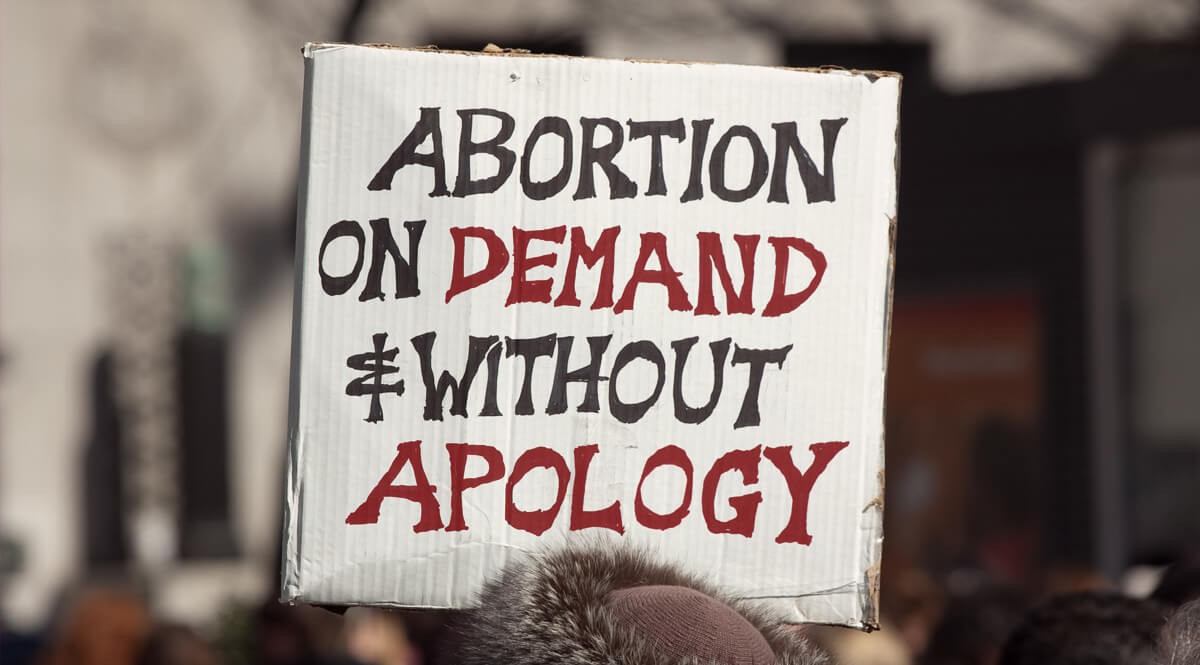
As much as we wish the 2023 vote had gone another way, we know that a tremendous number of Ohioans who may have voted in favor of it are still firmly opposed to abortion-on-demand, taxpayer funding of abortion, and wiping out safety standards that help protect women from an abortion industry that cares more about their bottom line than actually helping women.
After three years, we are only beginning to see the repercussions of this vote. More abortion is not true care for the women, children, and families of Ohio.
Ohio can do better.
LifeNews Note: Carrie Snyder is the executive director of Ohio Right to Life








![WHAT POLICY? Crockett Trips Through MS NOW Softball Question on Her Agenda if Elected to Senate [WATCH]](https://teamredvictory.com/wp-content/uploads/2025/12/WHAT-POLICY-Crockett-Trips-Through-MS-NOW-Softball-Question-on-350x250.png)