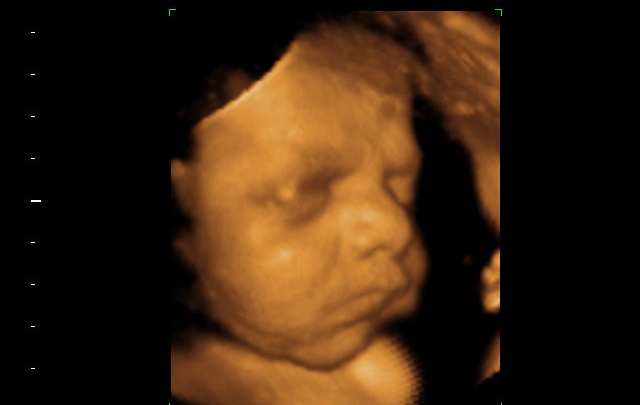
Anyone paying attention knows that the medical establishment does not believe in any restriction on abortion, and moreover, that it should be provided free anytime a woman wants to terminate a pregnancy. For example, a current editorial in The Lancet celebrates the editors’ view that more than 800 million women recently gaining better access to abortion, while decrying “barriers” such as waiting periods (and unstated, ultrasound imaging) that data shows, save the lives of unborn babies:
Gains in legal access to abortion are worth celebrating. An analysis between 1994 and 2023 by Katy Mayall and colleagues showed an incredible trend towards the liberalisation of abortion laws across all regions of the world. 825 million women now have access to abortion services who did not before. However, progress has not been uniform. Complete bans on abortion or restrictive laws are concentrated in Africa, Asia, and Latin America, with 97% of unsafe abortions globally concentrated in developing nations. And other barriers exist beyond legality. Mandatory waiting periods and counselling, refusals to provide abortions, harassment and obstruction, and cost can all impede or delay access. Populations marginalised on the basis of race, age, sexuality, and income are typically the most affected and there are strong intersectional and social justice dimensions to abortion access.
Nothing in the editorial is surprising. But I was rather astounded to recently learn that some pro-abortion bioethicists now deploy the obscure philosophical field of “mereology” — which explores the relationship between parts and wholes — to argue unscientifically that the gestating baby is actually merely a “part” of the woman’s body:
Recently, Kingma has argued that, contrary to popular belief, the fetus is not merely contained by the gestator’s body but a part of it. This is a metaphysical claim which is grounded by scientific facts about pregnancy. [Citations omitted.]
SUPPORT LIFENEWS! If you want to help fight abortion, please donate to LifeNews.com!
The article explores “the metaphysics of pregnancy,” meaning that with this discussion, we have left the scientific realm. Moreover, unlike the metaphysical claim that the unborn child has a soul — which, whether true, does not impact the scientific facts of pregnancy — applying the theory of mereology to the reality of fetal existence has the potential to ignore biological reality:
When thinking about whether the analogy with the bun and the oven is reasonable, Kingma argues that it is actually quite preposterous: ‘We cannot take ‘the bun out of the oven’, check it and stick it back in if it is not fully cooked. (If only!) Birth is irreversible: once a baby is out, it does not go back in — ever’. Given that it fails to satisfy Smith and Brogaard’s criteria for being a separate entity, Kingma concludes that one ought to consider the fetus as a part of the gestator’s body. She calls this the Parthood View of pregnancy.
The article, which is complex and arcane in the extreme, does not reach final moral conclusions about abortion. But it does give away the ultimate pro-abortion game that is afoot in this argumentation:
Donley . . . argues that if we have a property or privacy right in our bodies, and the fetus is a part and product of our bodies, then those property or privacy rights should encompass the fetus. . . .
The parthood of the fetus affects how one employs the concept of bodily integrity (and bodily autonomy), and therefore what norms might follow from it and why. That said, the strength of arguments based on the right to bodily autonomy is that autonomy is generally considered to be an inalienable right which comes simply from being human. . . . Therefore, perhaps Thomson’s argument is safe after all — parts of us do not require our permission to remain parts, but equally we do not require anyone’s permission to remove them.
Please understand that this ongoing debate, which is mostly taking place in ivory tower obscurity, is acutely relevant to future abortion public policy. Indeed, if the medical and bioethics elite ever reach a consensus that a fetus is merely a body part — like, say, an appendix — and not an individual living organism, that view (follow the metaphysics!) will be incorporated into public policy obliterating the regulation of abortion in any regard whatsoever.
LifeNews.com Note: Wesley J. Smith, J.D., is a special consultant to the Center for Bioethics and Culture and a bioethics attorney who blogs at Human Exeptionalism.