The proverbial Martian visiting America in this 250th year (a whole quarter millennium) of our existence would be struck by many things. But probably by nothing more obvious than the large gap between what, on the one hand, we daily say and do – and on the other, what we would like to be. We’re worried about how technologies like AI are coming to define us, but are mostly blind to how we’ve already defined ourselves – confined ourselves, really, even before the devices took over – to a materially prosperous but flat view of the world and ourselves. The Church, in recent years, has been trying to compensate with terms like Dignitas infinita and Magnifica humanitas, concepts that, in their argumentative way, do try to get at the problem. But they fall well short because what we desperately need now is not yet more arguments, but serious and artful poetry.
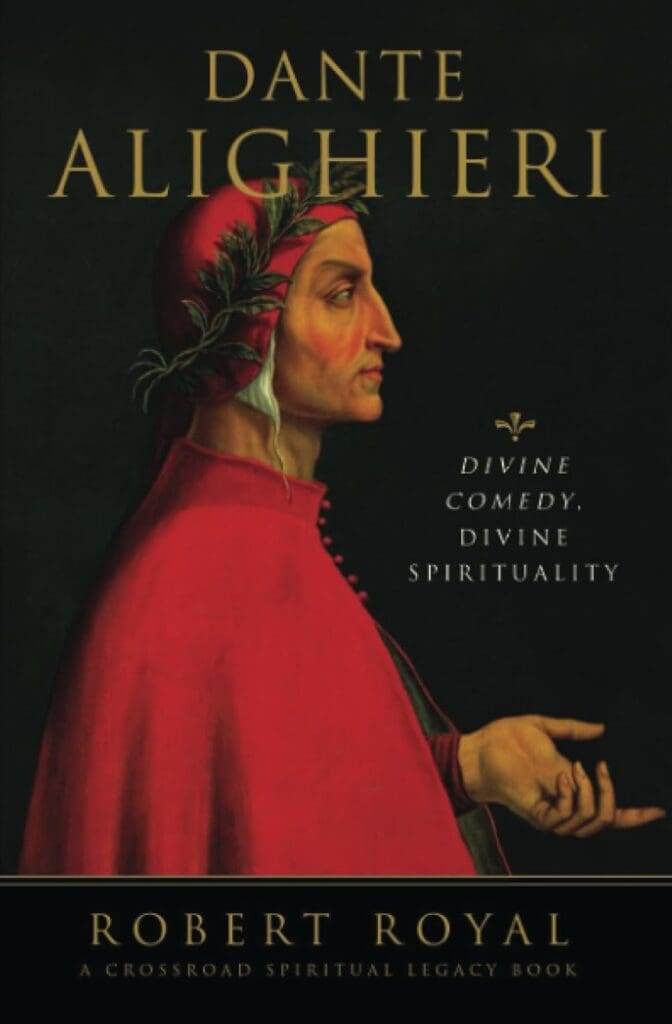
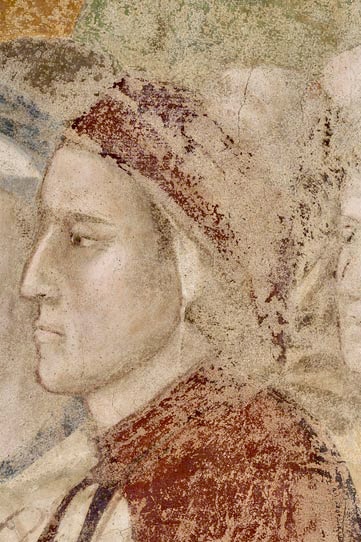
The incomparably great Dante Alighieri already understood all this at the beginning of his Paradiso:
Trasumanar significar per verba
non si poria; però l’essemplo basti
a cui esperïenza grazia serba.To transhumanize in words
Cannot be done; but let the example suffice
For those whom grace reserves the experience.(RR trans.)
It’s been said by some scholars that, by some inexplicable inspiration, Dante invented this idea of “transhumanism.” Perhaps so. But he certainly meant something different, something Christian, by it, unlike the grotesque transmodern projections emanating from the thickets of AI in our day.
And nota bene: he recognized several deep questions as well, even as he was embarking on writing a poem about the only realm in which we achieve real happiness, a state for which the term human “dignity” is a pale and distant shadow – as if we were all merely Victorian ladies and gentlemen claiming a decorous position in polite society.
But we are His sons and daughters.
Christianity, which is to say the truth about human existence, is much more fierce, and on a wholly different plane, than that. And to grasp that truth at all requires considerable skill, indirection – and poetry. (See Emily Dickinson’s “Tell all the truth but tell it slant.”)

We need arguments, of course, to keep from falling into “subhumanism.” And to prevent poetry from turning into sentimentality or idolatry. And also to remind us that what exceeds human reason is not, therefore, irrational, but participates in something that, beyond us, paradoxically makes us more ourselves. Because it brings us into the presence of the Truth beyond truths. This has long been understood in the Christian tradition. Modern rationalism and scientism see the transcendent as something unwarranted; within the Faith, that transrationalism is precisely what shows Christ’s very power and truth.
As St. Ambrose, who knew a few things about such matters, put it: Non in dialectica complacuit Deo salvum facere populum suum (“It pleased God to save his people not through dialectics [i.e., argument]). His follower, the great St. Augustine, wrote Si comprehendis, non est Deus (“If you understand, it’s not God.”) And in more recent days, St. John Paul II urged that we rediscover a more ambitious reason, a reason that appreciates its limits and seeks answers that it needs, but goes beyond what human powers can achieve solely on their own. These can only come to us as revelation (“thoughts beyond their thought to those high bards were given”) or, in its way, what we might call a kind of poetry.
That few people read or value poetry anymore is a problem because it already makes us blind to the ways we will have to speak about that something beyond ourselves, even before we get to the question of the divine.
For me, the most luminous example is the modern American poet, Wallace Stevens, who began his writing career as a nonbeliever and converted to Catholicism on his deathbed. In his great early poem Sunday Morning, an older woman is not going to church but still feels “The need of some imperishable bliss.” So, Stevens offers this vision of the world:
We live in an old chaos of the sun,
Or old dependency of day and night,
Or island solitude, unsponsored, free,
Of that wide water, inescapable.
Deer walk upon our mountains, and the quail
Whistle about us their spontaneous cries;
Sweet berries ripen in the wilderness;
And, in the isolation of the sky,
At evening, casual flocks of pigeons make
Ambiguous undulations as they sink,
Downward to darkness, on extended wings.

This is already a very different, more wonderful world than the one presented to us by our science and politics. While he was still an unbeliever, Stevens also wrote about “the necessary angel,” which is to say “reality.” No wonder that someone who could perceive and register “reality” like this ended up Catholic. Reality is what Plato referred to as “what is” – and the One who in Scriptures tells the Hebrew He’s borne them up on “eagles’ wings” then reveals more philosophically that His name is “I am.” Or as Jesus put it in a burst of purest poetry: “The Way, the Truth, and the Life.”
We hear a lot these days about the many young people now turning to Christianity – primarily Roman Catholicism and Eastern Orthodoxy. They speak of seeking something solid amid postmodern uncertainties. They also express a thirst for “mystery,” in the traditional Latin Mass and other time-hallowed practices.
But “mystery” presents itself through the “poetry” of words and symbols that are themselves the product of a long development that has proven itself capable of leading us to something transhuman and, at the same time, renders us more ourselves than the selves we inhabit in our daily lives. You might almost say – don’t though, it will degrade it – that it’s a kind of “sacred technology” that has proven itself effective over times much longer than any individual human life, and even the span of whole nations and civilizations.
So, let us learn to read poetry again – the poetry of literature and the poetry of God. On America’s 250th, we may find that it leads us to something incomparably greater than “human dignity” in this world and the next.