The U.S. Department of Justice (DOJ) and Drug Enforcement Administration (DEA) deregulated FDA-approved marijuana products today to “strengthen medical research.”
The decision carries out President Trump’s December executive order from December which directed the DOJ to explore reclassifying marijuana from a Schedule I drug, which has no accepted medical use and a high likelihood of abuse, to a Schedule III drug, which has “moderate to low potential for physical and psychological dependence.”
“These actions provide immediate and long-term clarity to researchers, patients and providers alike while still maintaining strict federal controls against illicit drug trafficking,” the DOJ wrote in a press release.
A hearing to “evaluate broader changes to marijuana’s status under federal law” will begin in June, per the release, indicating the Trump administration may be considering loosening federal regulations on marijuana.
Right now, the reclassification only applies to states which have legalized the drug.
The Trump administration claims reclassifying marijuana as a less dangerous drug will facilitate more research of its medical benefits. But Kevin A. Sabet, Ph.D., the president and CEO of Smart Approaches to Marijuana and the Foundation for Drug Policy Solutions, argues it does no such thing.
“Marijuana is already one of the most studied drugs in the world,” Sabet wrote in a scathing piece for Compact just three days before DOJ’s announcement. “Rescheduling it will do little to enable new research; Nor will it unlock potential therapies.”
Instead, Sabet suggested readers follow the money. Rescheduling marijuana would provide significant tax-relief for the marijuana industry, totaling up to $2 billion, by some estimates.
One thing is for sure: The decision to deregulate marijuana reflects industry myths, not scientific fact.
The industry swears marijuana isn’t addictive. But modern marijuana causes addiction, in part, because it contains high average concentrations of THC, the chemical which gets you high.
Modern marijuana products contain an average of 15% to 20% THC, with some containing up to 99%. In 1995, marijuana had an average THC concentration of 4%.
A New York Times analysis of the 2022 U.S. Survey on Drug Use and Health found one-third of adult marijuana users — 18 million people — demonstrated symptoms of cannabis use disorder (CUD), meaning they could not stop using marijuana if they wanted to.
The Times estimated three million of those users were addicted to marijuana.
Decades of research link marijuana consumption to the development of psychosis and serious mental illness. As the Daily Citizen previously reported:
- People who smoke high-THC marijuana daily are five times as likely to develop a psychotic disorder than those who don’t smoke (The Lancet; 2019).
- As many as one in 200 individuals who ingest marijuana experience cannabis-associated psychotic symptoms (Nature; 2024).
- A cannabis-induced psychotic episode has a 47% chance of triggering schizophrenia or bipolar disorder — a higher likelihood than psychotic episodes induced by alcohol, opioids, sedatives, cocaine and amphetamines (American Journal of Psychiatry; 2017).
In his piece for Compact, Sabet cited a new study of nearly 500,000 adolescents between 13 and 17 years old which found subjects who ingested marijuana, no matter how much, were more than twice as likely to develop bipolar or psychotic disorder by the time they turned 26.
Marijuana consumption can also cause physical illness. A comprehensive UCLA analysis of marijuana research published between January 2010 and September 2025 found daily, high-potency marijuana use correlated with higher rates of heart disease and greater risk of stroke.
Prolonged use can also lead to cannabinoid hyperemesis syndrome (CHS), a condition causing debilitating nausea and vomiting that can be left fatal if left untreated.
Marijuana’s effects on adults are bad enough. But when states “legalize” marijuana, pediatric exposures to the drug skyrocket, too.
Sabet used Ohio, which legalized marijuana in 2023, for example.
A year later, in 2024, nearly 600 children five years old or younger were admitted to hospitals after ingesting marijuana — a more than 1,100% increase from 2018, when hospitals first started keeping track.
The children reportedly experienced symptoms including breathing problems, problems with their central nervous systems, vomiting, hallucinations and seizures.
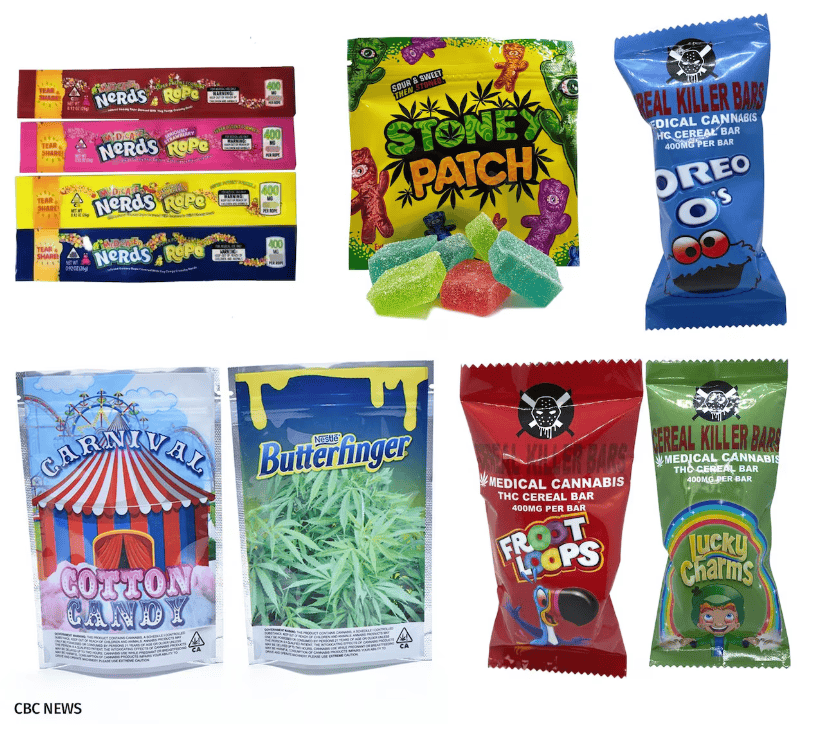
Children ingest marijuana, in part, because the marijuana industry infamously make their products appealing to children — creating vape juices with 91% THC concentration in flavors like watermelon or edibles mimicking the packaging of popular candies.
What groundbreaking medical benefits could justify further deregulating marijuana, when the expanding industry is already causing so much harm, particularly with the proliferation of hemp THC?
The Daily Citizen isn’t sure. According to the UCLA analysis, evidence shows marijuana successfully treats only three medical conditions:
- Appetite loss caused by HIV/AIDS.
- Nausea and vomiting caused by chemotherapy.
- Some pediatric seizure disorders.
Beyond these illnesses, researchers concluded evidence “does not support the use of cannabis or cannabinoids for most conditions for which it is promoted, such as acute pain or insomnia.”
Marijuana consumption harms American citizens, as Focus on the Family President Jim Daly pointed out in December. Deregulation exacerbates these harm and perpetuates industry lies that marijuana products can cure everything from sleepless nights to chronic pain.
If the Trump administration wants to prevent addiction and prioritize recovery, as it articulated in the Great American Recovery Initiative, it should focus on closing regulatory loopholes which allow the marijuana industry to market to children — not making dangerous drugs even more accessible.
Additional Articles and Resources
Help With Substance Abuse and Addiction
Talking With Your Teens About Drugs and Alcohol
President Trump Unveils Plan to Combat Drug and Alcohol Addiction
Focus’ Jim Daly to Pres. Trump: Strongly and Unequivocally Oppose Reclassification of Marijuana
President Trump Loosens Restrictions on Marijuana — But the Grass Isn’t Greener on the Other Side
THC-Laced Snacks Marketed to Kids, Hemp to Blame
Marijuana Causing Psychosis in Young People, Legacy Media Late to Party
JD Vance Celebrates Mother’s 10-Year Sobriety at White House: ‘You Made It’
New Law Increases Penalties for Manufacturing, Distributing Fentanyl


![Hegseth Demands Fitness Requirements, Says 'Fat Troops' 'Not Who We Are' [WATCH]](https://teamredvictory.com/wp-content/uploads/2025/09/Hegseth-Demands-Fitness-Requirements-Says-Fat-Troops-Not-Who-We-350x250.jpg)