Recently, I read an author’s claim that “as Christians we can’t simply ignore politics. We’re supposed to be leaven in the world. So we can’t just retreat to the hills as St. Benedict did.”
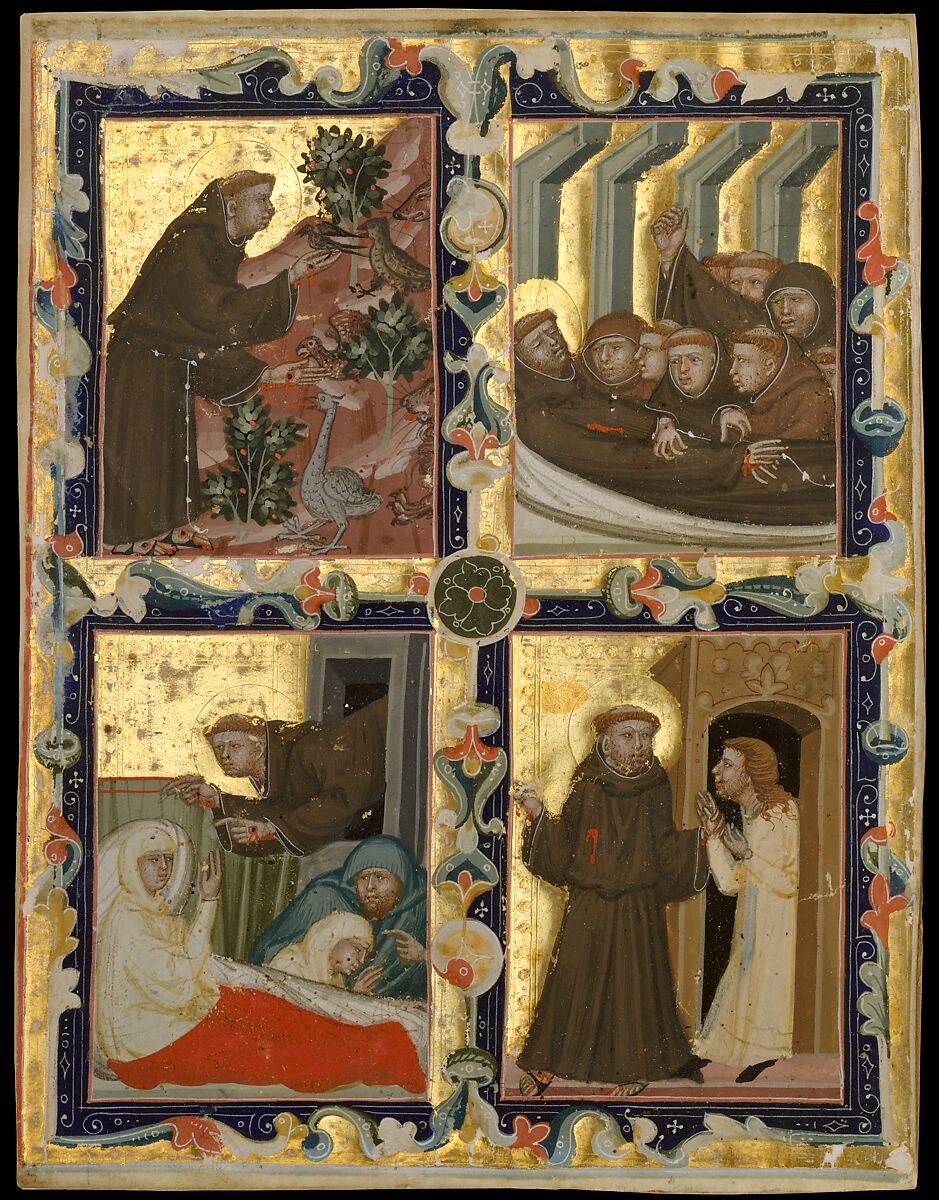
Actually, people nowadays do “retreat to the hills” to live under the Rule of St. Benedict. Benedictine communities in many places, especially in the hills, are thriving; likewise Carmelites. So are orders such as the Dominicans, Franciscans, and others who blend retreat from the world with action in that world. They are all a powerful leaven.
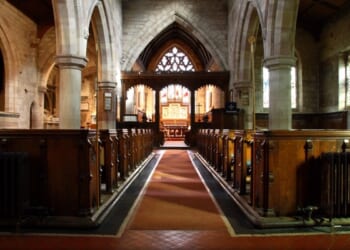
Maybe the author intended that as a throw-away shot at the so-called “Benedict Option,” with its much-discussed merits and blindnesses. But he seemed to convey implicitly that contemplative life is obsolete. Yet the Catechism still endorses this life, even in the case of hermits, whose retreat is perhaps the most severe.
The author paraphrased Pope Benedict XVI in support of Christian political engagement. Pope Benedict was also a loving advocate for contemplative life. His burial ring bore an image of St. Benedict, “founder of Western monasticism and patron of my pontificate.”
Speaking to Carthusians with their profound solitude and silence, he described the “deep bond . . .between pastoral service to the Church’s unity and the contemplative vocation in the Church.” He went on:
Dear brothers you have found the hidden treasure, the pearl of great value (cf. Matthew 13:44-46); you have responded radically to Jesus’ invitation: “If you would be perfect, go, sell what you possess and give to the poor, and you will have treasure in heaven; and come, follow me” (Matthew 19:21). Every monastery – male or female – is an oasis in which the deep well, from which to draw “living water” to quench our deepest thirst, is constantly being dug with prayer and meditation.
Benedict’s predecessor, Pope John Paul II, no stranger to political engagement, offered similar thoughts on both Eastern and Western contemplative life in his 1996 Apostolic Exhortation Vita Consecrata:
Men and women hermits, belonging to ancient Orders or new Institutes, or being directly dependent on the Bishop, bear witness to the passing nature of the present age by their inward and outward separation from the world. By fasting and penance, they show that man does not live by bread alone but by the word of God (cf. Matthew 4:4). Such a life “in the desert” is an invitation to their contemporaries and to the ecclesial community itself never to lose sight of the supreme vocation, which is to be always with the Lord. Institutes completely devoted to contemplation, composed of either women or men, are for the Church a reason for pride and a source of heavenly graces. By their lives and mission, the members of these Institutes imitate Christ in his prayer on the mountain, bear witness to God’s lordship over history and anticipate the glory which is to come.

The kind of reflexive rejection of contemplative life that I noted above sometimes comes from those who, at the end of careers in or near the political maelstrom, find themselves wondering what it was all about. What gaps does a life of intense concern with that “passing nature of the present age” leave, especially for those whose hopes of progress in the earthly city may have been more expansive than St. Augustine told us to expect?
“My kingdom is not of this world” can’t be shrugged off while looking at the latest polls.
But the author I’ve cited touches on a real problem. How is it possible to live a more contemplative life if heading for the hills is not a “realistic” option in one’s circumstances? That can be especially urgent for those who find themselves both repelled – negatively – by what now passes for politics and reason in our culture, polity and Church, and called – positively – to closer union with God.
One rich source to consider this question is the work of Fr. Donald Haggerty of New York. In his book, The Contemplative Hunger, Fr. Haggerty wonders if a “contemplative revolution” might be taking place in the Church that “does not just come from the contemplatives praying in cloisters and monasteries.” We may be in an age when many are drawn to greater silence and solitude, and Fr. Haggerty offers much to aid those who feel that pull.
In a related book, The Hour of Testing: Spiritual Depth and Insight in a Time of Ecclesial Uncertainty, Fr. Haggerty asks if the confusion propagated by some Catholic authorities who betray unchanging truths of the Magisterium might bring a realization that the Church is undergoing a Passion from within, perhaps even a final representation of Christ’s suffering.
Some Catholics will find in this age a call to contemplation and greater asceticism, in the hills or in their cities:
With the secular culture darkened by a hostility to truth, and the Church perhaps in her leadership demonstrating little moral courage, souls of God may have one of two options. In rare cases, they can choose some form of separation from society and a life of greater solitude and prayerful silence. The other possibility is to remain in the world, but while living in the world to embrace a commitment to prayer that would seem inappropriate and excessive in more ordinary times. . . .The contemplative souls in a last era of the Church will be servants of a holy preservation of the faith in a manner like the monastic scribes in the monasteries of the Dark Ages.
These contemplatives should be prepared to be called strange or anti-social or cowardly or irresponsible or lazy or worse, while their surrender to God will render them “unfit for mere worldly living.” Yet they will be exactly the leaven that the Church and the world need desperately at this moment.