
A federal judge on Wednesday partially blocked the Trump administration’s overhaul of the Teen Pregnancy Prevention Program, preventing the Department of Health and Human Services from applying new criteria that prioritize abstinence, marriage, and fertility awareness when awarding future grants.
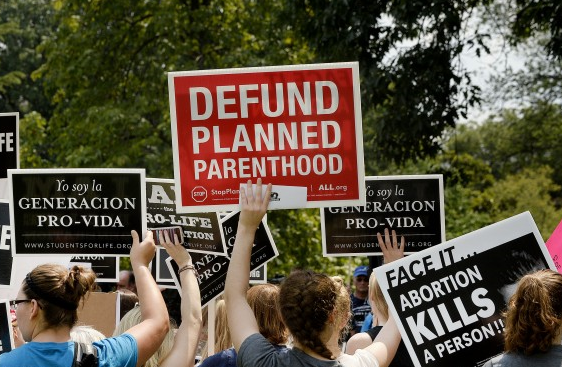
But the defunding of the Planned Parenthood abortion business’ sex ed programs stays in place for now.
Judge Christopher Cooper, an Obama appointee sitting in Washington, sided in part with the Sexuality Information and Education Council of the United States, a Planned Parenthood chapter that covers Iowa and Nebraska, and the governments of Hennepin County, Minnesota, and King County, Washington. Those parties sued after the administration terminated funding for most existing programs earlier this summer.
In his ruling, Cooper wrote that the Trump administration “is perfectly entitled to formulate its own views about how to stem teen pregnancy — or even whether it is worth preventing at all — and to pursue policy initiatives consistent with its viewpoint. But it is not at liberty, under the Administrative Procedure Act (‘APA’), to impose conditions on grant recipients that Congress did not intend or that are unreasonable or unexplained.”
Follow LifeNews.com on Instagram for pro-life pictures and videos.
The preliminary injunction stops HHS from using the new criteria for future grants while the lawsuit proceeds.
Still, the ruling does not restore tens of millions of dollars previously cut from groups like Planned Parenthood that had received funding for programs critics described as graphic and sexually explicit. Those cuts remain in place while the pro-abortion groups’ lawsuit continues.
Cooper declined to reinstate the terminated funds, expressing uncertainty about his authority to do so.
In June and July, HHS ended approximately $67 million in Teen Pregnancy Prevention grants to 53 of 67 Biden-era recipients, including Planned Parenthood affiliates, state and local health departments, and other nonprofits. Officials determined that many curricula were “medically inaccurate,” “age-inappropriate,” and “sexually explicit,” violating the program’s statutory mission.
A termination letter stated that some materials “normalize adolescent sexual activity and are not age appropriate, as they contain overly sexually explicit or pornographic content that is not necessary to achieve the TPP program’s statutory mission.”
Examples cited in reports on the cuts included role-play scenarios about condom use to avoid HIV, stories of teens “hooking up” and pressuring partners for sex, discussions of pornography including abusive content, and instructions for teens on obtaining and practicing with condoms.
The administration argued such approaches normalize sexual activity for minors rather than equip them for healthy choices.
Under the revised priorities, OASH stated it would ensure materials are “age-appropriate” and “do not promote harmful ideologies, such as gender ideology and discriminatory equity ideology.” Programs must not promote “obscene, indecent, or sexually explicit content, including content that encourages, normalizes or promotes sexual activity for minors.”
New guidance requires teaching abstinence as the only means to prevent teen pregnancy, stressing the importance of marriage and procreation, and instructing young people on safeguarding fertility, with limited emphasis on contraception and STI prevention.
Pro-life advocates and supporters of sexual risk avoidance education welcomed the original cuts as a long-overdue shift.
Quena González of the Family Research Council said, “The fact that some professional sex ed providers who receive millions of dollars in federal funds are complaining that these priorities are now required to continue receiving taxpayer dollars should alarm parents and enrage taxpayers. We shouldn’t be allowing, much less paying for, schools to tell students, ‘We know you’re going to experiment, wink wink, so here’s how to derive the most sexual pleasure from underage sex.’”
He added that insisting taxpayers fund lessons for middle schoolers on sexual consent, pleasurable condom use, or IUDs “is just plain creepy.”
Valerie Huber, president of the Institute for Women’s Health, called the pivot a relief “mostly for the young people.” She noted that sexual risk avoidance is now treated as a legitimate public health goal for adolescents, consistent with approaches to other youth risk behaviors: “We do not teach teenagers to smoke carefully. We tell them the truth about risk, and we help them stay at no risk or move from high risk to low risk to no risk.”
Huber argued prior programs positioned outside providers, including abortion organizations, as trusted adults while treating parents as obstacles, and measured success primarily by births and birth control use while adolescent emotional and social health declined.
Dr. Michelle Cretella cited a review showing sexual risk avoidance education aligns with the CDC’s acknowledgment that abstinence is the only 100% effective way to prevent STDs and pregnancy. Effective programs, she said, are medically accurate, discuss contraceptives, and help students commit to abstinence without decreasing contraceptive use among those already sexually active.
Plaintiffs in the lawsuit accused the administration of forcing “non-evidence-based curricula that exclusively promote abstinence-only before marriage” and “ideologically-driven, medically inaccurate information, including misinformation regarding contraception.”








![WHAT POLICY? Crockett Trips Through MS NOW Softball Question on Her Agenda if Elected to Senate [WATCH]](https://teamredvictory.com/wp-content/uploads/2025/12/WHAT-POLICY-Crockett-Trips-Through-MS-NOW-Softball-Question-on-350x250.png)