The lawyer for Lindsay Clancy, charged with strangling her three young children to death, is asking a judge to investigate the lone juror who blocked an acquittal and forced a mistrial.
Attorney Kevin Reddington is seeking a review of that juror’s phone use during deliberations.
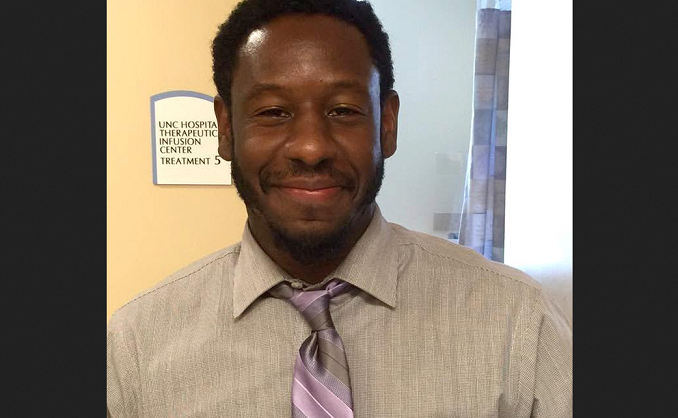
Reddington filed a motion seeking a “limited inquiry” into the holdout, identified in public reports as Michael P. Desronvil, 48, of Bridgewater, Massachusetts. The filing asks the court to preserve questionnaires, hallway surveillance video outside the deliberation room and cellphone sign-in sheets for all 12 jurors and six alternates.
It also seeks Desronvil’s questionnaire and supplemental filings, probation records, his record in the statewide domestic violence registry, phone records from 8:30 a.m. to 4:30 p.m. on each deliberation day, and an independent examination of his phone use in that period.
Reddington asked that prosecutors say whether they have had contact with the holdout as a defendant, complainant or subject going back to January 2021. He wants the juror questioned, on the record and with lawyers present, about the truthfulness of his questionnaire and voir dire answers, his statements to the court on September 3, and whether he used a phone or outside information while the jury was out.
HELP LIFENEWS SAVE BABIES FROM ABORTION! Please help LifeNews.com with a donation!
The motion says Juror No. 10 could be heard “limited to what he observed of Juror Doe’s phone use.”
The court had referred to the holdout as “Juror Doe” under an order protecting jurors’ identities, though his name has already been revealed.
“The inquiry will not touch the substance of deliberations,” the motion states.
Judge William Sullivan declared a mistrial September 4 after more than 38 hours of deliberations.
Notes to the court indicated an 11-1 split. Eleven jurors were prepared to find Clancy not criminally responsible by reason of mental illness or defect. Desronvil was not and said he never had “reasonable doubt” about whether Clancy killed her children and should be held accountable.
Neither side disputed that Clancy strangled 5-year-old Cora, 3-year-old Dawson and 8-month-old Callan at the family’s Duxbury home on Jan. 24, 2023, then slashed her wrists and jumped from a second-story window. She was left paralyzed.
She faces three counts of first-degree murder. Prosecutors argued she acted deliberately and knew that killing the children one by one with exercise bands was wrong. The defense said she was in the grip of postpartum psychosis, had sought help and should not be held criminally responsible.
For those who hold that the law must answer for the taking of a child’s life, the stakes of the 11-1 split are plain. Cora, Dawson and Callan are dead. Had the majority prevailed, there would have been no finding of guilt in their killings.
Desronvil later said through interviews that he never harbored the reasonable doubt other jurors attributed to him.
Ray Marcel of Fugitive TV told NewsNation that Desronvil “felt that she was sane when she did it. And that’s exactly what he told me.”
Marcel said the juror told him from the first day “that he always felt that she was guilty, and he never displayed or said anything about reasonable doubt.”
Marcel recounted Desronvil’s description of the first vote: “He said that from day one, he said eight of them were going for Lindsay Clancy not guilty. That was on day one. Eight were going not guilty. Two were for guilty. And two didn’t know. They didn’t make up their mind. He said to him those eight felt like they were activists. … The eight that felt that Lindsay was not guilty were trying to convince the other four, ‘Hey, Lindsay is not guilty.’”
Foreman Roni Carlson told NBC 10 Boston that Desronvil had reasonable doubt but would not explain why and failed to apply the court’s instructions. Other jurors said he ignored them.
Juror Paula Devlin, 65, told the Daily Mail the holdout made “no sense” when pressed, was “quiet” for most of the week and spent more energy policing the tone of discussion than explaining why he believed Clancy was guilty.
“The main thing he focused on is sometimes we would all want to talk at once, and that was very upsetting to him,” Devlin said. “He would get upset and say, ‘Listen to what she’s saying, listen to what he’s saying, be respectful.’”
Desronvil has said he disclosed a past arrest when he was chosen and that “I did not lie on the questionnaire.”
A 2021 charge that he assaulted his then-wife was later dismissed. He has said he was not convicted and that some claims about his background were incomplete, partly true or false.
After the mistrial he was publicly identified, doxxed and, according to reports, threatened. He has retained a lawyer.
Reddington has separately asked the court to overrule the holdout and enter a not-guilty finding, a motion legal specialists say rarely succeeds. Prosecutors have not said whether they will try the case again. A hearing is set for Sept. 29.
The three children cannot be heard in that courtroom. The defense that failed to win a unanimous finding of no criminal responsibility is now asking the court to examine the one juror who said their mother knew what she was doing when she killed them.
Pro-life writers have called that reaction a moral inversion: compassion for a mother who killed her children, with far less public focus on Cora, Dawson and Callan themselves.
Journalist Caitlin Flanagan wrote that “what began as admirable compassion for a woman who says she was driven by mental illness to commit the world’s greatest form of evil has turned into something strange: an almost exultant, fan-like celebration of Lindsay Clancy.”
Paul Batura of Focus on the Family argued that a culture already trained to treat a child’s death as secondary to a mother’s distress — first in abortion, then in cases like this one — struggles to say plainly that killing children is wrong even when the mother is ill. Postpartum mental illness is real, he wrote, but “an individual can be mentally ill and still criminally responsible.”
Abby Johnson, CEO and founder of And Then There Were None and ProLove Ministries, who herself experienced postpartum psychosis after the birth of one of her children, said the intense identification with Clancy reveals a deeper moral distortion long cultivated by abortion advocacy.
“I am not arguing that compassion for Lindsay is wrong…What concerns me is something different. We have become extraordinarily practiced at looking at a dead child and asking first what his or her mother was going through. And abortion taught us how to do that. For decades, the defense of abortion has depended on shifting the moral center of the story away from the human being who dies and toward the human being experiencing the crisis. The mother’s suffering becomes the justification. But suffering does not make killing good,” Johnson wrote.
Johnson stressed that mental illness may affect legal culpability without changing the moral nature of the act.
“Mental illness may affect a person’s culpability for an act. It does not change the moral nature of the act itself,” she said. “Cora was five years old. Dawson was three. Callan was eight months old. Their mother killed them.”
Johnson argued that culture has spent more than 50 years training itself to begin with a mother’s fear, financial stress, lack of support or depression until the child’s humanity nearly disappears—first in abortion and now in cases like this one.
“We can demand better postpartum mental-health care in their names. We can acknowledge that their mother may have been gravely ill. We can pray for Lindsay,” Johnson wrote. “None of that requires us to forget where the greatest irreversible harm occurred. Three children went to bed on January 24, 2023, in the home where they were supposed to be safest. They will never get to grow up.”
Cora, Dawson and Callan cannot be allowed to become peripheral to their own story.