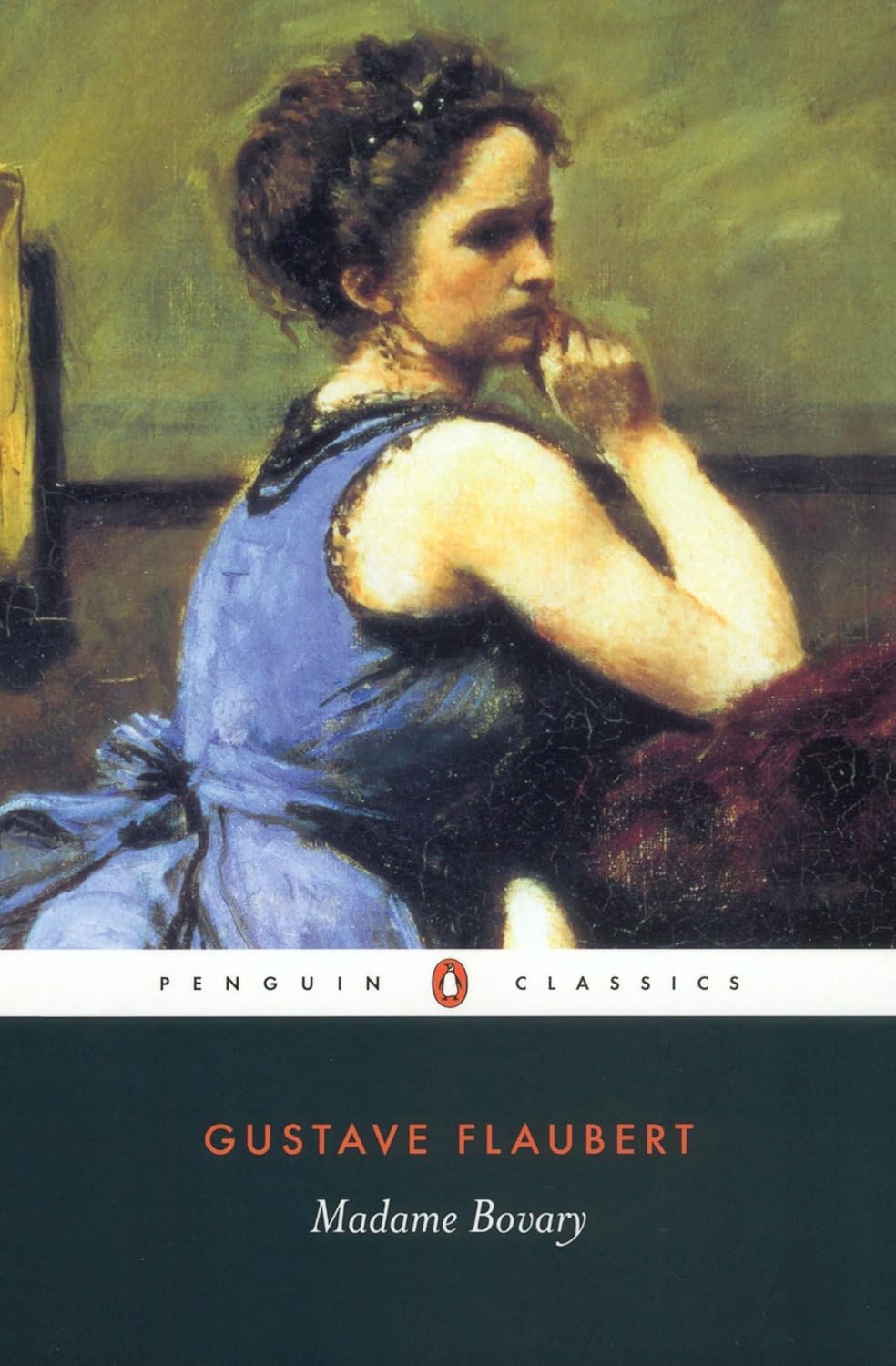
When the classic French novel Madame Bovary first appeared in 1856, public prosecutors tarred the serial novel as obscene – outrage aux bonnes mœurs et à la religion (“an outrage to public morality and religion”) – given author Gustave Flaubert’s intimate portrayal of a bored bourgeois woman enmeshing herself in multiple extra-marital affairs. As these things often go, the ensuing trial of Flaubert only elicited more public attention for the book, and after his acquittal the following year, it became a bestseller. When it was translated into English two decades later, Madame Bovary became a global phenomenon. The irony, today, is that Flaubert’s description of Bovary’s sensual escapades would barely merit a “PG” rating.
The Catholic Church doesn’t come off particularly well in Flaubert’s celebrated masterpiece. Uneducated lay Catholics are described by one character as adhering to “prejudices” and “traditional ways,” relying on their “novenas, and relics, and the curé. . .rather than finding it natural to go and see the doctor or the pharmacist.”
Pious Catholic literature is described as “condescending,” “sentimental,” and “saccharine.” The local curé is portrayed as ignorant but self-assured, incapable of effectively defending the old religion against Enlightenment-influenced skeptics.
Whatever Flaubert’s intentions with the novel, literary critics in the more-than-century-and-a-half since Madame Bovary’s publication have noted that the titular character is actually quite banal, a morally and intellectually stunted individual who is ridiculous and unhinged the further she descends into her sins.
She is the embodiment of the romantic – both her intellectual and moral life are entirely detached from the people and world around her. And, in that sense, she very much sounds like the immature, atomized, digitally-addicted modern self.
We are all well-aware of the effect of smartphones on the human attention span and cognitive performance, a fact increasingly well-documented by empirical research. Both smartphones and social media also distort our conception of reality and relationships towards the extreme or idealized, given their tendency towards a filtered, curated self-presentation and algorithmic amplification.
Once, it was commonplace to speak to a stranger in public; now, it’s considered awkward and even potentially rude to interrupt a person glued to his or her device. There’s even a word for snubbing other people in favor of smartphones: “phubbing.”
Then there’s the emotional and intellectual dangers posed by artificial intelligence. Recently published research from the Institute for Family Studies and the Wheatley Institute at Brigham Young University discovered that one in seven young adults in committed relationships routinely communicate with artificial intelligence as a romantic companion. Almost a third of respondents had experimented with one of these romantic bots at least once.

Interpreting that data in light of an ongoing pornographic addiction epidemic, we are talking about generations of Americans whose conceptions of romance and intimacy are alarmingly untethered from reality, focused on idealized fictions that infantilize and morally impoverish the user. Artificial romantic partners and pornography videos cater to one’s narrow and (often) progressively depraved desires.
Those who succumb to these temptations are certainly ill-prepared not only for the challenges (and wonders) of true relational intimacy; they’re also ill-conditioned for the spiritual life, which requires a capacity for contrition and contemplation.
All of this we see in the character of Madame Bovary. As married life becomes drudgery, she develops an obsession with sentimental novels that fosters a highly romanticized conception of the world. This, in turn, leads her to hedonistically crave beauty, wealth, status, and unmitigated passion.
Flaubert poignantly portrays the instability this causes: “She longed to travel; she longed to go back to her convent to live. She wanted to die, and she wanted to live in Paris.” Over time she is barely capable of concealing her contempt for people or her circumstances, and develops a habit of needlessly provoking others.
In the course of her romantic affairs, Madame Bovary increasingly ignores her young daughter – the mother is simply too self-absorbed, too beholden to her impulsive whims and affections. Of her liaisons, Flaubert writes: “No longer was it love; it was more like a perpetual seduction. . .she was the beloved of every novel, the heroine of every drama, the vague she of every volume of poetry.”
In her mind, Bovary is acting out some version of the fantasies she has read; in truth, she is ruining her soul and her marriage.
As time passes, Madame Bovary’s sexual liaisons require additional sins. Lies are not only necessary to preserve the secrecy of her dalliances, they become “an obsession, a pleasure.” She spends profligately on sumptuous clothes and food during her weekly sojourns to the city where she meets her second lover.
She flies into tempers and is peculiarly erratic. There is an addictive quality to her romantic affections, and she seems to go through periods of withdrawal when separated from her lovers. For her sins, her ultimate end (and that of her family) is misery.
We are more than two decades into our grand global experiment with social media. Our relationship with smartphones is almost as old. The age of artificial intelligence has only just begun, and the initial effects on our souls and relationships are not promising.
We sense that these technologies are making us, like Madame Bovary, more impulsive and scattered, less grounded, peaceful, and content. Even worse, we see all that, and yet often cannot avoid its intrusion into every element of daily life.
Our world is taking on the self-destructive qualities of Madame Bovary, as the pope’s recent encyclical implicitly warns us. Impressionable youth, most susceptible to the depression, anxiety, and self-worship engendered by modern tech, need both a lifestyle and worldview that is, if not Luddite, at least suspicious of anything that separates us from others, from the natural world, and, most saliently, from the divine.
Given how leaders in the tech industry are describing their anticipated future, we have every reason to be wary. “Touch grass.” “Go into your room and shut the door, and pray to your Father” (Matthew 6:6). And read Madame Bovary. For Flaubert was on to something.