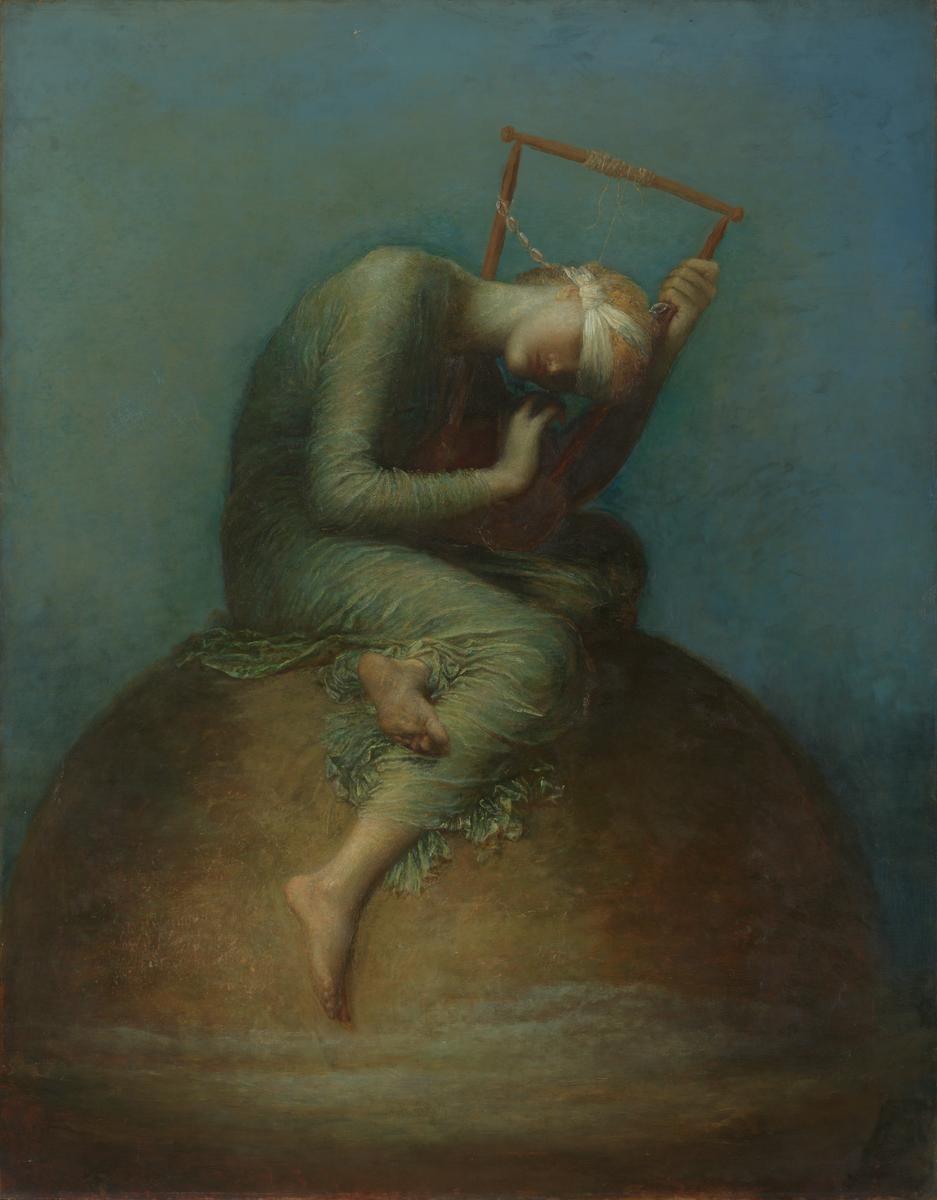
French existentialist Gabriel Marcel called hope “the stuff of which the soul is made.” Dante marked the entrance to Hell by its absence: Lasciate ogni speranza, voi ch’entrate (“Abandon all hope, you who enter here.”)
Civilizations are not often measured in terms of hope. We are more inclined to judge them by military might, political stability, or economic outputs – all of which are fair metrics, in a way. Yet at a moment when many argue that Europe and the United States are forgetting their civilizational roots and in need of a revival of faith, love, and law, there’s a deeper, lingering question: What kind of future do our people believe is possible?
As an American who travels to Europe frequently, I have noticed how many Americans visit Europe seeking inspiration from her Christian past. Yet when it comes to the present, I have also noticed how many Americans comment that Europe appears worse off in terms of economics, the practice of the Faith, respect for life, birthrates, and optimism about the future.
And yet, as true as this might be, I’ve found increasing reason for hope, not because of Europe’s institutions, economies, or politics, but because I’ve come to know her Christians.
More than most Americans, my own life since childhood has been deeply intertwined with Europe. I spent my formative years in Slovenia and Germany and fell in love with the opera, literature, and rich history of the Old World. When I moved to Edinburgh to begin my master’s degree, I went to Mass at St. Albert’s, which served as the home of the university’s Catholic Student Union.
Under the wise and intellectual leadership of Dominican priests, I met Catholics from all over Europe whose witness of charity and appreciation of their glorious inheritance inspired me to place the Faith at the center of my life. Still, as beautiful as were the Latin liturgy and the weekly concert Masses at St. Mary’s Catholic Cathedral, they were secondary to the transformative effect of the witness of my Catholic friends.
I realized during that time how small the practicing Catholic community had become, even within one of Europe’s leading universities. Of 49,000 students at the University of Edinburgh, the chaplaincy has probably around 100 weekly student visitors: about 0.2 percent. From a number’s standpoint, that is not a good ratio.
And yet, the faith has never been solely about numbers. The future of Catholic Scotland or Christian Europe, if it is to have one, will depend far less on the number of registered members, or even the preservation of its structures. I believe it depends on the fidelity of its Christians.

It was first in Edinburgh that I encountered the living faith of European friends who loved their Christian inheritance and choose every day, to witness to it and defend it. Their witness is an inspiration beyond words – they believe in miracles, and even amidst the world’s brokenness, in the triumph of the heart over all else. In Charles Peguy’s poetry, he imagined God saying, the “faith that I love best is Hope” because “my children see what happens and believe things will improve.”
On my side of the Atlantic, most conversations about Europe today are fatalistic. Many are convinced that widespread secularization, demographic decline, the influence of Islam, and mass migration have already settled the question of whether Europe has a future, let alone a strong one. I find myself far less doubtful than many of my counterparts in Washington, D.C. There is no denying the darkness of our present age – but still, I find myself hopeful.
Hope is a misunderstood theological virtue. It is often mistaken for optimism, which depends upon favorable circumstances. Hope does not. St. John Paul II turned repeatedly to young people, calling them “the future and the hope of the Church and of the world.” His words describe people I have been privileged to know.
My Christian European friends are not necessarily winning the “culture war,” but they are definitively refusing to become deformed by the prevailing culture. They have every reason to despair, but they do not. Their center of gravity is far from anything that could be defined as grievance, though they’d have a right to that seeing as how their institutions have failed them. Instead, they are rather animated by a belief that the Gospel is true.
Aside from living the truth, many choose to work in defense of their faith tirelessly in private, in public, creating ventures to defend what they know is true. They are magnanimous souls, who make friends and evangelize without aggression.
In Edinburgh, I had friends younger than me (twenty-three at the time) who had sponsored several young Catholics into the Church. One friend in Slovakia met a fellow weightlifter at his gym, and a year later, he stood beside him as his sponsor into the Catholic Church. I’ve witnessed my friends in Europe pray often, marry young, observe the sabbath, and build extraordinary community. One cannot spend much time among them without being reminded of the first Christians of the early Church.
The Roman Empire demanded that Caesar be acknowledged as Kyrios – Lord. The third-century Christians quietly refused, and though many of them were killed, their martyrdom is the reason we have our Church today. Václav Havel, writing nearly two millennia later, in “The Power of the Powerless,” argued that we all possess extraordinary strength when choosing to simply live as though Christianity were true.
That’s the ethos of Romans 5:5: “And hope confoundeth not: because the charity of God is poured forth in our hearts, by the Holy Ghost, who is given to us.” I have seen that hope poured into the lives of ordinary Christians across Europe.
They are not waiting for history to become favorable before living faithfully. Civilizations are ultimately renewed the same way they were first built: one soul, one family, one church, one saint at a time. That is why I remain hopeful for Christian Europe.