Among the greatest challenges that Jesus poses to His disciples are His prescriptions on wealth. On the one hand, Jesus extolls poverty. He begins the Beatitudes with the declaration, “Blessed are the poor in spirit, for theirs is the kingdom of heaven.” Elsewhere in the Gospels, He tells a rich man to give away all his possessions since “it is easier for a camel to pass through the eye of a needle than for someone who is rich to enter the kingdom of God.”
On the other hand, Jesus also acknowledges the need for productivity, especially in the parable of the talents, where the third servant is punished for not generating a profit with the one talent with which the master had invested him. Jesus also recognizes the need to pay taxes to Caesar (“Render unto Caesar what is Caesar’s”) and even does so Himself without complaint.
Christians have traditionally reconciled these two views by treating money as a means and not an end. You should indeed work and produce wealth, but must never idolize money or fall into greed.
Unfortunately, instead of maintaining this balance, Catholic progressives (among others) now idolize the poor and condemn wealth. They, therefore, ignore the actual causes of poverty (social and political dysfunction, lack of education, indolence, addiction and vice, etc.), and focus their ire on the ultrawealthy and capitalism because this fits a false political “narrative.”
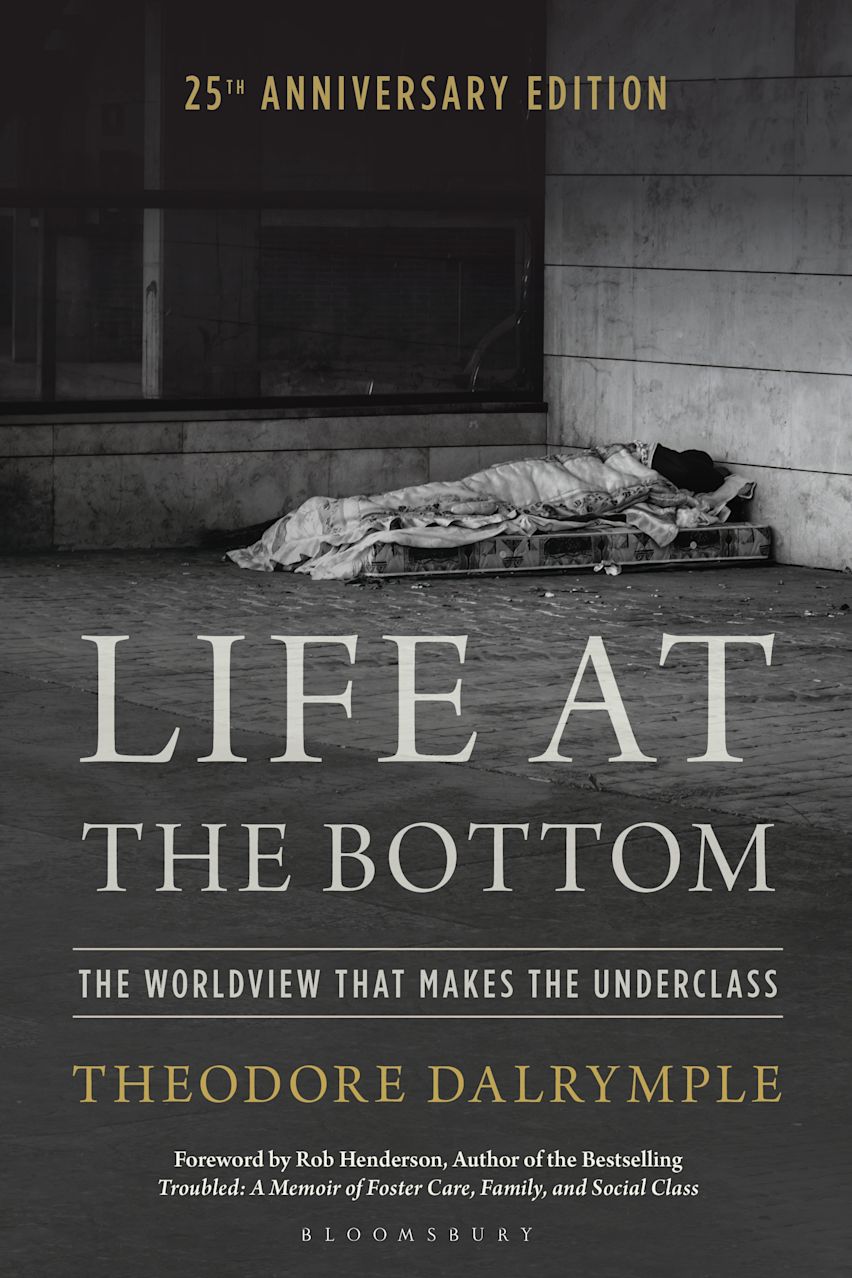
The main problem with this view, however, is that it frames poverty as a material rather than a spiritual phenomenon. In truth, behind every rich tycoon and penniless pauper is a story that involves certain beliefs, values, and perceptions, i.e., the immaterial part of themselves. To better understand this dynamic, one would do well to read Theodore Dalrymple’s modern classic Life at the Bottom: The Worldview That Makes the Underclass.
As a psychiatrist working in the slums and prisons of England, Dalrymple was close enough to see what really afflicts the poor. It is usually not various systems of “oppression,” the lack of economic opportunities, or the rise in CO2 levels; it’s more often an attitude that rejects discipline, gratitude, and personal agency.
Of course, Dalrymple recognizes that this mindset does not arise spontaneously, but has been inculcated by popular media, public education, and ideologues and demagogues. Growing up in unstable households, rife with domestic abuse, alcoholism, and criminal neglect, the children who make it to adulthood are completely unequipped to cope with reality and blame others for their problems. They cannot control impulses, work a steady job, or make sacrifices. Many of them cannot read, write, or do arithmetic, and few of them are part of a religious community.
As a result, hardly anyone in this class has a moral compass to guide them. When Dalrymple talks to a group of murderers in a prison where he worked, he notes they were “so convinced of the gross injustice of the world that they were convinced also that nothing they did themselves could add significantly to its sum.”
This distorted moral outlook also comes out in many stories of women staying with abusive and unfaithful men because they learned to equate love and commitment with lust and wrath: “In the absence of a marriage ceremony, a black eye is his promissory note to love, honor, cherish, and protect.”
Many souls are thus condemned to live in squalor in an otherwise developed country like England. The men end up unemployed and frequently in prison; the women have children out of wedlock and continue coupling with different partners; and the children internalize the chaos around them, forming gangs, bullying others, and committing crimes with impunity.
Sadly, this situation is only made worse by the poor’s supposed champions in the British upper classes. Like their counterparts in America, they call for more welfare payments, more social services, more subsidized housing, and less policing.
They believe that poverty is determined by outside factors, not a distorted worldview. In their minds, poverty, addiction, and violence simply descend on this class of people like a plague, so it seems best essentially to quarantine them in a ghetto and offer them assistance from afar.
Above all, there can be no judgement, as this “would be tantamount to admitting that one way of living is preferable – morally, economically, culturally, spiritually – to another. . .a thought that must at all costs be kept at bay, or the whole ideology of modern education and welfare collapses in a heap.”
Although Dalrymple has much to say about the lives of the poor, he is relatively quiet about what to do about their misery beyond reintroducing basic accountability measures, such as putting criminals in jail, improving public education, and getting men to work and women to stop having children with deadbeats.
Anyone who feels a deep need to help the poor, however, can follow Dalrymple’s example and actually work in these neighborhoods – if they can stomach the unpleasantness and hypocrisy.
More likely, Dalrymple wants his reader at least to come to their own conclusions about what to do for the poor in their own communities by providing a clearer view of who these people are. They are not the helpless victims of plutocrats, nor are they saints holding the moral and spiritual high ground.
Like all of us, they are people who need to repent of their sins so that they can live more worthy lives here on earth and ultimately enter the Kingdom of Heaven.
In other words, more than material assistance, economic opportunity, and public esteem, they need faith, hope, and love. Otherwise, their largely self-induced suffering will continue unabated while the means of salvation disappears.
Perhaps this is why Jesus said, “The poor you will always have with you, but you will not always have me.” This suggests that Christians should focus on sharing the fullness of the Gospel with the less fortunate instead of vainly trying to Christianize Marx – and getting nowhere.