St. John Henry Newman discovered, after much study, prayer. and pain, that the Anglo-Catholic, or Tractarian, concept of the Anglican Church as a via media between Catholicism and Protestantism, was ultimately a house built on sand, without foundation. There is still a small minority within that communion that advances the thesis. But with both female clergy, and now a woman occupying the throne of St. Augustine in Canterbury, that embattled band is like King Cnut vainly attempting to hold back the waves of the ocean.
An old joke, perhaps a little unkind, saw that the famous “middle way” was actually the ultimate fudge, an “on the one hand this, on the other hand,” that resulted in a position of perpetual fence-sitting, both extremely painful and rather embarrassing.
There is, however, a position much needed today in our discourse, certainly on that which used to be called the “printed page,” which is neither fence-sitting, nor a vain attempt to keep all sides happy by adopting an anemic position.
Hilaire Belloc, the greatest exponent since Jonathan Swift of the specialized form of writing known as the “essay,” wrote many essays with “On” in the title. He might write “On Cheese, On Laughter,” and “On Getting Rid of People,” to name a few. With that in mind, the position, or practice, needed today, especially by those committed to caritas in Veritate, not only those of the clerical order, but also those who claim to speak as Catholics, would be an attitude of moderation.
A timely example of this is opinion about the State of Israel. The very mention of this contentious topic is likely, depending on the position chosen, to reverse Dale Carnegie, and “lose friends and influence no one.” The moderate stance, entirely in keeping with revealed Catholic teaching and the Magisterium, would acknowledge the right of the secular State of Israel to exist, while discounting the extremes of a certain theology, which sees such a State as the fulfillment of Biblical prophecy.
It would also firmly reject any form of antisemitism, whilst at the same time holding to the eternal and unbroken teaching that the Catholic Church is the new Israel. This moderate stance will infuriate many, on all sides, and lead to loss of friendships from those unable to see through the red mists of prejudice and fear. To practice moderation is not a comfortable place to be, if all you want is to avoid conflict. But it is most certainly not a sign of weakness.
Moderation can, and should, also be seen in those who refrain from vulgarity and profanity, particularly in writing, but also in private. It’s unseemly to find Catholics using profanity on social media, or other forms of communication.
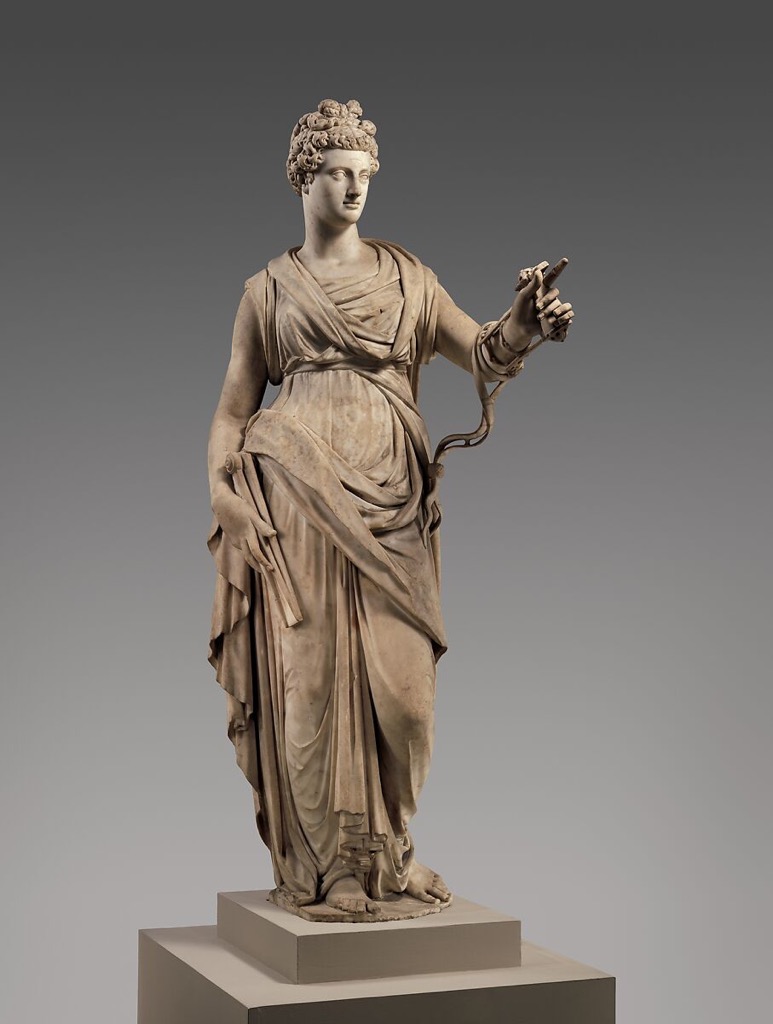
Why, we might ask, is moderation so difficult – and why, now, so necessary? Its very definition implies a sense of “keeping within reasonable limits,” with its etymology encompassing the idea of staying “within bounds.” That Middle English noun gives us a sense, not only of physical limits, but also of an unreasonableness that, if violated in conversation or writing, inflames rather than informs, and exacerbates rather than brings comprehension.
There are phrases and expressions that we know, are “beyond the bounds of decency.” But there are also polemical styles, very popular today, which do not serve the Common Good.
Moderation encourages us – along with its good companions: temperance and judiciousness. Temperance, we know, to be a virtue, in fact, a Cardinal Virtue, not only in matters of the appetites, but in word and action. Intemperate language may be all the rage, and may encourage clicks, and followers, for those known as ‘influencers,’ but it does not signify wisdom or civility.
Moderate but wise and erudite commentators may not command the highest viewing or listening figures in the illusory world of podcasts, but they will contribute more to intelligent discourse in the long term. And what they say will be remembered, long after the last influencer disappears into the fading mists of TikTok.
We Catholics, and those of the Orthodox faith, have our own brand of influencer: we call them saints. And whilst some were indeed fiery in language and tone, it was always in the service of the truth.
Judiciousness, that bride of moderation in the manner of public discourse, allows us also to resurrect a word more often denigrated today than celebrated: the other needed virtue of prudence. Denigrated because it is, falsely, seen as weakness, or an excuse for lack of action, including the spoken word.
Real prudence, however, is not appeasement, as in the case of silence for the sake of peace. That might indeed signal cowardice, not the robust Cardinal Virtue of prudence. Recall Churchill’s great definition of the appeaser as the “one who feeds the crocodile, hoping it will eat him last.”
Prudence and a judicious attitude prepare the ground before action, wisely consider all the options, and act with necessary restraint. The crocodile might certainly need to be tackled, but on our terms, not those of the reptilian.
Moderation is also an antidote to what we might call the “indolence of distraction,” in the words of John Philpot Curran, the Lord Mayor of Dublin who, like Benjamin Franklin, in 1790, actually spoke of the price of God’s gift to men of liberty, as “eternal vigilance.”
The fate of the indolent, Philpot said, was to see their rights “become a prey to the active.” The indolent distraction of punditry without profundity, and of intemperate communication, may enable a stealthy removal of liberty in the babble of our newly created “chatocracy.”
Benedict XVI, as he so often did, encouraged us to moderation, and its necessary partner, judicious and prudent silence. He wrote that: “silence at the right moment is more fruitful than the constant activity that only too easily degenerates into spiritual idleness.”
Might not only the meek, but also the moderate, inherit the earth?


![Hegseth Demands Fitness Requirements, Says 'Fat Troops' 'Not Who We Are' [WATCH]](https://teamredvictory.com/wp-content/uploads/2025/09/Hegseth-Demands-Fitness-Requirements-Says-Fat-Troops-Not-Who-We-350x250.jpg)