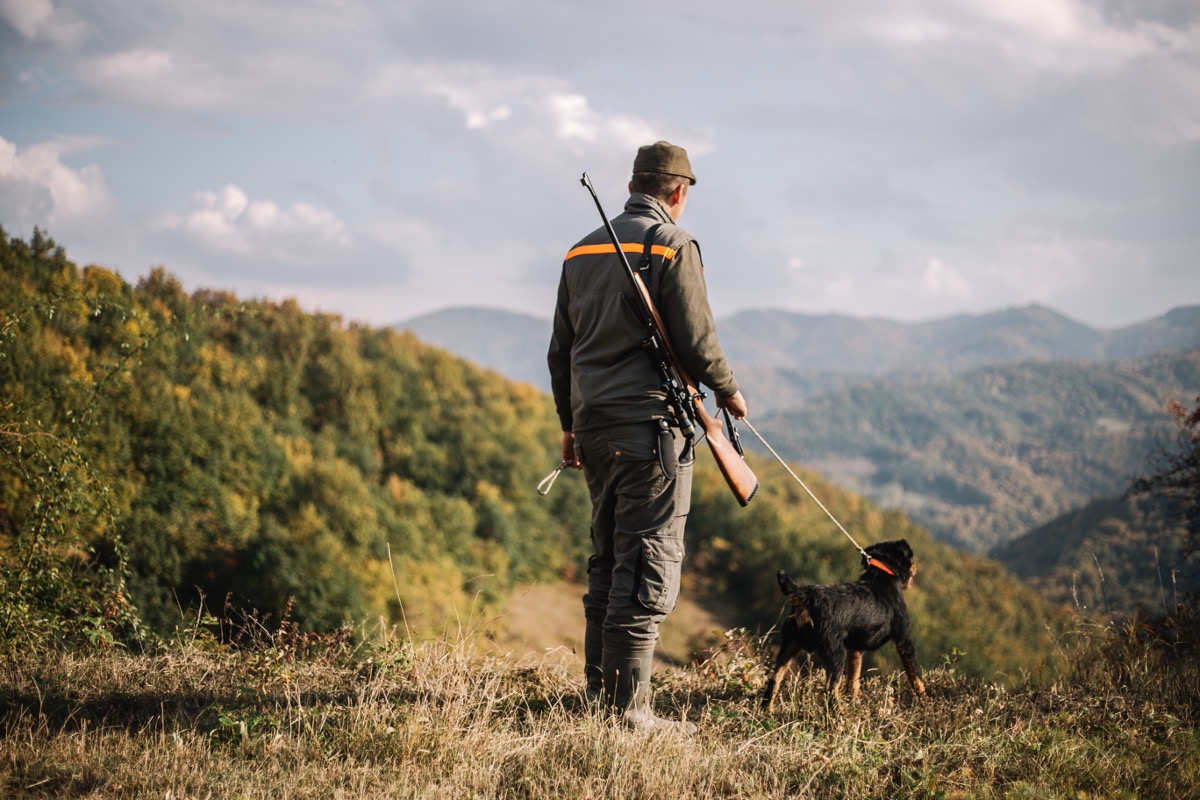
Oregon voters may soon decide whether the state will effectively criminalize many ordinary uses of animals, including hunting, fishing, trapping, livestock production, animal husbandry, and some forms of research. Initiative Petition 28 (IP28), also known as the People for the Elimination of Animal Cruelty Exemptions (PEACE) Act, is being promoted as an animal-protection measure, but its practical effect would be a sweeping assault on rural life, food production, property rights, and the responsible stewardship of God’s creation.
The proposal seeks to amend Oregon’s animal-cruelty statutes by removing many of the exemptions that currently protect lawful activities such as hunting, fishing, trapping, livestock slaughter, accepted animal-husbandry practices, scientific research, wildlife management, rodeos, and pest control. Under current Oregon law, those activities are generally not treated as criminal animal abuse, because they serve legitimate purposes in agriculture, food production, conservation, and human life. IP28 would substantially narrow those protections, leaving only limited exceptions for veterinary care and self-defense against immediate harm.
As of late May, IP28 supporters had submitted more than 120,000 signatures, exceeding the 117,173 valid signatures needed to appear on the November 3, 2026, ballot. Those signatures still must be verified by Oregon election officials, meaning the initiative has not yet been certified for the ballot. The deadline for an initiative to qualify for the November 3 election is July 2, meaning it is likely that Oregonians will be voting on it this fall.
Multiple attempts have been made to add a right-to-hunt/fish amendment (e.g., the failed 2016 initiated measure, HJR5 in 2023, and SJR13 in 2025). Twenty-four states currently guarantee the right to hunt and fish in their constitutions, with Vermont being first in 1777.
What IP28 Would Do
The PEACE Act defines an animal as any nonhuman mammal, bird, reptile, amphibian, or fish. By removing the exemptions in Oregon’s animal-cruelty laws, the measure would make it a crime to intentionally, knowingly, or recklessly injure or kill such animals except in narrow circumstances.
The “Yes on IP28” campaign states that the measure would criminalize the “injuring, killing, forced impregnation, and masturbation” of mammals, birds, reptiles, amphibians, and fish. It would also require all animals under human care to receive adequate food, water, bedding, shelter, and space to exercise, and would prohibit animal ownership by individuals convicted of certain animal-cruelty crimes.
In practice, the measure would effectively ban hunting, fishing, trapping, livestock slaughter, and many ordinary farming practices. Ranchers could still care for cattle, but they could not kill them for food or forcibly impregnate them for breeding. Hunting and fishing would lose their legal exemption, meaning the act of killing animals for food, recreation, or wildlife management would become criminalized. Animal experimentation, rodeos, 4-H and FFA programs involving breeding or slaughter, pest control, and wildlife management could also be heavily restricted or prosecuted under the expanded cruelty framework.
The measure would also expand Oregon’s animal-sexual-assault statute to include certain breeding practices, including contact with an animal’s sex organs for the purpose of impregnation or masturbation. For livestock producers who rely on artificial insemination or other reproductive-management practices, those activities could lead to criminal prosecution unless performed by a veterinarian.
A Threat to Agriculture and Food Security
Supporters of IP28, particularly “Yes on IP28,” argue that Oregon can meet human needs through plant-based alternatives such as crops, fruits, nuts, and vegetables, and other “non-harmful” methods. The initiative would create a Humane Transition Fund to provide grants for food assistance, income replacement, job retraining, conservation, and rewilding efforts for those affected by the law.
But this proposal misunderstands both economics and human nature. Agriculture is not merely an industry; it is a way of life, a source of food security, and a necessary part of civilization. Oregon farmers and ranchers raise livestock for meat, dairy, eggs, fiber, and other products that families rely on every day. Criminalizing the ordinary practices that make animal agriculture possible would not end demand for those products. It would simply drive production out of state, raise costs, undermine local farmers, and make Oregon more dependent on outside sources of food.
Whether intentional or not, this proposal also fits into a broader global attack on farmers, ranchers, and local food independence. Under the banners of “sustainability,” “climate,” and “food security,” international organizations and globalist entities have pushed policies aligned with the United Nations’ Agenda 2030 that restrict agriculture, undermine private property, and consolidate control over food production. Farmers around the world have faced draconian restrictions in the name of environmental protection. IP28 may be a state ballot initiative, but its practical effect follows the same pattern: weaken independent food producers, restrict traditional agriculture, and move society toward greater dependence on government-approved food systems and politically favored alternatives.
Opponents, including agricultural and hunting groups, warn that the measure would threaten Oregon’s rural economy and potentially affect farmers, ranchers, hunters, anglers, wildlife managers, researchers, and tribal communities. The Oregon Hunters Association estimates that Oregon has more than 330,000 licensed hunters and more than 500,000 licensed anglers, and that hunting and fishing generate $1.9 billion annually in economic activity for Oregon communities.
Conservation Without Hunters?
IP28 would also undermine the very conservation efforts its supporters claim to value. While outside the legitimate role and scope of government, hunting and fishing license fees, tags, and related excise-tax revenues help fund wildlife management, habitat restoration, hatchery programs, public access, and conservation work, essentially hurting the very things they claim to want to save. If Oregon eliminates hunting and fishing, it will eliminate a major funding source for the Oregon Department of Fish and Wildlife and other conservation programs. One positive theoretical outcome is that conservation efforts would then come from private entities, but that is not the intent, nor would it be the actual outcome.
The initiative’s supporters argue that conservation can be handled through nonlethal methods, but wildlife management often requires difficult decisions. Healthy ecosystems sometimes require population control, predator management, invasive-species control, and disease prevention. A sentimental view of nature that forbids nearly all intentional harm to animals may sound compassionate, but it ignores the reality that responsible biblical stewardship sometimes requires human intervention.
A Constitutional View
From a constitutional perspective, IP28 raises serious concerns about property rights (a foundational, God-given right), economic liberty, self-government, and the proper role of civil authority. The state has a legitimate interest in preventing genuine cruelty, but it should not use animal-cruelty laws to criminalize peaceful, productive, and traditional activities that sustain families and communities.
Our system of government is built on ordered liberty, private property, and local accountability. IP28 moves in the opposite direction. It would empower the state to treat farmers, hunters, anglers, ranchers, and others as criminals for practices that have long been part of human life and responsible stewardship. It would also undermine Article IV, Section 4 of the U.S. Constitution, which guarantees every state a republican form of government, by allowing activist-driven mandates to override the livelihoods and customs of large segments of the population.
This is also why “ballot-box biology” is so dangerous. Wildlife management, farming, hunting, and fishing should not be dictated by emotional campaigns, out-of-state activists, or temporary majorities at the ballot box. America was founded as a constitutional Republic, not a pure democracy, precisely because the Founders understood that majorities can become tyrannical when they trample the rights of individuals. James Madison warned in The Federalist, No. 10, that when a majority is captured by faction, it can sacrifice “both the public good and the rights of other citizens” to its ruling passion. IP28 reflects that danger. If passed, it would allow a majority of voters — many of whom may have little connection to farming, ranching, hunting, fishing, or wildlife stewardship — to criminalize the livelihoods, food sources, property use, and long-standing traditions of others. That is not republican government; it is democracy untethered from God-given rights, constitutional limits, and local stewardship.
The measure also reflects a broader ideological shift. Instead of recognizing that man’s duty to exercise dominion responsibly — affirmed in Genesis 1:26-28 — makes hunting, fishing, and farming a God-given right protected under the Ninth Amendment, IP28 treats animals as rights-bearing beings whose “bodily autonomy” must be protected by criminal law. That framework elevates animal-rights ideology above human need, private property, food production, and the traditions that have sustained families for generations.
A National Warning
Although IP28 is an Oregon measure, it should concern Americans everywhere. Supporters have acknowledged that the campaign is part of a broader effort to change public attitudes toward animals and bring similar measures to other states. For example, a chief petitioner of IP28, David Michelson, said, “This is an initiative we bring to states across the country over the long haul.” If such proposals gain traction, the consequences could extend far beyond Oregon.
Americans should reject genuine animal cruelty, but they should also reject radical measures that criminalize lawful hunting, fishing, farming, and food production. True stewardship respects both animals and people. It protects property rights, sustains local economies, preserves food security, and allows families and communities to live without unnecessary government interference.
Oregonians should carefully study IP28 before voting. Behind the peaceful-sounding name is a sweeping proposal that would reshape agriculture, wildlife management, research, and rural life. Citizens in every state should also remain alert, because the same animal-rights agenda could soon appear on ballots elsewhere. The proper solution is not more government control, but a return to constitutional principles, private property, responsible stewardship, and local accountability.