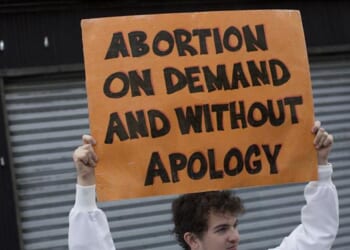
Today, September 28, the international pro-abortion movement and abortion profiteers will celebrate abortion. They call it International Safe Abortion Day, and the celebrations stretch around the world. Activists march in Quito, Dublin, Paris, Mexico City, and Brussels. They turn buildings green, fountains run in emerald hues, and even Geneva’s Jet d’Eau is green. The Women’s Global Network for Reproductive Rights counts “85 countries” and “400 actions.”
This year’s slogan is Solidarity in Action: Advance Reproductive Justice and Urgently Strengthen Health Systems for Comprehensive Abortion Care. Good grief. It reads less like something anyone would actually chant in the street and more like a grant application title. But then again, that may be the point. There’s never enough blood money to be had.
And the choosing of this day is as sinister as they are. On September 28, 1871, Brazil passed the Lei do Ventre Livre, the Law of the Free Womb. Children born afterward to enslaved women were declared free, although their mothers remained enslaved. More than a century later, in November 1990, Brazilian delegates attending the Fifth Encuentro Feminista (the fifth feminist encounter) in San Bernardo, Argentina, proposed using the anniversary as a regional day to demand legalized abortion.
LifeNews is on TruthSocial. Please follow us here.
The campaign went global in 2011 and adopted its current name in 2015. International Safe Abortion Day is not a United Nations observance. It is an NGO campaign that took an anniversary associated with freeing children from slavery and turned it into a day celebrating the freedom to shred those children before birth.
The irony is difficult to miss.
While Europe paints landmarks and Latin America fills avenues with green scarves, there is another group of women you will not hear much about today. Nobody will light a fountain for them. Nobody will march through Paris carrying their photographs. They are the women who went in for the “safe” abortion and never came home.
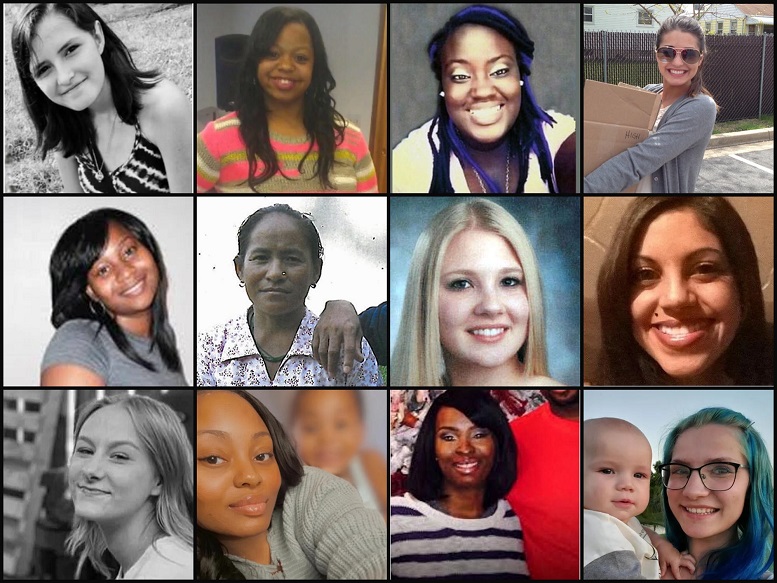
Lexi Arguello was 18 years old when she underwent a surgical D&E that was supposed to be routine. She did not survive. The green lights will photograph beautifully tonight, as they always do, but there is nothing photogenic about a dead 18-year-old whose family expected her to come home.
April Lowery was 29. Her abortion perforated her uterus. She went to a clinic operating under the law and did not return to the life she expected to resume afterward.
Tia Archeiva Parks was 26 when she underwent a first-trimester vacuum aspiration. Legal. Licensed. She died anyway. That last sentence is one you will not find printed anywhere in today’s social media toolkit.
Abortion advocates will tell us deaths like these are rare. Perhaps that word provides some comfort when you are discussing statistics at a conference table. It sounds considerably different when your daughter, sister, wife, or mother becomes the rarity. Numbers make everything wonderfully tidy. Names have a nasty habit of ruining the presentation.
Keisha Marie Atkins was 23 when she underwent a multi-day late abortion. The fetus was stopped first. Then her body was. She never walked back out.
Kalynda Collins was 32 and the mother of two. At Cherry Hill Women’s Center, she was packed with laminaria despite having previously reacted to it. She suffered anaphylaxis, and the resulting lawsuit became a matter of public record.
Somehow, I doubt the green façade of Barcelona City Hall will include that particular footnote.
Jamie Lee Morales was 30. When she too went in for a D&E at a legally founded clinic, she died and left yet another family waiting for a woman who would never return.
Cree Erwin-Sheppard was 24 when she underwent vacuum aspiration and had an IUD inserted during the same visit in Michigan. She later collapsed and died. Protesters eventually carried her face on signs because someone had to make sure she was remembered.
Diamond Williams was only 18. She was six weeks pregnant when she underwent a surgical abortion at Carolina Center for Women in Charlotte. Diabetes put her in a high-risk category, the abortionist went ahead anyway. Four days later, the autopsy cited hemorrhagic bronchopneumonia and retained tissue, and her mother then had to fight to obtain her medical records. Eighteen years old, the same age as Lexi.
For a day devoted to celebrating so-called “comprehensive abortion care,” there are an awful lot of young women missing from the celebration.
Jennifer McKenna Morbelli was 29 and 33 weeks pregnant when she went to LeRoy Carhart in Maryland for a late abortion. She hemorrhaged, and her husband became a widower.
Tonya Reaves was 24 when she underwent a D&E at Planned Parenthood of the Loop in Chicago in 2012. She bled for hours before reaching a hospital. The recovery everyone expected never came.
Then there was Karnamaya Mongar. She was 41 when she entered Kermit Gosnell’s Philadelphia abortion facility. An overdose of sedatives killed her. She did not die because abortion was illegal, and she did not die in the “back alley” we hear about whenever abortion advocates want to frighten legislators into removing another safeguard. She died in an abortion facility that government inspectors had failed to stop. Prosecutors later described Gosnell’s operation as a “house of horrors.”
Mongar presents a rather serious problem for the tidy story being told today. We are supposed to believe legal abortion equals safe abortion and illegal abortion equals dangerous abortion. Her death does not fit that formula, so she disappears from the story. So do Lexi, April, Tia, Keisha, Kalynda, Jamie Lee, Cree, Diamond, Jennifer, and Tonya.
None of these women died because a legislature passed a pro-life law. They died because of the very system that today’s marches demand. They want more abortion clinics; they demand later abortions and fewer waiting periods. And the elimination of all pro-life safeguards.
Their demands change from country to country, but the direction never does. In sovereign nations where pro-life laws exist, they demand legalization. Where abortion is already legal, they demand fewer safeguards. And where progressives have eroded and outlawed the safeguards they will then ask for more funding and later abortions.
And every September 28, they light buildings green to tell us how safe all of this is.
I have to wonder why something supposedly so routine requires this much theater. If, as they claim, abortion is as ordinary and medically unremarkable as its defenders insist, why do we need International Safe Abortion Day? Why appropriate the anniversary of a law freeing children from slavery? Why the scarves, fountains, toolkits, coordinated marches, manifestos, and warnings about “rising fascist forces”?
They need the spectacle because reality is considerably messier than the slogan. Because they have to obfuscate the emergency room visits, the medical charts and the autopsies. There are mothers who buried daughters and husbands who buried wives. There are children who lost their mothers. And there are names.
So let the fountains run green tonight. Light the buildings. List the cities and count all 400 actions in all 85 countries. Then do something the organizers of International Safe Abortion Day will not do. Say the names of the women whose deaths do not fit comfortably inside the celebration.
Lexi, 18; April, 29; Tia, 26; Keisha, 23; Kalynda, 32; Jamie Lee, 30; Cree, 24; Diamond, 18; Jennifer, 29; Tonya, 24; Karnamaya, 41 and countless more.
They went in for abortions they had been assured were safe. They entered clinics operating within the very abortion system activists want expanded around the world. Their families expected them to come home.
They never did.
That is part of the history of “safe” abortion too.
It just does not fit on a green scarf.
LifeNews.com Note: Raimundo Rojas is the Outreach Director for the National Right to Life Committee. He is a former president of Florida Right to Life and has presented the pro-life message to millions in Spanish-language media outlets. He represents NRLC at the United Nations as an NGO. Rojas was born in Santiago de las Vegas, Havana, Cuba and he and his family escaped to the United States in 1968.