Amidst all the turmoil surrounding Cardinal Blase Cupich’s decision to honor Senator Dick Durbin last month, objections raised by the faithful (including Cupich’s brother bishops), and Pope Leo’s unscripted comments, almost no attention has been given to a fundamental theological problem underlying the entire fiasco. “The tragedy of our current situation in the United States,” Cupich wrote in a statement after Senator Durbin declined the award, “is that Catholics find themselves politically homeless.”
At the November 3rd Keep Hope Alive Fundraiser, Cupich doubled down on his assessment of “our current situation” as a “tragedy,” this time pointing to the dearth of politicians who embrace the entire gamut of Catholic social teaching: “Let’s be true and honest,” he said. “The tragic reality in our nation today is that there are essentially no Catholic public officials who consistently pursue the essential elements of Catholic social teaching.”
But is that really a “tragedy?” If we want to be “true and honest,” shouldn’t we acknowledge that Catholics are not supposed to find themselves at home in this world, politically or otherwise? Doesn’t Holy Scripture, along with a host of saints, remind us that the Gospel entails placing our hope in the home of a world yet to come?
“Put no trust in princes, in children of Adam powerless to save.” (Psalm 146:3)
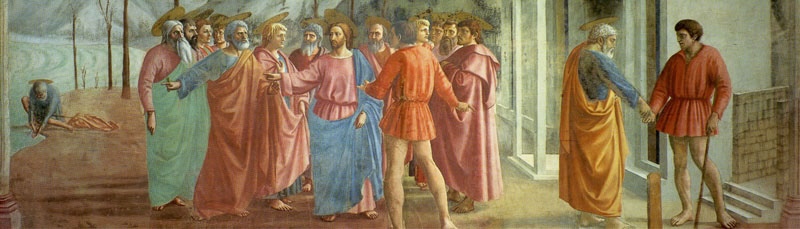
“Repay to Caesar what belongs to Caesar and to God what belongs to God.” (Matthew 22:21)
“My kingdom does not belong to this world.” (John 18:36)
Another Archbishop of Chicago by the name Cardinal Joseph Bernardin created controversy in 1983 when he introduced the concept of a “consistent ethic of life” connecting the issues of poverty, war, capital punishment, and euthanasia to abortion in a “seamless garment.”
Whatever one makes of this concept, I would propose that what we really need is a “seamless garment” connecting theology to the Church’s teaching and preaching priorities. If we really expect this world to offer a political party that we could call “home,” if we really expect politicians to embrace all of Catholic social teaching without exception, then we should probably call ourselves something other than “Christian.”
I am not, of course, arguing at all that Christians should detach themselves from social responsibility. Neither am I suggesting that Catholics remain apolitical.
What I am suggesting is that Catholics engage the polis with their eyes set on the Kingdom of God, their mouths on the call to conversion, and their hearts on the hope of everlasting life. The first has been inaugurated in this world but awaits fulfillment in the next, the second stands at the very core of the Gospel proclamation, and the third – as every credal formula attests – is the crown jewel of Christian life.
The moment we expect to find a political home in this world is the moment we set ourselves on a path toward political disillusionment, precisely because we expect the secular to offer something only the eternal can. “Wherever politics tries to be redemptive, it is promising too much,” wrote Cardinal Ratzinger the year before he was elected pope. “Where it wishes to do the work of God, it becomes not divine, but demonic.”
Catholics should be deeply concerned about the plight of immigrants. But the Catholic Church should not expect to come up with the best immigration policy. Similarly, Catholics should strive to understand, embrace, and implement “all of Catholic social teaching without exception.” But the Catholic Church should not expect to find a single politician – let alone an entire political party – that “consistently pursue(s) the essential elements of Catholic social teaching.”
It’s not the Church’s task to promote – much less achieve – political perfection in this world. Indeed, it is her duty to teach that such perfection is impossible.
In Rerum Novarum, Pope Leo XIII had already suggested that the best the Church can offer are her own institutions, not a prescription on how to perfect others. “Civil society was renovated in every part by Christian institutions. . .in the strength of that renewal the human race was lifted up to better things – nay. . .it was brought back from death to life, and to so excellent a life. . . nothing more perfect had been known before, or will come to be known in the ages that have yet to be.” (27)
Translation: The Church does best when she concentrates on spreading the message of eternal life that God revealed rather than on perfecting secular life through the efforts of man.
Leo continues: “When a society is perishing, the wholesome advice to give to those who would restore it is to call it to the principles from which it sprang; for the purpose and perfection of an association is to aim at and to attain that for which it is formed, and its efforts should be put in motion and inspired by the end and object which originally gave it being.” (27)
Translation: Christians, focus on leading souls to Heaven. Politicians, focus on maintaining earthly peace by restraining evil and enacting laws that promote the common good.
It took Saint Augustine 1,000 pages to unpack the subtleties of how the eternal and secular interrelate. His main task in The City of God was to show how “these two cities (i.e., the earthly city and the heavenly city) are entangled together in this world, and intermixed until the last judgment effect their separation.” (V, 21) The Bishop of Hippo strove to explain the “rise, progress, and end of these two cities” so that the city of God – in comparison with the earthly city – might “shine with a brighter luster.”
In a world increasingly motivated by self-love – the kind of love Saint Augustine identified as definitive of the earthly city – the urgent task of the Church should be to show the “brighter luster” of the heavenly city, for we can expect to find nothing but homelessness until we find happiness in our everlasting home.