One of my favorite, if cynical, figures from Reformation history and Europe’s Wars of Religion is Henri de Bourbon. Raised as a committed (Calvinist) Huguenot, he succeeded to the French throne as Henri IV. But in a dominantly Catholic nation, he faced fierce resistance. So he did the pragmatic thing. He converted. His motives may have been dubious. But a line attributed to him – it’s not clear that he ever actually said it – echoes down through the centuries: Paris vaut bien une Messe; “Paris is well worth a Mass.” Simply put, he did what he needed to do to get what he wanted.
I mention this to illustrate a very different, and much more personal, story.
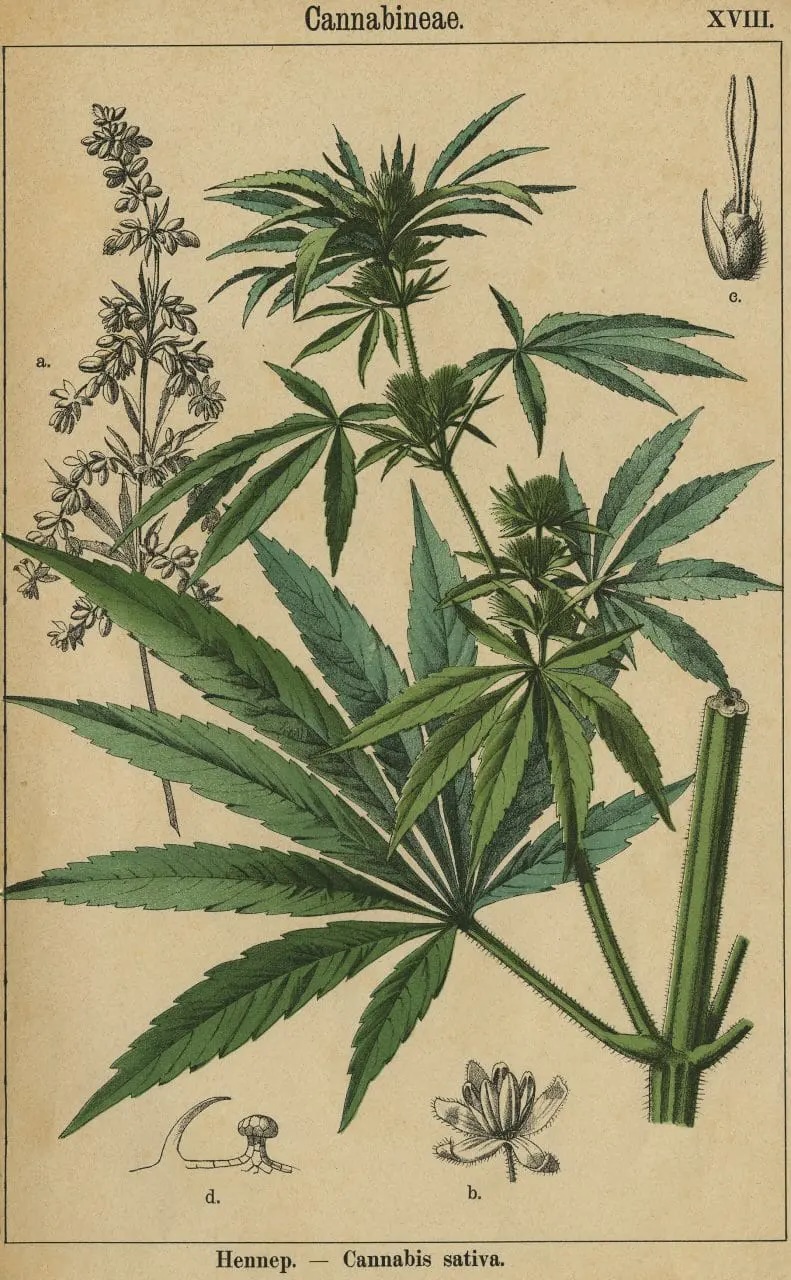
Cannabis and similar unauthorized goodies arrived on the University of Notre Dame campus (at least in Dillon Hall, my sophomore year dorm) sometime in late 1967. Which is why the next two years are a bit fuzzy in my memory. But as a senior, I met my lovely, very Catholic bride of the past 56 years.
She sweetly but quite emphatically briefed me on her non-negotiables for a mutually agreeable future, including what and who needed to change. I wasn’t an idiot. For me it was an easy choice and, given the woman involved, a sincere one – well worth a different kind of life, one that I can write about gratefully here instead of drying out somewhere in a drug rehab program.
For some of my buddies from that time, though, the story is a lot darker. They made a different choice. My closest friend – one of the few truly genius-level persons I’ve known in my life – ended up an addict with a destroyed intellectual career.
It started with cannabis. All of which is background for what follows.
My wife and I (and our kids when they came along) have returned to ND and the Lake Michigan area every year for half a century. In summer, this sliver of the Midwest is pure magic. For us and so many others, it’s thick with memories. It is a rustic escape for nearby Chicago ex-pats and vacationers. The air is clean, the cornfields seem infinite, the lake is an inland ocean, an immense, majestic sea stretching to the horizon (“no salt, no sharks” – a local slogan), and US Route 12 still connects two of our favorite beach communities that lie just a few miles apart: Long Beach, IN, and New Buffalo, MI.
Once upon a time, that 60 mph, undivided, four-lane road rolled past a restaurant, a car repair shop, some open fields, an American Legion post, and a couple of lazy motels. Today these fossils share the highway with a gleaming new breed of buildings.
The three or so miles between the Indiana/Michigan state line and New Buffalo’s city limits are now the region’s high-speed Stoner Alley, offering 20 different high-end cannabis outlets – from “BLOW” to the aptly named “Information Entropy” – in the niche form of capitalism previously known as dope peddling.

Some have lounges for on-site consumption and socializing. Most are busy seven days a week. Many offer the first half ounce of cannabis free for a first-time customer. New Buffalo, once a rundown poverty hole and now an upscale holiday spot, has nine more such dispensaries within its municipal limits, earning it the affectionate nickname “Weed City, USA.”
The highway along Stoner Alley does have one official, earnest road-sign reminder: Under Michigan law, seat belts are mandatory.
To underline the obvious, in Michigan, cannabis is fully legal, taxed, and commercialized. In Indiana, it’s fully illegal, with any THC above trace hemp levels treated as a controlled substance under criminal law. First-offense possession is a Class B misdemeanor with up to 180 days in jail and a $1,000 fine. Penalties escalate from there.
Twenty-four states now treat cannabis as fully legal, with another sixteen allowing it for medical use. This is the gift that keeps on giving from my own self-centered, infinitely self-indulgent Boomer generation. As the Wall Street Journal noted earlier this week, “senior citizens are at a record high for getting high.”
It went on to report that:
Many senior pot smokers are loud and proud. San Antonio grandmother Sandra Bomar, 63, who goes by “Stoner Granny” online, posts pot memes on Facebook to her like-minded community. One recent item features a doctor in a white coat and the line, “In my professional opinion, you should smoke a fatty.”
The cannabis industry is seizing on [these developments] with targeted brands such as “Senior Moments.” A Cannabis Media Council campaign shows an elderly couple in slinky sleepwear, grinning next to the words: “Can cannabis help a senior in the sack? Good news, Tiger!”
For the record, as a Boomer myself, I do not endorse the above views. Really. More importantly, as the Journal tells it, quite a few other people don’t either. They’re fed up with the stink and behaviors associated with cannabis. And they’re fighting back with personal confrontations, legal threats, and calls to the police.
But as with state lotteries, online gambling, and “thrillionaire” casinos, all such critics are swimming against the tide. In a culture soaked in materialist propaganda; a culture of comforts, distractions, and noise; a culture where tens of millions are on antidepressants, 20 percent of adolescents reported struggling with anxiety, and 32 percent of young adults reported some form of mental illness as recently as 2024; “smoking a fatty” can sound like a pretty good plan.
Stoner Alley is emblematic of our moment in time, its confusions and addictions. Any old analgesic will do in a society committed to avoiding things higher than itself.
In the end, what we want and what we’re willing to do to get it define who we are. It’s not a new story. Check Deuteronomy 30:15-19. Again and again, we simply want and choose the wrong things. Consequences follow. The point is: We were made with love, for a purpose. And we’re meant to be better than this.


![Hegseth Demands Fitness Requirements, Says 'Fat Troops' 'Not Who We Are' [WATCH]](https://teamredvictory.com/wp-content/uploads/2025/09/Hegseth-Demands-Fitness-Requirements-Says-Fat-Troops-Not-Who-We-350x250.jpg)