The Catholic Church has always distinguished itself from other Christian bodies by its claim to possess, and be bound by, a deposit of faith handed down from the Apostles. The Church comes from Christ, and the Church doesn’t invent, revise, or vote on its Magisterium, its authoritative application of that depositum fidei. It receives, guards, and transmits that ancient faith. Doctrine can develop in the sense that St. John Henry Newman described it, growing in clarity and application, as an acorn becomes an oak tree. But it cannot be renegotiated – or reversed! – by majority sentiment or contemporary enthusiasm.
The claim of having received the Truth and of guarding it is the Church’s entire reason for existing and makes it something other than a voluntary religious association. But synodality, no matter what its defenders suggest, introduces a mechanism capable of dissolving that claim: a standing, undefined, participatory process for generating endless, contemporary ecclesial consensuses that increasingly function as rival sources of authority alongside, and – from the standpoint of the innovators – ahead of the settled deposit of faith and, therefore, the Magisterium meant to guard it.
The vagueness we’ve seen so far in the synodal process has not been incidental. It’s a feature, not a bug. After multiple synodal gatherings, the Church still has no fixed definition of synodality – only descriptions of a “style,” a “process,” an “instinct,” and this inability to clearly define synodality is no minor omission.
It’s reminiscent of the first Barack Obama campaign, which defined its agenda with one word: “Change.” It meant nothing then; “Walking together” means nothing now. Where is our fixed point?
Aquinas and others, including the early Church Fathers, and several councils, have given the Church a fixed point and a shared technical vocabulary precise enough to allow the adjudication of all real disputes. Synodality has nothing equivalent. It runs on “individual discernment” and “the sense of the faithful” – categories that are functionally unfalsifiable: whatever the assembled body concludes gets read backward through the outrageous claim that each new proposal is what the Holy Spirit was saying all along! Finally, they tell us, we’re listening!
But a process with no fixed criteria for correction isn’t discernment; it’s consensus-building with theological vocabulary attached, like the stickers my grandkids slap onto seemingly everything, including Grandpa’s face.
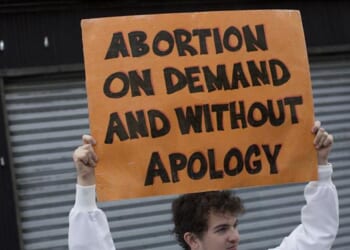
History shows where this will lead us. The Church of England is the closest institutional analog we have, and it demonstrates exactly how the process plays out over time: synodal bodies incorporating clergy and laity into decision-making, provincial autonomy under a loose central authority, and a steady sequence of changes, each introduced as modest, “pastoral” accommodations – remarriage after divorce, women’s ordination, blessings for same-sex unions, approval of artificial contraception, ambiguity on abortion – all over time transforming Anglicanism’s doctrines and fracturing its unity.
Entire Anglican and Episcopal provinces now refuse to recognize each other’s positions on same-sex “marriage” and the ordination of women. Sarah Mullally’s installation as Archbishop of Canterbury has caused a schism within Anglicanism.

Yet it’s the mechanism, not any single decision, that always was and remains the real and ongoing danger.
And that same mechanism is inherent in any Catholic version of synodality. Germany’s Synodal Path pushes for a permanent Synodal Council that would hand the laity shared governing authority with bishops over doctrine and discipline. Rome has intervened directly to halt it, but several German bishops still openly resist the Vatican’s warnings. Who knows what the outcome will be? But a “national” church attempting to institutionalize exactly the Anglican pattern within Catholic structures has been restrained so far only by direct Roman override. That is a fragile check, not a structural guarantee. And “synodality” remains on the lips of Leo XIV.
Meanwhile, the traditional filter that used to protect the Magisterium from synodal momentum has itself been weakened from within: under the 2018 reform of synodal procedure, a pope can now adopt a synod’s final document directly as part of his “ordinary magisterium,” skipping the post-synodal exhortation that historically allowed popes to reframe or decline synodal proposals. That filter worked as designed when Pope Francis declined the Amazon Synod’s proposal on married priests. But it did not work that way for the 2024 synodal assembly, whose final document became magisterial teaching immediately, without that intervening exhortation. The very safeguard synodality’s defenders point to as proof the system can’t run away from itself is now optional at a pope’s discretion – which means it isn’t a structural safeguard at all, only a personal one, good for exactly as long as the man holding the office chooses to use it – or not.
And we recall how Pope Francis responded to concerns about wording in Amoris Laetitia (2016) that allowed (with “discernment”) the reception of the Eucharist by divorced couples remarried civilly. He told the bishops of Argentina, who sought clarity, that “There are no other interpretations.” In doing so, he abrogated canon law and gave us a preview of the synodal process.
And there’s the passive-aggressive Fiducia supplicans, the innovative pastoral mechanism for blessing same-sex couples, extended even as the immemorial definition of marriage is held to be unchanged. And there you have the precise sequence that has preceded doctrinal change in every Protestant body: practice moves first, under pastoral cover, and doctrine is declared unchanged . . . until that fiction becomes unsustainable
This is why the synodal threat is existential. What’s at risk isn’t just this or that teaching, but the thing that makes the Catholic Church the Catholic Church – an authoritative, non-negotiable deposit of faith, guarded by a Magisterium whose tenets bind all believers.
A Church that governs itself by synodal consensus is a different kind of institution than the one that, for two millennia, has existed to transmit what it has received. It may keep its name, its buildings, and even its structural hierarchy. What it must lose is the claim that made it worth being Catholic. And that loss, once the mechanism runs its course, would likely not be reversible by yet another vote.