The bishops of the United States are gathered in Orlando, Florida this week for the USCCB’s annual June meeting. The conference’s June meetings are generally more low-key than the November plenaries in Baltimore. That said, this week the conference welcomes a new president (Archbishop Paul Coakley of Oklahoma City, who was elected last November) and a new apostolic nuncio (Archbishop Gabriele Caccia, who replaces Cardinal Christophe Pierre).
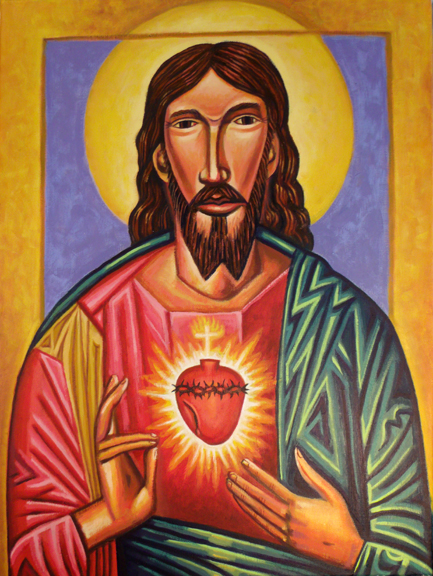
If there is an aspect to this June meeting which is likely to garner attention, it is this: This evening, June 11, 2026, the bishops of the United States will gather in the Basilica of the National Shrine of Mary, Queen of the Universe in Orlando and consecrate the United States of America to the Sacred Heart of Jesus.
The bishops made the decision to consecrate the nation to the Sacred Heart back in November 2025. Months of planning have gone into this consecration, including a nationwide novena and an extensive campaign to get the word out at the diocesan and parish levels. As we reach the culmination of all this, it is worth reflecting on what this consecration means for the Church in the United States.
First, as this year marks the semiquincentennial of the Declaration of Independence, the bishops have made it clear that the consecration ought to be understood “as part of the celebration of the 250th anniversary.” The founding of this nation is not merely worth remembering; it is worth celebrating.
And so the text of the bishops’ prayer of consecration acknowledges, “We celebrate the abundant gifts you have given this nation, founded on the self-evident truths that our Creator has endowed all people with the right to life, liberty, and the pursuit of happiness.” Whatever else needs to be said or understood about our history as a nation, we ought to begin with gratitude.
Second, in addition to expressing gratitude, by consecrating the nation to the Sacred Heart, the bishops are proclaiming a fundamental truth about all human endeavors, including our political life, namely, there is no greater perfection for human beings than to be conformed to Christ. In His Sacred Heart we discover both the perfection of our human nature and the overwhelming mercy of God, who not only saves us from sin and death, but invites us to share in His divinity.
Such a claim certainly goes beyond the Declaration’s language about “Laws of Nature and Nature’s God,” but the two claims are far from incompatible. Man is not the ultimate judge of his own affairs. Moreover, the common life of our nation is not diminished by being under the laws of nature, still less divine law. Rather it is precisely in being under such higher authority that political life can be ordered in such a way as to achieve its proper ends.
Third. Like every nation in history, our political life has not always been perfectly ordered to its proper ends. Grave injustices – from slavery to abortion – have marred our history over the centuries. We have been divided to the point of open Civil War in the past, and we are divided in many ways today. The sins and failings of this nation cannot be healed, still less corrected, by self-loathing. This country cannot be made beautiful by despairing of her promise. But, like all of Creation, she can find healing in the merciful heart of Jesus, the King of Kings.
In consecrating this nation to the Sacred Heart, the bishops are gratefully celebrating what is best, acknowledging that we stand under the judgment of a God who is both just and loving, and begging pardon for what has been and is broken by sin. In the words of the prayer of consecration: “We make reparation for the offenses against you and against human dignity that have taken place in this nation.”
That brings us to a fourth consideration regarding this consecration: it is public.
Archbishop Alexander Sample of Portland, in a reflection on why the bishops wish to consecrate the nation to the Sacred Heart, put it this way: “As we reflect with gratitude on the blessings God has bestowed on our country, our devotion to the Sacred Heart demands that we consider how we might foster truth, justice, and charity in American life. . . .And we invite all in our society to see the face of Christ reflected in each sister and brother.”
The Church consecrates, but it is an unmistakably public – and in a real sense, binding – act. The Declaration of Independence begins by observing that a public account is owed for the motives and actions of the signers. Hence, we read, “a decent respect to the opinions of mankind requires that they should declare the causes which impel them. . .”
In consecrating the nation to the Sacred Heart of Jesus, our bishops are making a public declaration which cannot be easily withdrawn. Our bishops may not be pledging their lives, fortunes, and sacred honor to a political cause, but our bishops – and by extension, all the Catholics of the United States who join in this consecration – are making a public declaration of devotion and dependence to the Sacred Heart of Jesus. Moreover, this is a pledge of devotion made, not only before the nations or out of respect for the “opinions of mankind,” but before God himself.
The whole Church in the United States, joined with their shepherds, is not only giving public witness, she is also not only offering the whole nation to the Sacred Heart of Jesus, she is publicly calling on the Lord to act. In the words of the prayer of consecration:
O Desire of Nations and Center of History,
we ask you to bless these United States of America.
Who live and reign with God the Father
in the unity of the Holy Spirit,
God, for ever and ever.
To which we all may say, in a single voice: “Amen.”
Sacred Heart of Jesus, have mercy on us!