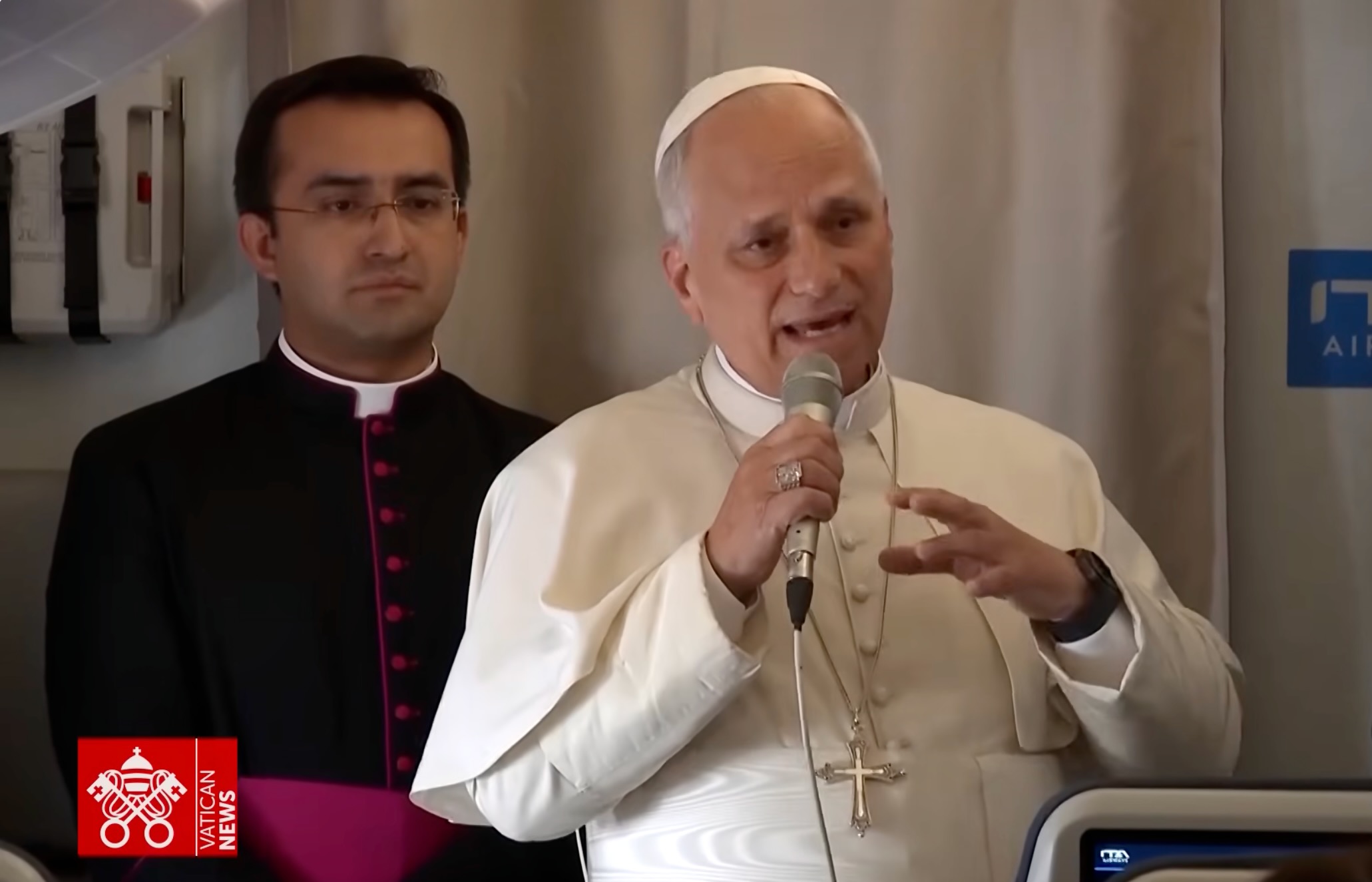
Pope Leo travelled to four African countries this month, which included not only the usual calls for peace, justice, and brotherhood, but several touching and poignant moments with local communities. Let’s hope that the presence of this Successor to Peter, who possesses a natural gentleness and piety, bears much fruit. Unfortunately, on the way back to Rome on Thursday, we were treated to yet another muddled in-flight papal press conference, which grabbed headlines and has left many Catholics confused – and dismayed. A pope has multiple good channels to express himself. A press conference is not one of them.
By its very nature, these informal Q&A sessions make it seem that the Church’s teachings and the words of the pope himself, are like a politician commenting on political issues. One could already see the usual rhetorical and moral tangle coming, for instance, in this exchange with a German journalist:
I would like to know how you assess the decision of Cardinal Reinhard Marx, Archbishop of Munich and Freising, that he gave permission to the blessing of same-sex couples in his diocese, and in light of different cultural and theological perspectives, especially in Africa, how do you intend to preserve the unity of the global Church on that particular matter?
[Pope Leo XIV, in English:] First of all, I think it’s very important to understand that the unity or division of the Church should not revolve around sexual matters. We tend to think that when the Church is talking about morality, that the only issue of morality is sexual. And in reality, I believe there are much greater, more important issues, such as justice, equality, freedom of men and women, freedom of religion, that would all take priority before that particular issue. The Holy See has already spoken to the German bishops. The Holy See has made it clear that we do not agree with the formalized blessing of couples.
We “do not agree” is a weak response to a strong challenge. It’s not a matter of agreement or disagreement, but of the teachings of Jesus and His Church since time immemorial. And like it or not, sexual ethics – which go deep into the Christian conception of the human person (“male and female he created them’) – is a central matter. Not the only one to be sure. But trying to finesse what amounts to rebellion within the Church and surrender to the spirit of the world is a poor tactic for holding the Church together. And it won’t work against the global LGBT juggernaut.
The only thing that might is a firm theological and doctrinal stance
Further, while it is true that the Church teaches that there are more and less serious sins (as we often say here, see Dante’s Inferno for a graphic image) – and it is in fact an Augustinian theme that has been stated more clearly by other recent popes – is this a good way to speak to our culture today?
[BTW, next month I will be offering a brief course on “Leo and the Augustinian Tradition” (here) in which we will pursue several of the central questions in greater detail.]

What would be better? The pope has his own attractive style, and he could decide about that. But the substance would have to go something like this to remain a good Augustinian, which is to say faithful to the fullness of Catholic reality:
All mortal sins are serious. Indeed, all sins, however venial, take us away from God, our fellow human beings, and our own true selves. The human person has been so created by God that – ever since Cain and Abel – the most obvious way we turn away from God’s order and being is through physically harming, even to the point of killing one another.
This would be the barest of openings and at least Biblically grounded.
But it couldn’t stop there. It would have to make some distinctions that have always existed in the Church. Something like this:
Sexual sins are the easiest to understand, because they so closely resemble the love God has placed in us to love other persons, especially God Himself. They are also among the most common sins, as we see all around us, which is why the Church has consistently warned about them. Very few of us will commit physical assault or murder, let alone be in a position to start wars or perpetrate social injustices. So even as we recognize the gravity of such matters, for most of us those are distant (almost wholly theoretical) temptations, hardly the stuff of most human lives.
When the Church presents itself as primarily concerned with large public issues, already present enough in secular culture, is it any wonder people aren’t in the pews on Sunday?
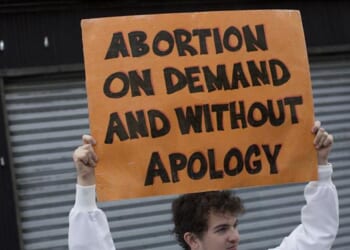
And as long as we’re trying to gauge the relative gravity of sins, let’s not ignore a massive, undeniable fact of our time. Every year, 60 million children are killed via elective abortion. “Sexual sins” too have murderous consequences, far larger than the allegedly “much greater, more important issues” of Pope Leo’s remarks.
Besides the broken families and marriages, the fatherless children, social chaos wrought by the sexual revolution, the Church claims to believe that abortion is the taking of innocent human life – violence masked by talk of “reproductive rights” and “reproductive health.” Numbers alone are never the whole story. But if that many human beings (almost 1 million a year in America alone) were being killed annually by wars, poverty, climate change, political oppression (as even combined, they manifestly are not), the world would be in total uproar.
Over four years, World War I, which many people believe began the destruction of our Western civilization, resulted in the death of perhaps 20 million. World War II, in six years, added maybe another 75-80 million. So, again just running numbers, two of the greatest cataclysms of modern times produced over the course of a decade a lower body-count than two years of our global abortion regimes.
And we’re just starting to see how the disrespect for life at the start is impacting life at its end. Medically Assisted Aid in Dying (MAID as Canadians cleverly call it) is just getting started but already accounts for 1 in every 20 deaths north of the border.
To be clear: Pope Leo has spoken out about abortion, euthanasia, the persecution of Christians, and other Catholic “issues,” as did Pope Francis. But is there any of the sense of urgency about them in the Church that we see on other matters?
The pope and the Church are right – pace American politicians of right and left – to comment on immigration, fraternity, war, care of creation, and much else. But we also need courage and candor about naming the greatest threats to humanity and the most widespread offense against God in our present moment.