I recently attended the funeral of a young man who died tragically. It happened to be a solemn high Traditional Latin Mass, entirely licit and even affirmed by the presence of our local bishop, his retired predecessor, and a couple dozen priests. That liturgy, however, was – all extraneous considerations aside – definitely not something to be reduced to the controversies surrounding the recent SSPX consecrations, the back and forth about Traditionis custodes (Pope Francis’ sharp curtailing of the TLM), or the short- and long-term fallout of Sacrosanctum Concilium (the Vatican II document on liturgy). It was all directed towards prayer for the eternal destiny of the young man’s soul and the souls of us all, which – sad to say – seem to get scant attention in the Church today, even at funerals.
It was a deeply moving experience, and it got me thinking, afterwards, as to why modern funerals so often are not. There’s been a massive shift in the Church towards what are often even called – even at Catholic funerals – “celebrations of the life” of someone who has died. And there seems to be an unspoken current running beneath it all that, despite all Our Lord’s warnings about the narrowness of the gate, everyone ends up in Heaven.
(By the way, it won’t do to blame Hans Urs von Balthasar or, more recently, someone like Bishop Robert Barron among others, for encouraging this attitude. I noticed during the Rosary before Mass that the Fatima prayer contains the formula, “And lead all souls to Heaven, especially those most in need of thy mercy.” Sure. The prayer doesn’t say that all are saved, or even that many are. And in truth, to judge from the Scriptures, not all of us are. But it certainly expresses that hope, which we all should have.)
Still, the easy assumption that all or almost all are saved is not only a theological question. We have to recognize that it basically short-circuits the whole of Christian life, which is at least a drama, and oftentimes a spiritual battle. If not, why, then, did Jesus have to die on the Cross to save us? Why, even, does He have to tell us to leave all and follow Him?
We know that missionary work (now replaced by the tonier but vaguer “evangelization”) has also dissipated in recent years. Is it too much to think that missionaries now are just another victim of the soft and formulaic “dialogue” and “respect” for other religions (and none) that seem to have displaced the command to preach the Gospel to all nations? And is that, too, just another consequence of the current etiquette that pretty much everyone is eternally fine, whatever they believe or, often enough, even whatever they do?
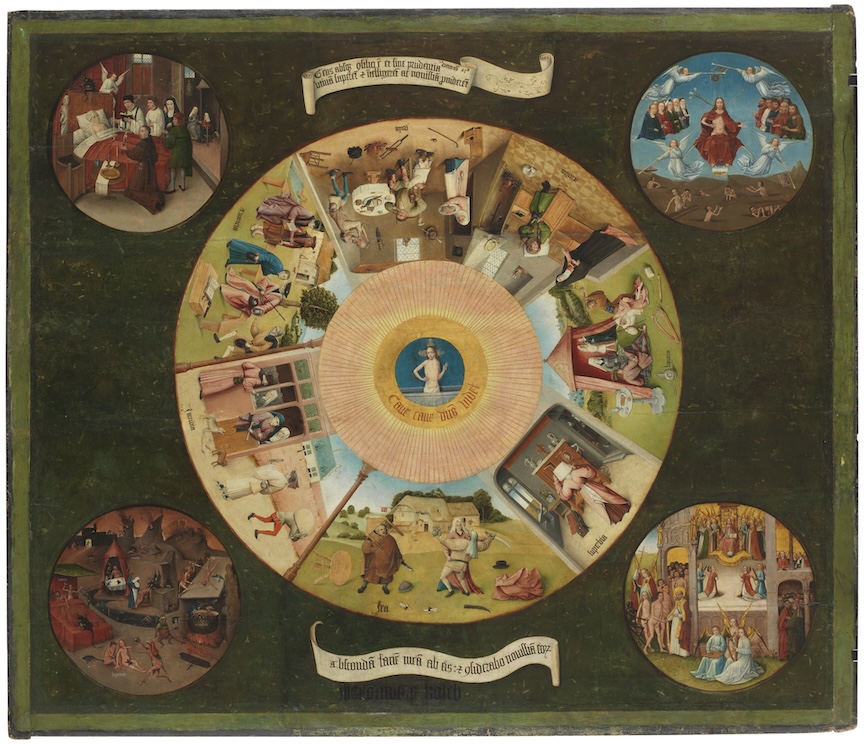
There was a time when everyone in the Church, even schoolchildren (in my own case), was taught about the “Four Last Things”: Death, Judgment, Heaven, and Hell. There was no squeamishness in talking about such ultimate matters – but this was before the advent of the Christian snowflake. It’s all still present in the Catechism of the Catholic Church (¶ 1020-1060). But does anyone preach such truths or take them seriously anymore? And how long before, without renewed attention to the main things, they disappear entirely from catechesis?

There are even teachings, Catholic teachings, in the Catechism about Purgatory. There’s been a long-running debate between Catholics and Protestants over whether Purgatory is mentioned in the Bible. If you accept the text of the Old Testament that the early Church used, which included prayers offered for the dead (Maccabees), Purgatory is the logical consequence. It is not, if you choose the slimmer canon of Jewish Scriptures, as do some Protestants, which had a complex history but was probably defined some centuries later by rabbinic Judaism after the destruction of Jerusalem and dispersal of the Jews.
If you think about it for a moment, unless Purgatory exists, it makes no sense to pray for the souls of the dead. The families and friends of the departed can gather together to mourn and remember, of course. But without Purgatory, it’s no wonder that praying for the dead – even long after their passing – or funeral Masses have lost the depth the old TLM still gives them.
This is in stark contrast with the entirety of the Christian past, when the passage from this life to the next was the main thing, literally matters of eternal life and death.
There are still some places where those truths are understood. And that also understand that perspective on eternity has consequences in this world as well.
In a recent “Faith under Siege” podcast (here), I spoke with Archbishop Bashar Warda, the Chaldean Catholic archbishop of Irbil, Iraq, where Christianity has existed continuously since around 100 A.D. Among other striking things that he had to say, he spoke eloquently – we hadn’t planned on this ahead of time – about how the Church there faces a difficult reality over and above the usual Middle Eastern tensions.
Muslims come to them who have dreamt of Jesus and want to know more about Him (the real Jesus, not the historically erroneous Islamic version). This is dangerous, which he candidly tells seekers – for them and for the Church, because apostasy from Islam can bring death on all involved.
The good archbishop manages these situations as well as he can, but confessed that he worries about standing in front of St. Peter someday and having to account for how he’s handled people coming to him in search of Jesus Christ. And one hears similar stories of Muslims in Western Europe and even Iran.
It’s a good thing, but relatively easier, to seek peace with other religions, among nations, even with Creation.
But how many of us reading this – including the present writer – take the greater risks of proclaiming the Truth? You do so only if you can see beyond present things, which will pass, and that the Last Things are the only things that finally remain.