
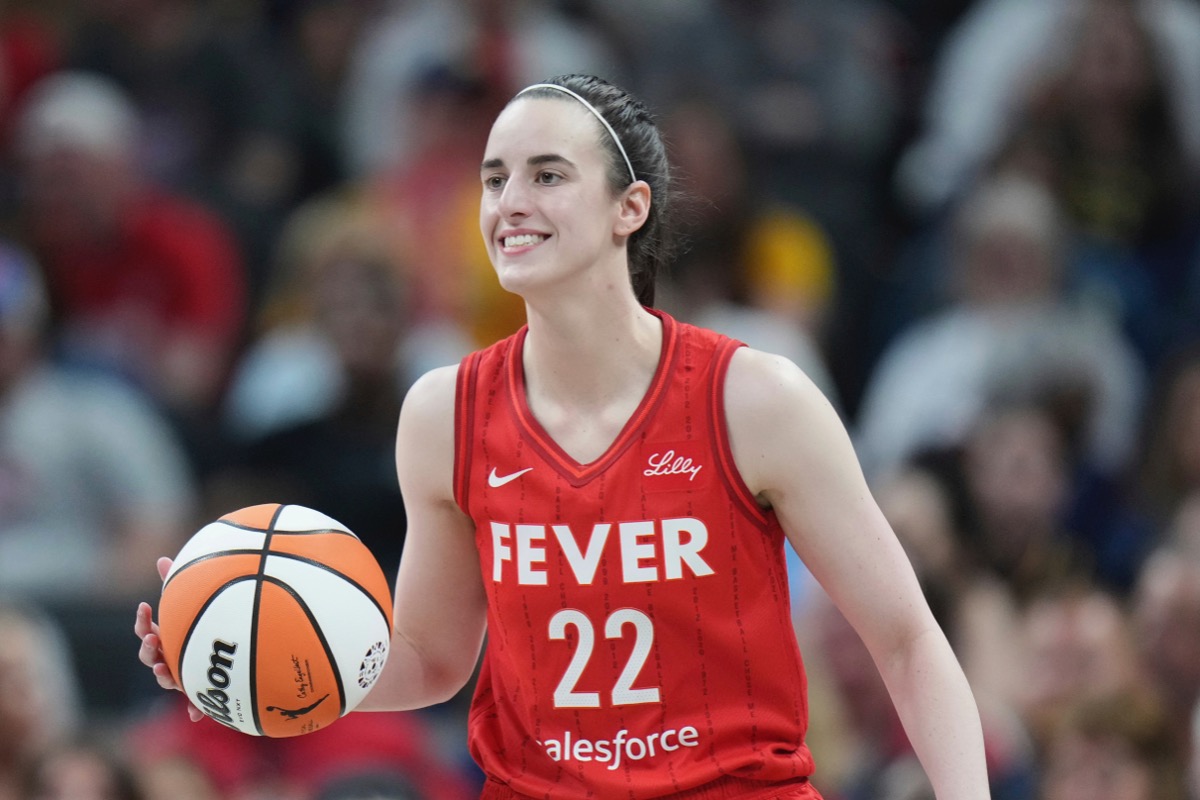
“The white race is the cancer of human history…,” wrote feminist author Susan Sontag in 1967. Now, almost 60 years later, some may wonder:
Has the white race become the cancer of marketing?
Many have long noted that black Americans are overrepresented in commercials and ads. At the same time, others complain, whites in commercials are often portrayed unflatteringly. But this may seem mild compared to what the unprofitable Women’s National Basketball Association (WNBA) has done in recent marketing.
It has taken its most valuable “product” — white player Caitlin Clark — and whited her out.
It all reflects, too, how, far from dead, wokeness is still whacking whiteness.
As you may know, Clark has, in a measure, done for the WNBA what legendary Arnold Palmer (and, later, Tiger Woods) did for golf. An amazing talent, she has drawn new fans and helped popularize the league. Nonetheless, complains sports journalist and commentator Clay Travis, her team, the Indiana Fever, isn’t exactly hot on her (tweet below).
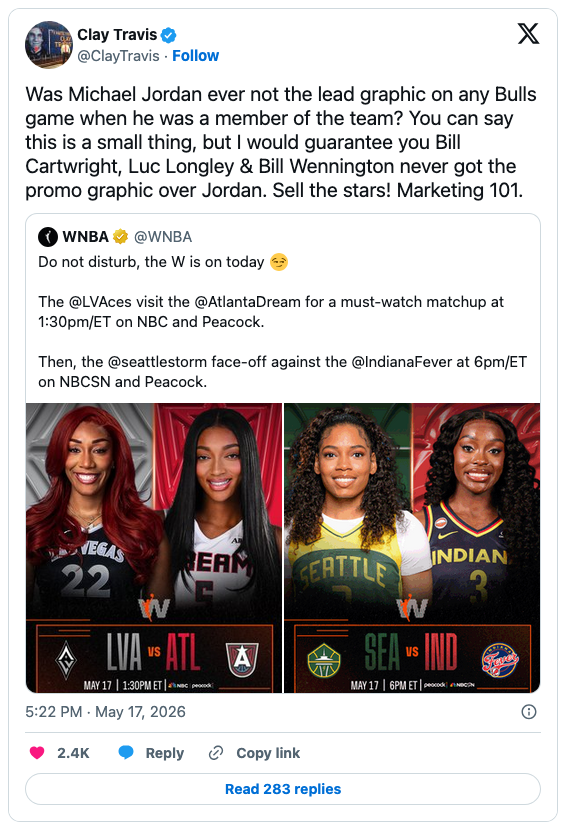
“It’s reminiscent of satirical police photo lineups with nine white guys and a single black guy,” quips pundit Mike McDaniel. He then quotes Fox News:
Just days after choosing Fever rookie Raven Johnson over generational superstar Caitlin Clark to front the promotional graphics for Sunday’s matchup against the Seattle Storm, Indiana took the court and let the box score settle the discourse.
Indiana secured a commanding 89-78 victory over Seattle, though the real story unfolded in the stark contrast between the league’s forced promotional face and the team’s actual focal point, which was a marketing mishap….
McDaniel then adds:
In the previous game, Clark scored 30 points. She’s more than capable of running up even higher scores, but she selflessly provides assists for her teammates and more. In the game where she wasn’t promoted, she scored 21 points — outpacing all her teammates and also handed out ten assists and seven rebounds. Those rebounds are more significant in that she’s not a center.
This is typical for Clark, too (tweet below), McDaniel emphasizes.
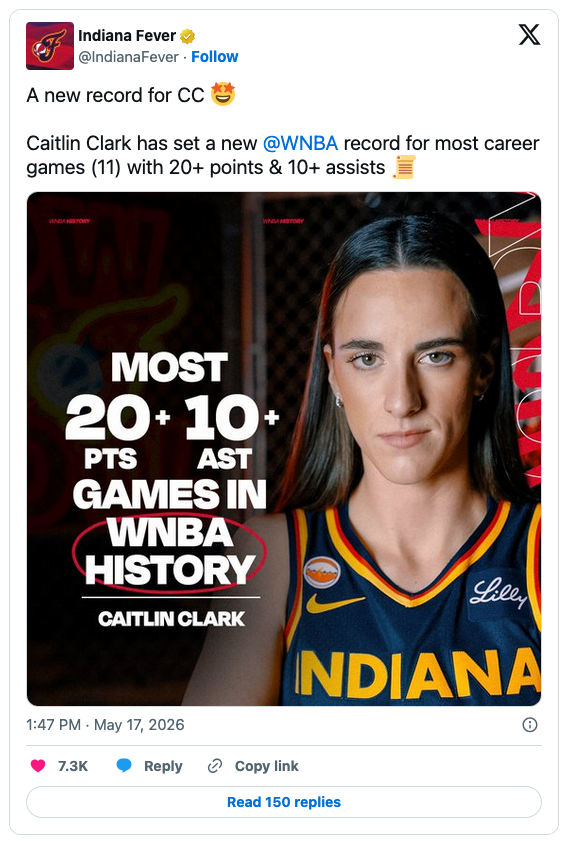
In fairness, the above shows that the Fever are willing to tout Clark, to an extent. More on the marketing realities momentarily.
Right Talent, Wrong Race
Adding further perspective, McDaniel states that it isn’t just the recent marketing oddness that tells the tale. The WNBA has also tolerated, if not winked at, frequent serious fouls against Clark. Some have caused her injury, too. It’s almost as if they’re not concerned about losing their golden goose.
And now, McDaniel points out, the league is even snubbing her. And how did the ad-promoted Raven Johnson do? Fox again:
Thrust into the spotlight as the unexpected “poster child” for the Fever in the WNBA’s promotional rollout, Johnson’s on-court production miserably failed to match her sudden marketing billing.
In 17 minutes of action off the bench, Johnson failed to register a single point, dropping a giant goose egg on the stat sheet.
While her defensive energy contributed to the team’s depth, a scoreless night highlighted the utter absurdity of the league elevating a backup guard over the most prolific scorer in basketball history, especially on a night when the team was already missing its star center.
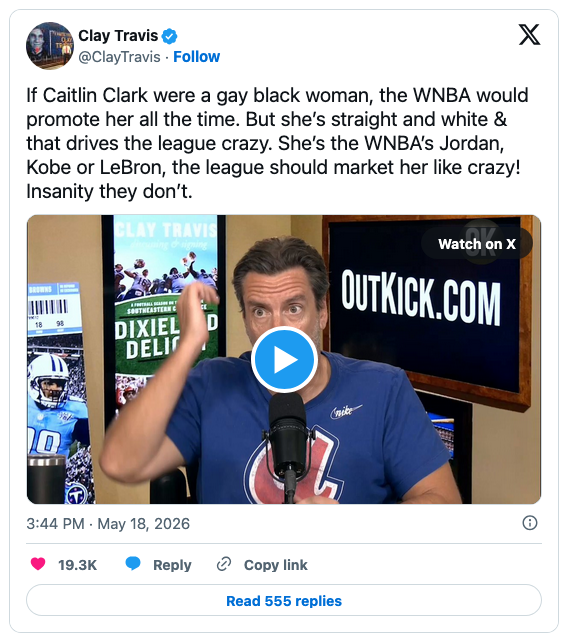
Now, sport is frivolity, of course, constituting the “circuses” in man’s bread-and-circuses category. It would hardly be worth commenting on, except that the aforementioned reflects deeper cultural matters. So how can we explain Clark’s airbrushing? Travis states the obvious (tweet below).
McDaniel seems somewhat incredulous that the WNBA, a business, would fail to market its biggest draw. Clark is much like Tiger Woods (a “black” golfer) and Danica Patrick (a woman in auto racing), too. That is, she’s a novelty; in her case, a successful white woman in a largely black league.
And novelties, especially successful ones, are gold mines. Yet there is method to the WNBA’s madness.
Prejudice or Marketing Prudence — or Both?
First, note here that the league has lost money virtually every year since its 1997 inception. And though some teams did turn a profit in 2025 owing to the Clark effect, the WNBA overall may still be in the red. (It exists only because it’s subsidized by the NBA.) The point?
Not having to worry about profit and loss gives you the luxury to indulge bottom-line-lowering discrimination.
Second, Clark did get great attention when first entering the WNBA. Predictably, too, the legacy media and other wokesters cried discrimination. “It’s only because she’s white!” they bellowed. (Well, duh. It’s that novelty factor again.)
But then there’s this: the market-reality factor. I had Grok artificial intelligence analyze the WNBA’s viewer demographics, and here’s what it found, in part (all quotations Grok’s):
- Women, who lean left as a group, constitute 44 percent of the WNBA’s fans.
- Blacks are 34-45 percent, and they may bristle at a “black” league trumpeting a white player.
- Forty-seven percent “of fans are aged 18-34 (higher than the NBA’s ~42% and far above the ~30% of the overall U.S. adult population). About 50% of avid fans are under 35.” And younger people skew left.
- An inordinate percentage of fans come from the East and West coasts — more liberal regions. Midwest fans are underrepresented.
- “Fans tend to be engaged [and] values-driven (e.g., receptive to social consciousness in sponsorships)….”
- About “25% of lesbians in the U.S. watched WNBA games on TV; 21% had attended a game.…”
- Approximately “29% of season-ticket holders were lesbians.”
No Mystery
The last three lines say it all: The WNBA clearly has a very liberal viewership. Its leadership is likely left-wing, too. Nonetheless, it seems probable the league is walking a fine line. It wants to market Clark for profit — but also not seem as if it’s “favoring the white girl.”
Whatever the case, it reflects how wokeness is alive and well. In fact, when it’s operative in collectively notable population segments (the aforementioned audience), it’s more than alive. It’s thriving.
Why, some may even say that wokeness is the cancer of recent human history.






![WHAT POLICY? Crockett Trips Through MS NOW Softball Question on Her Agenda if Elected to Senate [WATCH]](https://teamredvictory.com/wp-content/uploads/2025/12/WHAT-POLICY-Crockett-Trips-Through-MS-NOW-Softball-Question-on-350x250.png)