Fulton Sheen, officially to be declared “blessed” in a few days, began his wonderful book Three to Get Married with these four sentences:
It takes three to make Love in Heaven – Father, Son, and Holy Spirit.
It takes three for Heaven to make love to earth – God, Man, and Mary, through whom God became Man.
It takes three to make love in the Holy Family – Mary, and Joseph, and the consummation of their love, Jesus.
It takes three to make love in hearts – The Lover, the Beloved, and Love.
This was a brilliant summary of the relationship between the threefold communion of love that binds the three persons of the Triune God and the love that should bind the spouses and children within a family.
How can we begin to understand the Triune God, a reality that transcends our human reason? We begin with what we know concretely in our own world: human marriages.
So too, we begin to understand God as “Father” in relation to our own fathers. “He is not merely an angry, distant God,” we say, “He loves us like a Father.” But upon reflection, we come to understand that the relationship really operates in the reverse.
God is the paradigm “Father,” and our human fathers merely participate in His “fatherhood.” Our human fathers are partially responsible for our existence, but not fully, as is God. Our human fathers care for us, but not perfectly, as does God. So, as we reflect upon the fatherhood of God, we better understand what human fatherhood is meant to be.
The closest we come in this life to understanding the loving communion of Father, Son, and Spirit is the family. It begins with a man, a woman, and the love that binds them. But then the love they share becomes incarnate in an actual person – a child.
Anyone who has married friends has probably experienced a slight awkwardness spending time with one but not the other. It may be that you were close friends with one of them before the marriage, so you just mix more naturally with that spouse.
But if you know that these parents love their children, then you will also probably know that there are few things better you can do for your friends than to love and support their children. Loving and supporting their children is loving and supporting them – the fruit of their union as a couple. It is not his child or her child; it’s their child. The child is the embodied union of their love.

So we start with human marriage, but upon reflection, we realize that we can understand marriage and the family best as modeled by the Triune God: a unity of love that does not destroy their distinctness, and a distinctness of persons that does not make impossible their true unity. And this is a unity of persons that is not closed in on itself, but is expressed outwardly, abundantly inviting others into communion and fellowship.
The love of a great family never stops at the door of the house. It goes out to invite others in.
What makes this sort of love in marriage possible? As Catholics, we believe that we are given the grace to love this way by the Holy Spirit. Since the Holy Spirit is the Love shared between the Father and the Son instantiated as a distinct divine person, when we share in the gifts of the Spirit, we participate in the very Love shared between the Father and the Son.
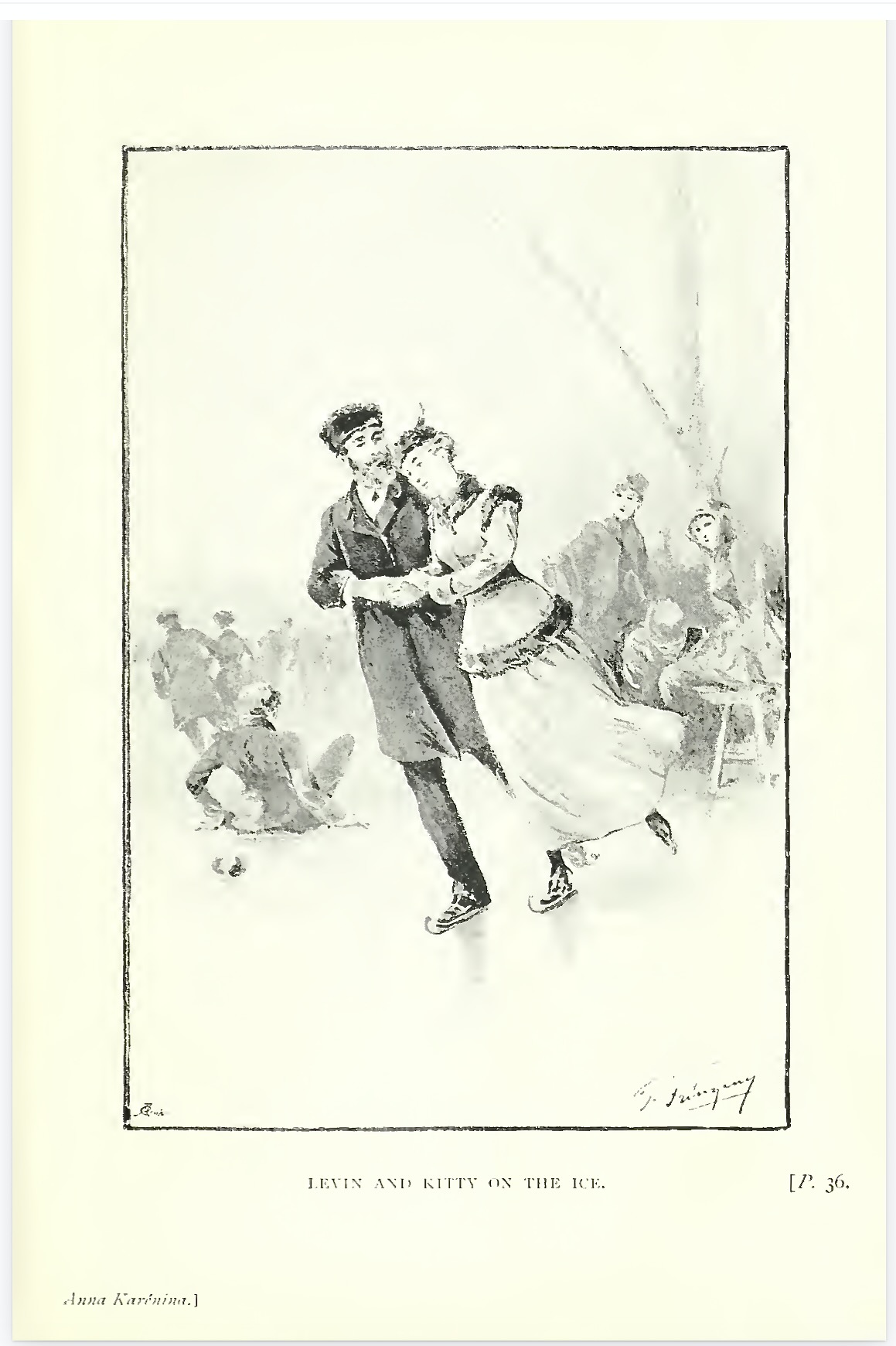
In Tolstoy’s novel Anna Karenina, Konstantin Levin, an unbeliever, marries Kitty, a woman he has loved deeply for years. At the wedding ceremony in the Church, Levin is led through what are to him a series of awkward steps he barely understands. But he does them anyway because of his love for his bride, and he is delighted.
At one point in the service, he hears these words: “Vouchsafe to them love made perfect, peace and help, O Lord, we beseech Thee.” Tolstoy writes: “Levin heard the words and they impressed him. How did they guess that it is help, just help that one wants? thought Levin, recalling all his recent fears and doubts. ‘What do I know? What can I do in this fearful business,’ he thought, ‘without help? Yes, it is help I want now.’”
It is a sweet passage, but also funny. How did they guess that it is help one wants? Well, the Church has been at this for a while, so, as we say in Texas, “this wasn’t their first rodeo.” But also the Church didn’t “guess” that couples need help; they are the ministers of a sacrament which has its source in God’s Triune love.
The Creator who made us in love and who loves us so much He was willing to die didn’t have to guess; He knows. He knows we need the sacramental bond and continuing help of His Holy Spirit.
Levin’s question is like asking, how did the Church guess that it is Confession that one needs? Well, they’ve been at this a long time, and they noticed some problems. And more to the point, God sent us a Savior for forgiveness of sins and some instructions about binding and loosing. So, the Church is not flying blind here. God really does care for us, and He really does enter sacramentally into our lives to give us the graces we need.
Levin also must go to Confession before he gets married. He does it out of love for his bride, but he doesn’t understand why it’s necessary. When it comes to the terrifying responsibility of marriage, at least then he realizes: “I need help.” That’s a good first step.
My wife once commented after a secular wedding that it was nice, but “not oomphy enough.” Something was missing. “Where was the Holy Spirit?” she asked.
Yeah, you need three to get married.