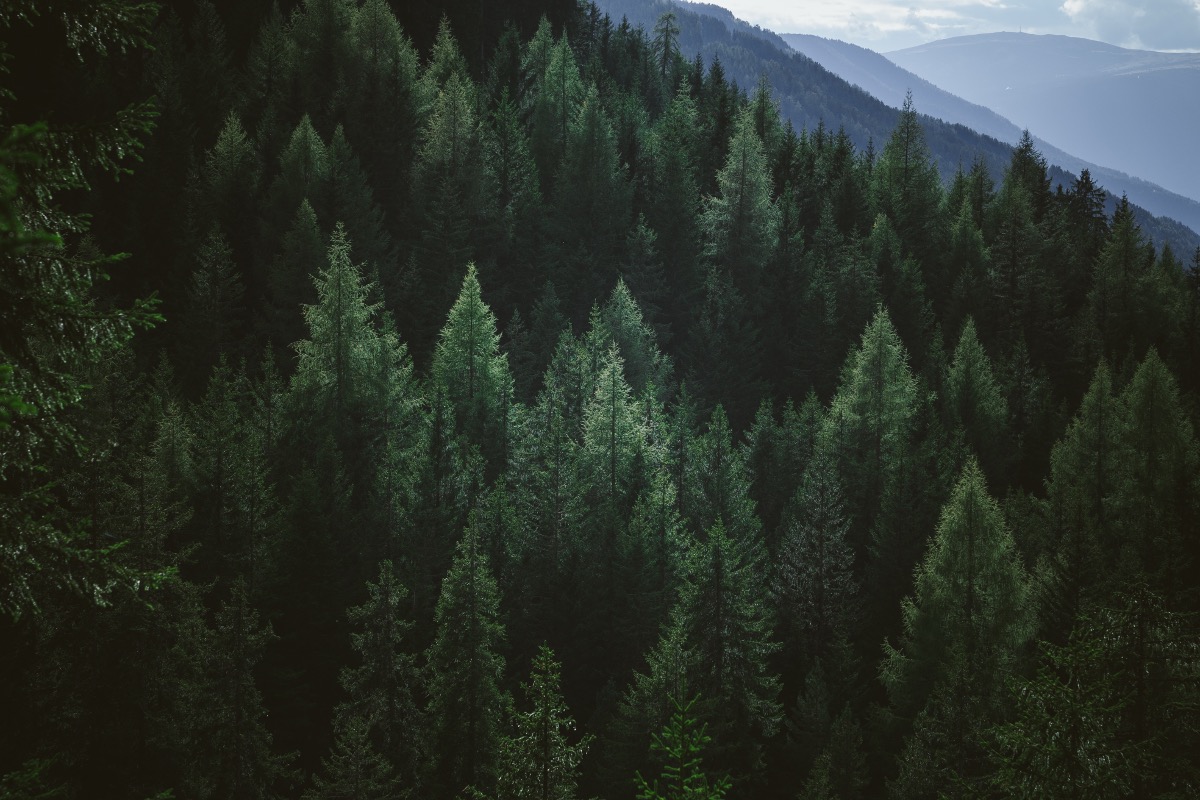
A small Quebec municipality has become the first in Canada to formally recognize trees as living beings possessing a “right to life,” raising questions about the source and proper meaning of rights.
The Terrasse-Vaudreuil Town Council unanimously adopted a resolution on June 9 endorsing the Universal Declaration of the Rights of Trees. The resolution declares that trees deserve protection, “including the right to life, to natural growth, to integrity and to regeneration.” The community of approximately 2,000 residents is located west of Montreal.
Mayor Michel Bourdeau said the municipality will review its rules and bylaws to protect mature trees whenever possible, and will require their replacement when removal is necessary. The town also plans to expand its canopy by offering trees for residents to plant. Bourdeau described trees as “green infrastructure” that can provide shade, improve air quality, absorb rainwater, and support wildlife.
Of course, responsibly managing natural resources is a worthy goal. Trees provide genuine environmental (i.e., carbon dioxide) and economic benefits. Recognizing those benefits, however, does not justify declaring trees possessors of inherent rights. Additionally, distributing trees for planting is not the role of government.
“Rights of Nature” Movement
The resolution is part of the growing “rights of nature” movement, which seeks to treat rivers, forests, plants, and ecosystems as legal entities capable of possessing rights. The declaration endorsed by Terrasse-Vaudreuil states that trees are a common good of humanity and that mankind must act in a spirit of “fraternity and solidarity” toward them. Its broader language even alludes that trees should be treated as subjects of law within rules governing private property through mandates. For example, homeowners in Saint-Amable, Quebec, east of Montreal, must pay a $200 annual surtax if their property lacks at least one leafy deciduous tree in the front yard.
Such claims invert the natural-law foundation of legitimate government. Rights do not arise because a government body passes a resolution. As the U.S. Declaration of Independence affirms, human beings are endowed by their Creator with unalienable rights, and government exists to secure those rights. Those rights do not stop at the borders of the United States; they are God-given rights belonging to everyone on Earth.
Trees are living organisms, but they are not moral agents created in the image of God. They cannot exercise reason, bear civic duties, consent to government, own property, or assert legal claims. Granting rights to trees therefore raises an unavoidable question: Who will speak for them? In practice, government officials, environmental organizations, and attorneys would interpret those supposed rights — potentially using them to restrict private property, development, farming, forestry, and other lawful and biblical human activity.
Stewardship Without Invented Rights
Terrasse-Vaudreuil’s resolution may be more symbolic than enforceable. Nevertheless, its language advances a worldview that places mankind on the same legal plane as plants and ecosystems. Municipal governments should protect private property and punish those who violate God’s laws. They should not manufacture new categories of rights that confuse responsible stewardship with legal personhood. This helps affirm the argument that preborn babies are people with souls. Trees are not.
A constitutional and biblical understanding of nature recognizes both mankind’s duty to care for creation and his unique responsibility to exercise wise dominion over it as proclaimed in Genesis 1:26-28, and we as individuals should take care of nature as laid out in Genesis 2:15. Protecting trees does not require pretending that they possess the same God-given right to life that belongs to human beings.

![Hegseth Demands Fitness Requirements, Says 'Fat Troops' 'Not Who We Are' [WATCH]](https://teamredvictory.com/wp-content/uploads/2025/09/Hegseth-Demands-Fitness-Requirements-Says-Fat-Troops-Not-Who-We-350x250.jpg)