Washington has reopened the spigot to one of the world’s most powerful and infamous vaccine organizations.
The Trump administration announced on July 29 that it would release $600 million in taxpayer funds to Gavi, the Vaccine Alliance. With Republicans controlling both chambers, Congress provided Gavi $300 million for FY2025 and another $300 million for FY2026. The administration had withheld it while demanding changes to Gavi’s vaccine policies. In particular, Washington pressed the alliance to move away from mercury-containing vaccines and expand access to mercury-free alternatives.
The reversal ends a yearlong confrontation that began when Health Secretary Robert F. Kennedy Jr. accused Gavi of ignoring vaccine safety. It also restores American financing to an organization launched with major seed funding from the Gates Foundation and closely tied to Bill Gates’ global “health” agenda.
Dr. Sania Nishtar, CEO of Gavi, welcomed the decision, saying,
This investment will help us to strengthen global defences against outbreaks and pandemics and protect more children from preventable diseases.
She credited Washington with helping Gavi immunize more than 1.2 billion children since 2000, adding that the alliance looked forward to “renewing this partnership and achieving even greater impact in the years ahead.”
Washington Releases the Money
The State Department and Department of Health and Human Services (HHS) announced the deal jointly.
The administration said President Donald Trump had directed Kennedy and Secretary of State Marco Rubio to negotiate “meaningful reforms” with Gavi before restoring U.S. support.
The most prominent commitment involved mercury-containing vaccines, which Gavi agreed to address:
Gavi has committed to work towards transitioning mercury-containing vaccines and expanding access to newer, mercury-free alternatives.
The agreement specifically identified four vaccine categories: meningococcal A, pentavalent DTP-Hib-HepB, pneumococcal, and hepatitis B.
But in practice, Gavi did not have to complete those reforms before receiving the money. The transition still depends on manufacturers, participating governments, and, in some cases, approval from Gavi’s own board.
Still, Washington was satisfied:
Based on those commitments, the United States will immediately release all $600 million in Congressionally appropriated funds to Gavi for both FY25 and FY26.
The administration argued that children in poorer countries should have access to the same mercury-free options used in wealthier nations.
The agreement went further. The announcement said that Gavi had already ended its promotion and procurement of Covid-19 vaccines for routine immunization. It also reduced its Geneva staff, created a new accountability framework for outside partners, including the World Health Organization (WHO), and promised a dedicated internal function to monitor vaccine science and safety. The United States also “expects” to reclaim its seat on Gavi’s board.
New Vaccines, Old Questions
There is a larger problem with the compromise. Mercury, usually used in vaccines in the form of the preservative thimerosal, was never Kennedy’s only objection to Gavi.
When Kennedy announced the funding cutoff in June 2025, he accused Gavi of neglecting vaccine safety. While professing “admiration” for the alliance, he attacked its continued use of the whole-cell DTP vaccine. He also said it treated safety concerns as a public relations problem rather than a health problem. Additionally, he faulted Gavi and its WHO partner for what he called the “questionable recommendation” that pregnant women receive Covid vaccines during the pandemic. Ironically, his own HHS continues to recommend Covid vaccination during pregnancy.
Children’s Health Defense (CHD) quoted Kennedy’s April Senate testimony:
“[Gavi’s] biggest vaccine is now a DTP vaccine … an old version that was discontinued in this country because it was causing brain injury,” he said. “We discontinued it. Europe discontinued it. They’re still giving it to 161 million African and Asian children a year.”
Besides brain injury, the outlet said, the vaccine was linked to seizures and death.
The new agreement does not eliminate Kennedy’s DTP concern.
State and HHS say Gavi will work toward replacing mercury-containing pentavalent DTP-Hib-HepB vaccines with mercury-free, hexavalent vaccines.
But Gavi’s own vaccine guidance describes its hexavalent product as a whole-cell pertussis vaccine. In other words, the preservative can disappear while the whole-cell component Kennedy criticized remains. Also remaining is the broader machinery of global vaccination, long marred by controversy and scandal (more on that later).
What Is Gavi?
Gavi, the Vaccine Alliance, is a public-private partnership that finances vaccination programs in poorer countries. Donor governments and foundations provide much of the money.
The Gates Foundation helped create it.
In 1999 the foundation pledged $750 million in seed money, and its total commitment has since surpassed $4 billion. The foundation also holds a permanent seat on Gavi’s board and plays a role in what Gavi calls efforts to “shape vaccine markets.”
Gavi’s 28-member board includes the Gates Foundation, WHO, UNICEF, the World Bank, donor governments, and governments receiving Gavi support. It also reserves two seats for vaccine manufacturers.
Supporters call that cooperation. Critics see a tight circle in which governments, global “health” agencies, private “philanthropy,” and pharmaceutical companies help set priorities for vaccination programs financed largely by taxpayers.
Controversies
Gavi and the Gates-linked global vaccine network have accumulated their share of controversies. A Gates-funded PATH HPV project in India involving thousands of adolescent girls drew a parliamentary investigation that documented serious informed-consent and regulatory failures.
CHD has repeatedly attacked Gavi’s continued promotion of whole-cell DTP vaccines, citing African studies that associated the vaccine with higher all-cause mortality, particularly among girls.
CHD also blasted Gavi’s $600 million HPV campaign targeting 86 million girls in poorer countries, warning of potentially severe consequences.
Beyond vaccine safety, Gates has faced persistent accusations that his global health programs overlap with a broader population-control agenda. Kennedy himself made that case while leading CHD. In 2020, he pointed to Gates’ public statements linking vaccination, reproductive health, and slower population growth. In his essay titled “Gates’ Globalist Vaccine Agenda: A Win-Win for Pharma and Mandatory Vaccination,” Kennedy wrote:
In 2010, when Gates committed $10 billion to the WHO, he said “We must make this the decade of vaccines.” A month later, Gates said in a TED Talk that new vaccines “could reduce population.” And, four years later, in 2014, Kenya’s Catholic Doctors Association accused the WHO of chemically sterilizing millions of unwilling Kenyan women with a “tetanus” vaccine campaign. Independent labs found a sterility formula in every vaccine tested. After denying the charges, WHO finally admitted it had been developing the sterility vaccines for over a decade. Similar accusations came from Tanzania, Nicaragua, Mexico, and the Philippines.
The controversy therefore extends well beyond mercury in the shots. Gavi’s shift toward new formulations will generate new vaccine purchases, but it does not resolve the broader disputes Kennedy himself raised about vaccine safety, DTP products, institutional accountability, and the documented harms of the global vaccination model.
Yet Kennedy now appears to believe Gavi has done enough to “restore trust” — at least enough for Washington to resume funding it.
Gates Had Washington’s Ear
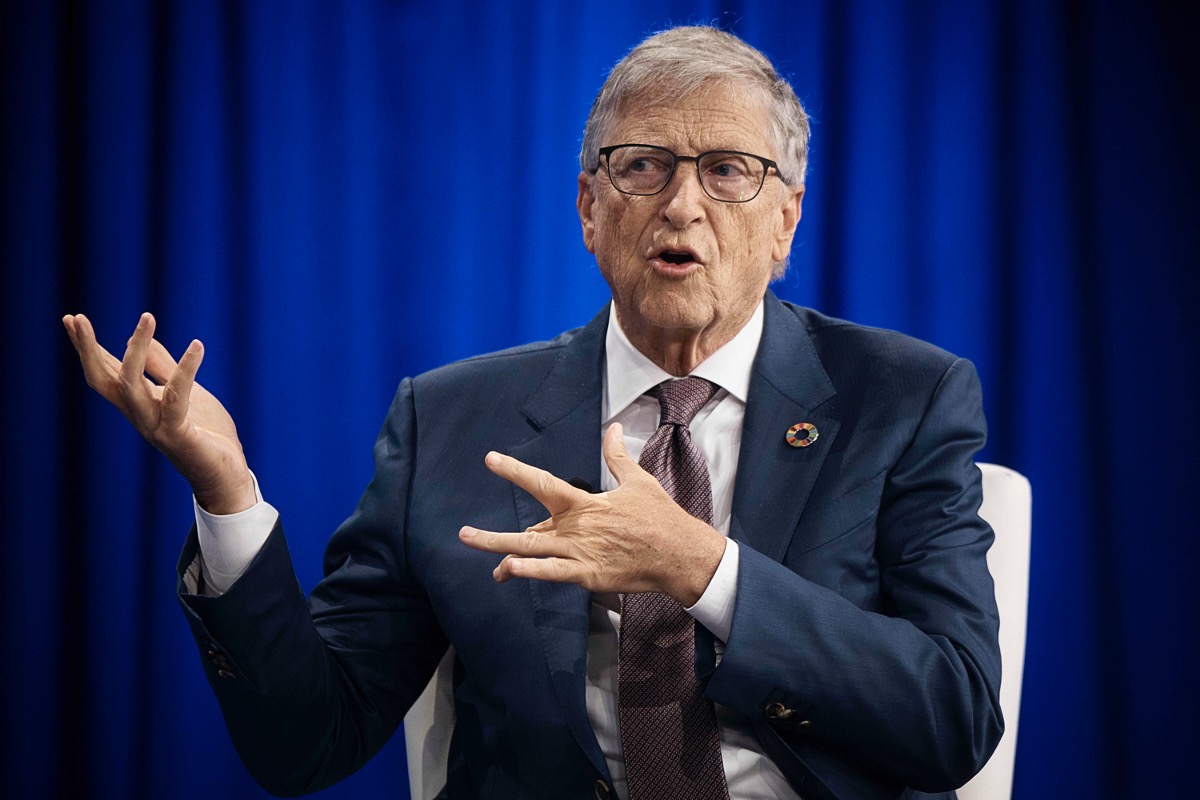
The funding reversal came after sustained lobbying by Bill Gates himself.
Reuters reported in March 2025 that Gates was personally pressing Trump administration officials to preserve U.S. global health spending. He met with the National Security Council (NSC) and Republican and Democratic lawmakers. His discussions specifically included Gavi, which was then among roughly 30 global health programs under administration review.
Gates had also visited the White House in early February 2025, shortly after Trump began dismantling USAID programs. Reuters noted that Gates also urged the NSC to maintain U.S. support for the WHO and efforts concerning polio.
Then, on September 4 that year, Trump hosted Gates and more than two dozen technology and business oligarchs at a White House dinner. Gates used his remarks to discuss what he called his “second career,” focused on “innovation” in “areas like vaccines.”
Gates mentioned polio and research involving HIV and sickle-cell disease. He also praised Trump’s Operation Warp Speed (OWS) as a model for accelerating medical “innovation.”
He later acknowledged just how deliberate that access was. In a January 2026 interview with the Financial Times, he said he had visited Trump’s White House four times and that he had spent 40 minutes of an 80-minute December meeting discussing “global health.” Of the September dinner, he said, “I was there to try to talk more about the global health spending.”
The courtship had begun even before Trump returned to office. Shortly before the inauguration, Gates told The Wall Street Journal that he had spent three hours over dinner with the president-elect discussing “global health,” including polio, HIV, and vaccine innovation. He said he was “frankly impressed” by Trump’s interest.


![Hegseth Demands Fitness Requirements, Says 'Fat Troops' 'Not Who We Are' [WATCH]](https://teamredvictory.com/wp-content/uploads/2025/09/Hegseth-Demands-Fitness-Requirements-Says-Fat-Troops-Not-Who-We-350x250.jpg)