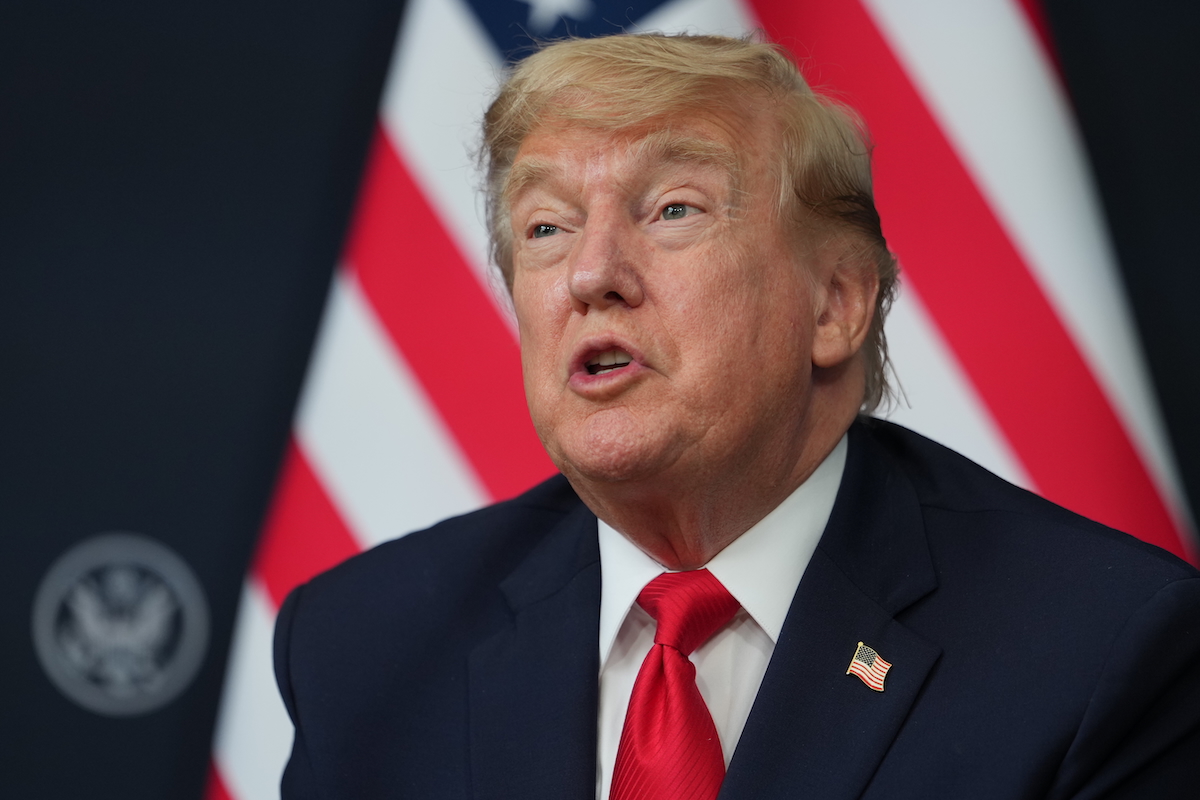
When a reporter asked President Trump last Thursday how he would feel if Janeese Lewis George won the District of Columbia’s Democratic mayoral primary, he did not hesitate. “I wouldn’t like it,” he said, and then offered the country a glimpse of an older, uglier form of rule. “Maybe we take back Washington, run it on the federal basis. We won’t put up with it.”
Let us be plain about what was threatened. Not a policy. Not a veto. A punishment. Trump announced that if the residents of the District elect a mayor he dislikes, he may simply seize the city and govern it himself. The threat is unconstitutional, and it is worth understanding precisely why, because the reason is not the one his critics usually reach for.
Congress Has the Power
Begin with the text, as we always must. Article I, Section 8, Clause 17 vests in Congress the power “to exercise exclusive Legislation in all Cases whatsoever” over the seat of government. I will not pretend, as some will, that the District enjoys the sovereignty of a State. It does not. The Framers placed the capital under the plenary authority of the national legislature precisely so that no single State could hold the federal government hostage. On this narrow point Trump’s defenders are correct: the District is not Virginia, and home rule is a statute, not a birthright.
But notice the word the Constitution chose. Congress. Not the president. Not the executive. The District Clause is a grant of legislative power, and the man who threatened to “take back Washington” sits in the executive branch. He may no more repeal the Home Rule Act by his own word than he may coin money or declare war from the Oval Office. To seize the governance of a city by executive fiat is not to exercise a constitutional power. It is to usurp one.
Founders’ Wisdom
Madison saw this coming two centuries ago. “The accumulation of all powers, legislative, executive, and judiciary, in the same hands,” he wrote in the 47th Federalist, “may justly be pronounced the very definition of tyranny.” Montesquieu, whom Madison was quoting, understood that liberty dies not in a single thunderclap but in the quiet merger of offices that ought to remain apart. When a president arrogates to himself the legislative authority the Constitution assigned to Congress, the structure that shields the citizen collapses inward. The question is never merely whether a thing may be done. It is who may do it, and by what authority. Here the answer is settled, and it is not the president.
Now press further, because the deeper offense lies beneath the separation of powers. Suppose Congress itself, and not the president, moved to dissolve home rule the morning after Lewis George took the oath. Even then the act would be poisoned at its root, for its purpose would be to nullify an election whose result displeased the powerful. That is not governance. That is reprisal against the franchise.
Jefferson grounded the whole American experiment in a single sentence: governments derive “their just powers from the consent of the governed.” Consent withdrawn the instant the governed vote the wrong way is no consent at all. A republic in which the citizen may cast his ballot freely, provided he chooses the candidate the executive approves, is not a republic. It is a pantomime of one.
Let Congress Decide
I should say, lest anyone mistake my argument, that I would not vote for Janeese Lewis George, and I find little to admire in the democratic socialism she preaches. That is precisely the point. The Constitution does not bend to my preferences, and it does not bend to the president’s. Its limits bind hardest when the man they restrain is most certain he is right.
Consider, too, that the very law Trump would invoke refutes him. The Home Rule Act of 1973 was an act of Congress, and only Congress can unmake it. Its emergency provision lets a president direct the city’s police for federal purposes for 30 days, and not one day longer without legislative assent. To run the capital “on the federal basis” in any lasting sense would require 60 votes in a Senate he does not command. He threatens a power the statute withholds and the Constitution never granted.
The Founders always intended this remedy. Let Congress guard its own prerogatives rather than surrender them. Let the courts hold the executive to the four corners of the law. And let the people of the District vote as free citizens, undeterred by a threat that has no force behind it but bluster.
Cicero taught that we are servants of the law in order that we may be free. A president who would master the law in order to master a city has the order exactly reversed. The capital does not belong to him. It never did.


![Hegseth Demands Fitness Requirements, Says 'Fat Troops' 'Not Who We Are' [WATCH]](https://teamredvictory.com/wp-content/uploads/2025/09/Hegseth-Demands-Fitness-Requirements-Says-Fat-Troops-Not-Who-We-350x250.jpg)