There are many crises in the Catholic Church today, but one of the most serious is the dismal state of moral theology. That crisis has its roots in the confusion and intellectual ferment that ensued in the aftermath of Vatican II. Progressive moral theologians proposed questionable moral theories like proportionalism and the “fundamental option,” while prominent scholars like Bernard Häring dissented on vital issues of received moral teaching such as the inadmissibility of contraception and the indissolubility of marriage.
These dissident theologians had differing visions, but one common theme: the Church had no authority to proclaim specific, exceptionless moral norms based on natural law. The best it could do was to teach formal moral principles. Specific moral precepts such as “adultery is always wrong” are highly problematic, in their view, because there may be valid exceptions. A corollary is the autonomy of conscience along with “discernment” in making moral decisions. In place of natural law, they recommended more flexible theories that allow for moral compromise in some situations.
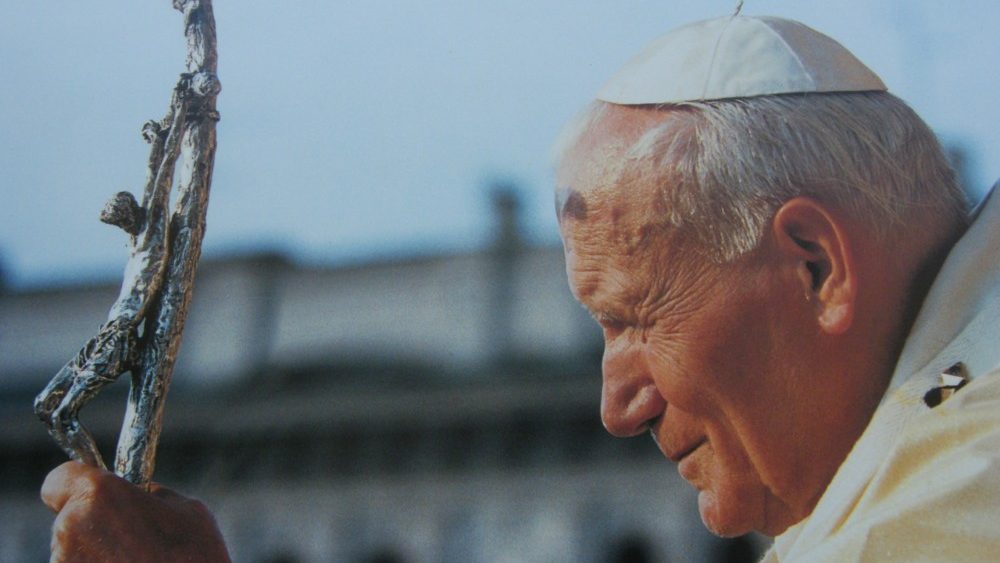
John Paul II sought to correct these errors in his encyclical Veritatis splendor. The fundamental option, proportionalism, the sovereignty of conscience, and moral subjectivism – all the heterodox doctrines – were thoroughly refuted through principled reasoning. He also reaffirmed the Church’s commitment to natural law and its anthropological premise of a common and fixed human nature that is a bridge to that law. Intrinsic goods such as life and health, marriage and friendship, constitute our human flourishing. A set of moral norms flows from the first precepts of the natural law and prohibits intrinsic evils such as adultery or the taking of innocent life.
For a time, it looked like the philosopher-pope had succeeded in his herculean effort to renew moral theology. But then came the papacy of Pope Francis, which consistently sought to dethrone the principles of traditional natural law theory. Archbishop Vincenzo Paglia admits as much in his recent interview, “My Reforms with Francis.” He recounts how Pope Francis dispatched him to reinvent the John Paul II Institute in Rome to overcome the rigid and moralistic natural law framework that was at the center of the curriculum. What was necessary, declares Bishop Paglia, “was the rethinking of the concept of ‘nature,’ which underpinned a static and immutable vision of the natural law, and with it the questioning of the essentialist and ahistorical paradigm that had supported. . .moral theology.”
Pope Francis’ Amoris Laetitia was an attempt to move in this direction, and it replaced Veritatis Splendor as the guiding text at the JPII Institute. Pope Francis’ encyclical clearly sides with the progressive wing of the Church on issues like intrinsic evil. In chapter eight, he explains:
It is reductive simply to consider whether or not an individual’s actions correspond to a general law or rule, because that is not enough to discern and ensure full fidelity to God in the concrete life of a human being. . . .It is true that general rules set forth a good which can never be disregarded or neglected, but in their formulation they cannot provide absolutely for all particular situations. (304)

The relevant “general rule” is Jesus’ prohibition against remarriage for someone divorced from his or her spouse because it is tantamount to adultery. But Amoris laetitia clearly does not consider this rule to be exceptionless, nor does it consider adultery to be an intrinsic evil, something always, objectively, wrong and harmful even if there is no subjective culpability.
Since Amoris Laetitia, there have been many other assaults on traditional natural law and absolute moral norms. During an international conference on moral theology at the Gregorian University in Rome, the keynote speaker, Father Julio Martinez, spoke about the need to “untie the knots Veritatis splendor made in moral theology.” One of those knots is the concept of intrinsic evil, which introduces “serious difficulties for moral theology,” and creates obstacles for discernment.
More recently, Synod Study Group Nine’s report on “emerging” issues, Theological Criteria and Synodal Methodologies for Shared Discernment of Emerging Doctrinal, Pastoral, and Ethical Issues, proposed moving away from the application of “abstract” and “rigid” moral principles to human lives. The document warns “against the temptation of the sterile and regressive ossification of principles and statements, of norms and rules, regardless of the experience of individuals and communities.” This is a veiled attack not only on exceptionless moral norms, but on the deductive moral reasoning that applies those norms.
The present discord in the Church means that we are faced with a stark choice between the theology of Veritatis splendor or the theology of Amoris Laetitia, the magisterium of Pope John Paul II or the magisterium of Pope Francis. Theologians and prelates like Bishop Paglia who carry the torch for the theology of Amoris Laetitia argue that because human nature changes so too must the moral law.
But the notion that human nature changes essentially is a progressive myth. Of course, there are many cultural transformations along with consequential inflection points in history that affect humanity for better or worse. But as John Finnis points out, these theologians cannot provide any concrete examples that illustrate the mutability of human nature because human nature, properly understood in terms of basic human possibilities or forms of fulfillment, has never changed.
We cannot find throughout the course of human history any persons who were not bodily, rational beings, for whom those intrinsic goods like life and health, marriage and knowledge, were not the source of their fulfillment.
It is all well and good to compose encyclicals on social issues like Artificial Intelligence. But Pope Leo faces more fundamental questions: through which moral lens will the Church evaluate those issues? It can be faithful to the natural law tradition or revert to the deflated morality proposed by secular humanism, which favors experience and social harmony. The answers to the most troubling moral disputes can only be found deep in the soil of natural law reasoning that acknowledges the eternal order of being and nature.