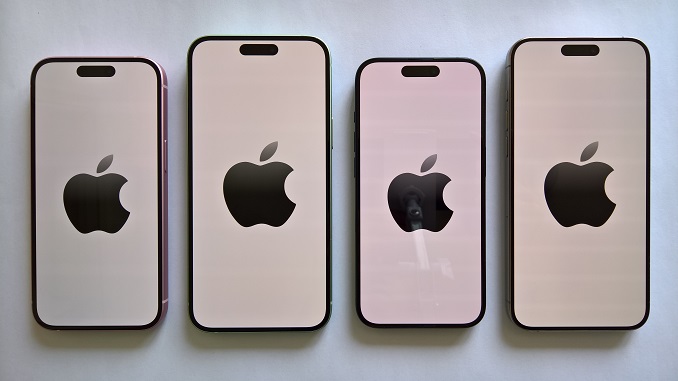
Amid a rapidly collapsing U.S. birth rate, new research released last week indicates that a major factor in the decline in fertility is likely the release of the iPhone in 2007, which began the era of widespread smartphone adoption and ushered in significant changes in societal behavior, including reduced in-person interactions and increased pornography consumption.
Data released by the CDC in April revealed that the birth rate in America reached a new record low of 53.1 births per 1,000 women, continuing a plunge that began in earnest in 2007. Following a high fertility rate (the average number of births per woman) in the early 1960s of just under four, births nosedived throughout the late ’60s and ’70s, bottoming out at around two by 1980. The rate stayed relatively steady, hovering around two for the next two decades, but in 2007, fertility once again began to drop, to the puzzlement of researchers. The rate has steadily declined over the next 18 years to a current rate of 1.6, well below the level needed to keep the population stable (2.1).
SUPPORT LIFENEWS! If you want to help fight abortion, please donate to LifeNews.com!
Now, research from Middlebury College economist Caitlin Myers has revealed that a major factor in the decline is likely the release of the iPhone. Myers looked at the birth rates of women aged 15-44 in areas of the U.S. where AT&T broadband coverage was widely available, which from June 2007 to February 2011 was the only carrier that offered iPhone coverage. She found that “access to the iPhone reduced births by 4.5-8.0% at ages 15-19 and 3.2-6.6% at ages 20-24.” Overall, Myers found that “the diffusion of the iPhone explains 33-52% of the decline in the general fertility rate among women aged 15-44.” She cites further studies finding that the likely reasons behind the technology being so detrimental to fertility are its capacity for “reducing in-person interactions, increasing pornography use, and reducing sexual frequency.”
The data from Myers’s research is backed up by another study released in May from two University of Cincinnati economists, which found that teen fertility was dramatically reduced on a global scale beginning around 2007. “Once enough teens are on the phone, being on the phone is where the peer network is; in-person time falls sharply,” the study noted. While the reduction in teen pregnancies is a positive, the paper also observed that “the same instrument that produces a collapse in teen fertility produces a surge in teen suicides.”
The dramatic effect of smartphone use was seen “in countries as varied as Iran, Costa Rica, Guatemala, Chile, Mexico and Turkey,” The New York Times pointed out about the study, finding that “teenage fertility declines accelerated once smartphones became a mass phenomenon.”
While experts say that the new research is compelling, they caution that the spread of smartphones cannot be solely to blame for people choosing to have fewer babies.
“The digital revolution has changed American social life in innumerable ways,” Lyman Stone, senior fellow and director of the Pronatalism Initiative at the Institute for Family Studies, told The Washington Stand. “iPhones are just one part of that change, which also includes the rise of online pornography, social media as a chief space for friendship, streaming services expanding home entertainment options, and even the rise of remote work. The digital revolution has unmistakably reshaped American family life in ways that have reduced marriage and birth rates — but it would be wrong to put that all at Apple’s doorstep.”
Still, experts like Dr. Arthur Brooks, an author and researcher, say that breaking a phone addiction is critical to living a balanced life and opening up more opportunities for face-to-face interactions. He advises a five-step strategy to in order to break an addiction: creating tech-free times throughout the day when checking a phone is off limits, such as the first hour of the day after waking, the last hour of the day before sleeping, and meal times; creating tech-free zones, primarily the bedroom in order to ensure good sleep; taking at least a yearly retreat from your phone for at least two days or more; being mindful of the content you are consuming by avoiding “doom scrolling”; and turning off your notifications.
LifeNews Note: Dan Hart writes for the Family Research Council. He is the senior editor of The Washington Stand, where this column appeared.
Apple iPhone