On June 25, 2026, the Human Reproduction Program (HRP) of the World Health Organization (WHO) circulated an email containing two striking items: a short promotional video introducing the “Comprehensive Abortion Care Wheel” and the full text of remarks delivered by HRP Director Pascale Allotey on May 18, 2026, at the ANSER Academic Network for Sexual and Reproductive Health and Rights Policy Conference in Brussels.
Together, these materials offer a window into the WHO’s increasingly aggressive and expansive promotion of abortion as a global health and human rights imperative. What emerges is not neutral technical guidance but a deliberate, long-term strategy to embed abortion access into health systems worldwide, influence national laws through so-called “evidence-based” guidelines, and reshape future technologies and education around a contested vision of autonomy that excludes the unborn child.
The Comprehensive Abortion Care Wheel: Operationalizing Access
The HRP video features Dr. Polyphile Ntihinyurwa, an OBGYN and HRP Fellow alumnus, presenting the abortion care wheel, a practical tool designed to help health workers determine gestational age, select chemical or surgical abortion methods appropriate to that stage, and provide post-abortion family planning counseling. The wheel is explicitly promoted for use “across a range of settings, including humanitarian contexts,” with the stated goal of expanding “accurate, evidence-based information” and reducing abortion-related complications.
Follow LifeNews.com on Instagram for pro-life pictures and videos.
From a pro-life perspective, this tool represents more than logistical support. It normalizes abortion as one clinical option among others once gestational age is established, using familiar instruments like pregnancy wheels and tape measures for uterine sizing. By facilitating task-shifting to a wider range of providers and emphasizing streamlined post-abortion contraception, the wheel lowers barriers to abortion while directing attention away from the developing human life involved and away from comprehensive alternatives such as maternal support services, adoption, or improved obstetric care.
Its marketing for “humanitarian” and low-resource settings raises particular concern: vulnerable populations in crisis are offered an infrastructure to abort rather than robust protection for both mother and child.
Allotey’s Brussels Remarks: Strategy, Ideology, and the Long Game
HRP Director Pascale Allotey’s address provides the strategic and ideological framework. She frames persistent gaps in maternal health as evidence of systemic failure driven by “patriarchy, colonialism, extractive capitalism, fascist geopolitics,” and the erosion of multilateral institutions. She criticizes the removal of sexual and reproductive health and rights (SRHR) language from the 2023 Political Declaration on Universal Health Coverage and urges advocates to adopt the long-term tactics of their opponents for their own purposes: building domestic constituencies, training candidates, developing litigation strategies, and making their usually skewed “evidence” travel into courts, legislatures, and media.
These remarks reveal a sophisticated political project. The WHO’s technical arm is not merely documenting health data; it is positioning itself as the intellectual architect of a global movement that seeks to redefine reproductive decision-making, override conscientious objection, and preempt future technological and educational landscapes.
The language of “evidence” and “human rights” is deployed to advance one side of a deeply contested moral and political question while characterizing opposing views, particularly those rooted in the right to life, as threats to progress.
This direction has accelerated markedly under WHO Director-General Tedros Adhanom Ghebreyesus since 2017. Earlier WHO guidance, such as the 2012 safe abortion technical document, focused primarily on clinical safety and health-system responses to unsafe abortion. Under Tedros, the emphasis shifted toward affirmative promotion of abortion access as essential healthcare and a human rights issue integrated into Universal Health Coverage.
Key developments include the 2019 consolidated guideline on self-care interventions, which elevated self-managed chemical abortion, and the landmark “2022 Abortion Care Guideline.” The 170-page document recommends full decriminalization of abortion, availability on the request of the “pregnant person” without grounds-based restrictions or gestational limits, removal of mandatory waiting periods and third-party authorization requirements, broad task-sharing to community health workers and pharmacists, and protections ensuring that conscientious objection does not impede access.
Further, it includes an annex on international human rights standards and has been accompanied by public statements from Tedros affirming that “women should always have the right to choose” and that restrictions drive unsafe procedures.
HRP serves as the primary engine for this agenda, conducting questionable research, training fellows, developing tools such as the abortion care wheel, facilitating south-to-north and south-to-south skill exchanges in abortion practices, and producing materials that translate guidelines into operational practice. The result is a feedback loop in which WHO recommendations shape training, tools, and advocacy, which in turn generate demand for further policy liberalization.
A central concern of his radicalized maneuvering on this issue is the impact on national sovereignty. WHO guidelines function as influential soft law. Although not binding treaties, these guidelines are routinely cited by advocates, courts, and policymakers as authoritative international standards. Recommendations that call for the removal of gestational limits, decriminalization, and overrides of conscientious objection directly conflict with the democratically enacted laws of many member states, including numerous African and Latin American nations, several U.S. states following the 2022 Dobbs decision, and countries such as Poland and Monaco.
This approach risks substituting the policy preferences of Geneva-based technical bodies and their donor partners for the sovereign choices of national legislatures and electorates. It echoes broader debates over global health governance, including concerns raised during pandemic treaty negotiations about the erosion of domestic control.
Pro-life frameworks, such as the Geneva Consensus Declaration, explicitly affirm that there is no international right to abortion and that decisions on the protection of unborn life properly rest with sovereign states. The WHO’s trajectory moves in the opposite direction, seeking to establish expansive access norms that are difficult to reverse once embedded in health systems, training curricula, and international monitoring mechanisms.
Lastly, the materials circulated on June 25, 2026, illustrate a comprehensive strategy: practical tools that normalize and facilitate abortion, ideological framing that delegitimizes opposition, policy recommendations that pressure legal reform, and forward-looking efforts to shape technology and education. This lethal agenda treats the unborn child as an obstacle to autonomy rather than a human being deserving protection. It prioritizes termination infrastructure, even in humanitarian settings, over investments in maternal health, family support, and alternatives that affirm both women and their children.
Women deserve genuine healthcare that supports them through pregnancy and motherhood.
LifeNews.com Note: Raimundo Rojas is the Outreach Director for the National Right to Life Committee. He is a former president of Florida Right to Life and has presented the pro-life message to millions in Spanish-language media outlets. He represents NRLC at the United Nations as an NGO. Rojas was born in Santiago de las Vegas, Havana, Cuba and he and his family escaped to the United States in 1968.
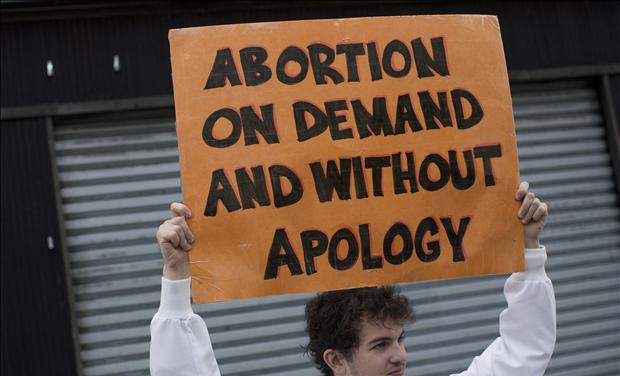 proabortion17



![Hegseth Demands Fitness Requirements, Says 'Fat Troops' 'Not Who We Are' [WATCH]](https://teamredvictory.com/wp-content/uploads/2025/09/Hegseth-Demands-Fitness-Requirements-Says-Fat-Troops-Not-Who-We-350x250.jpg)