A federal appeals court has reaffirmed New York’s strict school-vaccination requirements, dealing a setback to Amish families seeking religious exemptions. In Miller v. McDonald, the U.S. Court of Appeals for the Second Circuit ruled that the state’s elimination of religious exemptions does not violate the First Amendment-protected rights of Amish parents and private schools. The decision imposes significant fines for noncompliance.
The Genesis
The case stems from New York’s 2019 repeal of religious exemptions during measles outbreaks. Three Amish schools and parents, facing more than $118,000 in combined fines, argued that mandatory vaccination conflicts with their faith’s emphasis on separation from the modern world, Divine Providence, and moral objections tied to vaccine development (e.g., the use of aborted fetal tissue). They invoked Wisconsin v. Yoder (1972), which protected Amish educational autonomy, and claimed the policy targeted religious practice. However, the Second Circuit upheld the mandate with the precedent of Employment Division v. Smith, a 1990 U.S. Supreme Court (SCOTUS) ruling that the government generally does not have to provide religious exemptions from a law if that law is neutral and applies equally to everyone, even if it incidentally burdens religious practices.
Should the case reach SCOTUS, as legal experts expect, the decision could have nationwide implications for religious exemptions in all 45 states that currently allow them for school vaccines.
Contrary to Ethical Healthcare
The controversy intersects directly with principles of biomedical ethics outlined by Tom Beauchamp and James Childress in Principles of Biomedical Ethics. The framework rests on four pillars: respect for autonomy, beneficence, nonmaleficence, and justice. Autonomy — respecting individuals’ capacity for self-determination and informed choice — holds priority. Forcible or heavily coercive vaccination policies abrogate this by overriding sincere conscientious refusals, treating communities as means to public health ends rather than autonomous moral agents.
True ethical public health favors accommodation and least-restrictive alternatives over compulsion. Supporters of the ruling counter that school attendance creates a compelling state interest in preventing outbreaks, and uniform rules prevent free-rider problems.
Insulated Communities Pose Minimal Risk
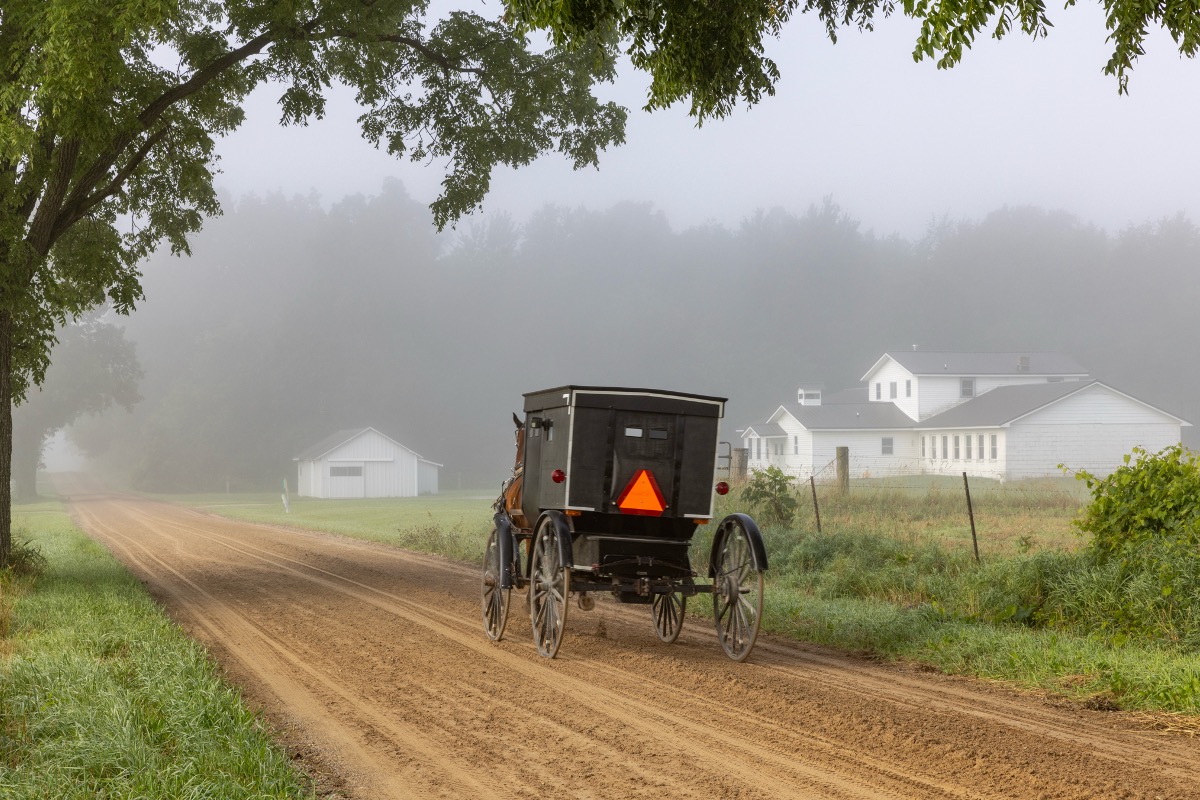
The Amish plaintiffs in Miller v. McDonald are not seeking special treatment. They are asking to be left alone — to live in private, self-sufficient, rural communities, educating their children in isolated, Amish-only schools, as they have for more than 200 years. The measles outbreak New York cited in justifying its 2019 exemption repeal occurred primarily in an Orthodox Jewish community in Rockland County, not among the Amish. The Amish community poses, by any reasonable epidemiological assessment, minimal public health risk from within its insular, geographically separated communities.
Attorney Greg Glaser, general counsel for Physicians for Informed Consent, responded to the ruling: “Informed consent and informed refusal are the bedrock of medical ethics. Banning religious exemptions effectively legalizes medical bullying by proxy, forcing families to forfeit their children’s education if they choose to exercise informed refusal.”
Patient Consent a Longstanding Requirement
The Second Circuit’s ruling demolishes the first pillar of biomedical ethics entirely. Autonomy is not merely a philosophical preference. It is the hard-won lesson of history’s most horrific medical atrocities. The Nuremberg Code of 1947, drafted in direct response to human medical experimentation, established as its first and most fundamental principle: “The voluntary consent of the human subject is absolutely essential.” The Declaration of Helsinki, adopted by the World Medical Association in 1964 and revised repeatedly since, reinforces that no medical intervention may be performed without free and informed consent.
These are not abstract academic principles. They are the medical profession’s own solemn commitments, made precisely because governments and institutions have repeatedly demonstrated, across documented history, that they cannot be trusted with unilateral authority over human bodies.
This article is part of The New American’s weekly online newsletter Insider Report, which is emailed to TNA subscribers each week. Click here to subscribe to The New American to receive the Insider Report and access exclusive content.



![Hegseth Demands Fitness Requirements, Says 'Fat Troops' 'Not Who We Are' [WATCH]](https://teamredvictory.com/wp-content/uploads/2025/09/Hegseth-Demands-Fitness-Requirements-Says-Fat-Troops-Not-Who-We-350x250.jpg)