A recent Ohio Capital Journal article reported on a new Urban Institute study claiming that “30% of surveyed Ohio residents reported they needed but didn’t get one or more types of care between 2024 and 2025.”
That should concern anyone who cares about women’s health.
Women should not have to wait months for an appointment, dismissed when they are in pain, or struggle to afford basic care. They should not be left without access to screenings, treatment, or support during some of the most vulnerable seasons of life.
But the details of this article tell the real story. The article’s headline frames the issue broadly as “reproductive care,” a phrase often used in political debates to promote abortion. But the actual care named in the article is basic women’s health care that has nothing to do with abortion.
According to the article, the study included services such as “pelvic exams, cervical cancer screenings, care for irregular or painful periods, birth control, fertility assistance, gender-affirming care, and menopause care.” Those are very different categories of care, and they should not be treated as though they all lead to the same political conclusion.
Please follow LifeNews on Rumble for the latest pro-life videos.
If Ohio women are struggling to access pelvic exams, cancer screenings, care for painful periods, fertility help, birth control, or menopause care, that deserves serious attention. It deserves better access to doctors, affordable options, compassion, and practical solutions. It does not justify more abortion. In fact, the article itself identifies the real barriers many women face: “cost, insurance barriers, and difficulty securing an appointment.”
Those problems are not solved by weakening health and safety standards for abortion facilities. They are not solved by removing informed-consent protections. They are not solved by expanding abortion by telehealth and pumping out growing numbers of dangerous abortion-inducing drugs. They are not solved by pretending that abortion is the same thing as caring for a woman’s body.
Ohio was told during the 2023 Issue 1 campaign that putting abortion into the state constitution was necessary to protect women’s health. Yet this new report says many Ohio women are still struggling to access basic care. That should tell us something important: abortion is not health care.
Legalized abortion did not make appointments easier to get. It did not lower insurance barriers. It did not guarantee women access to cancer screenings, fertility care, prenatal care, postpartum support, or treatment for painful medical conditions.
Ohio women deserve better than political slogans. They deserve doctors who listen when they are in pain, access to prenatal and postpartum care, support when facing an unexpected pregnancy, and fertility care that respects life. They deserve cancer screenings, maternal health care, help for young mothers, support for families raising children with disabilities, and compassionate care through every stage of womanhood.
They also deserve honesty.
Abortion advocates often use the language of “reproductive health care” to blur the line between ordinary medical care and abortion. But abortion is different. A pelvic exam is health care. A cervical cancer screening is health care. Treating painful periods is health care. Helping a woman through pregnancy, birth, postpartum recovery, infertility, miscarriage, or menopause is health care.
Abortion intentionally ends the life of an unborn child.
Those realities should not be bundled together as though they are morally or medically the same.
We can and should care deeply about women who are not getting the medical care they need. But we should not allow women’s real health care challenges to be used as a political argument for more abortion.
The liberal fixation on abortion expansion has not solved women’s health care problems. In many ways, it has made the conversation smaller. Instead of asking why women cannot get timely appointments, afford basic care, access fertility treatment, receive prenatal and postpartum support, or find doctors who take their pain seriously, abortion advocates too often steer every discussion back to expanding abortion. That does not serve women. It uses women’s unmet needs to advance an abortion agenda while leaving many of those needs unresolved.
If 30% of surveyed Ohio women say they could not get some type of care they needed, the is not more abortion politics. The solution should be better health care, stronger families, more support for mothers and children, and a renewed commitment to protecting both women and unborn babies.
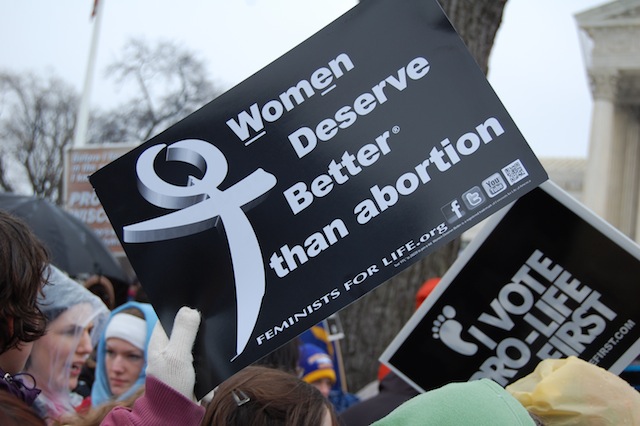
Ohio women need real care and real support. Ohio women deserve better than abortion.
LifeNews Note: Carrie Snyder is the executive director of Ohio Right to Life


![Hegseth Demands Fitness Requirements, Says 'Fat Troops' 'Not Who We Are' [WATCH]](https://teamredvictory.com/wp-content/uploads/2025/09/Hegseth-Demands-Fitness-Requirements-Says-Fat-Troops-Not-Who-We-350x250.jpg)