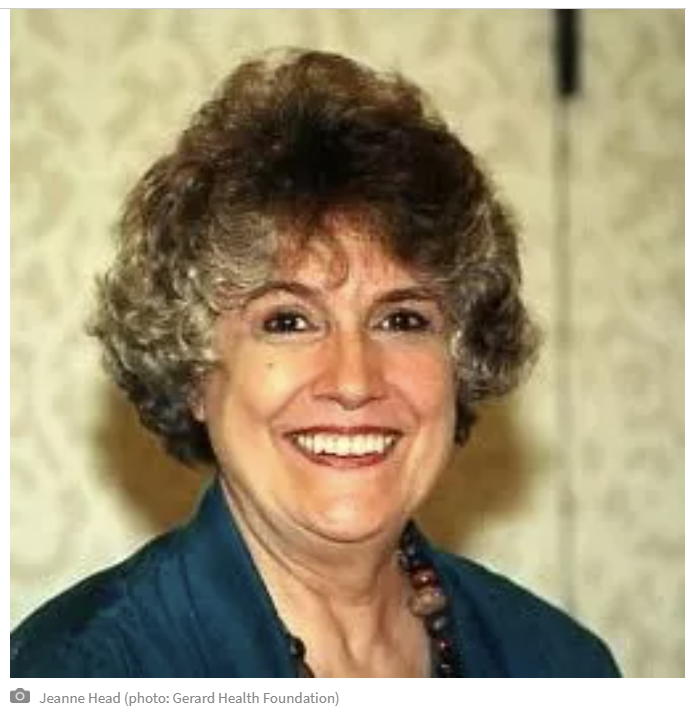
The first time I met Jeanne Head was in Atlanta in 1991, at the National Right to Life Convention and board meeting. It was my first board meeting ever, and it was also the meeting when she was first elected to the Executive Committee of the National Right to Life Board.
I did not know then that my life had just changed.
At the spring 1993 meeting of the NRLC Board, Jeanne asked me to join her at the United Nations to help with Spanish-speaking delegations as they gathered to discuss the Convention on the Rights of the Child. By then, Jeanne had already represented both National Right to Life and International Right to Life at the UN for years. She knew the building, the process, the delegations, the documents, the traps, the pressure points, and the stakes.
I had no idea what I was getting myself into.
But there she was on my first day, waiting for me in the lobby of that monstrous building on the East River. She walked me through the credentialing process and led me down the stairs to the basement.
Follow LifeNews on the MeWe social media network for the latest pro-life news free from Facebook’s censorship!
Then she turned back to me and said, “It’s a bomb shelter, you know.”
“A what?” I asked.
“A bomb shelter. You’ll be perfectly safe,” she said, and laughed.
And for the next thirty years, as I stood by her side, I was perfectly safe.
For the most part. Later that day, she defended me against Bella Abzug, who tried to have me expelled for passing a note to the Argentine delegation. At the time, Bella didn’t know I was with Jeanne E. Head, RN; she changed her tune quickly thereafter.
Yes, everyone should know the great things Jeanne accomplished. The work she did. The children she defended. The mothers she served. The lives she helped save.
I hope everyone shares, although many of those stories became legend long before she left us Wednesday. They deserve to be told and retold because they belong to the history of the pro-life movement and to the quiet record of grace.
But there was another Jeanne. Our Jeanne.
The Jeanne known by those of us who fought in the trenches with her at the UN, at the WHO, at any number of international meetings where the fate of unborn children could turn on a phrase, a comma, a late-night amendment, or one exhausted delegate asking the right person the right question.
Yes, we saw the brilliant mind. Yes, we saw the force of nature. Yes, we saw the strategist who could read a room faster than most people could read a paragraph.
But we also knew Nurse Jeanne.
Forever the caregiver. “Headache? Here, this will help.”
“You haven’t eaten today. Here, you need protein.”
“Why are you limping? Don’t wear new shoes. We’ll get Epsom salt on the way home.”
That was Jeanne. She carried nations in one hand and snacks in the other. She could dismantle a dangerous piece of UN language before lunch and then notice, before anyone else did, that someone on our team looked pale, tired, hungry, or overwhelmed.
Case in point. The translators at the UN go home at 6 p.m. So do the janitors, the groundskeepers, and nearly everyone from the maintenance staff. But negotiations do not always end when civilized people go home. Sometimes they dragged deep into the night and into the next morning. Vending machines emptied. Bathrooms ran out of supplies. People got hungry, tired, and frayed.
But Jeanne always had us covered.
On the days she knew we would be there into the early hours, she stuffed rolls of toilet paper, granola bars, cheese, crackers, and whatever else might keep us upright into her bag. She anticipated need because caregiving was not a role she put on. It was who she was.
Every morning, she walked into the UN with her bag, her backpack, and what looked like a carry-on suitcase full of documents and supplies. She had her trusty MacBook, her printer, her scanner, her stapler, extension cords, and every manner of office supply known to man. No matter what we needed, Jeanne had it. And in the 90s, we needed them.
The other side minded her too. No one dared to take her spot in the Vienna Café, the meeting place for delegates and NGOs, located in the middle of the negotiating rooms. Her corner was sacred, even to the pro-abortion side. If heaven forbid, a struggling pro-abort had taken a seat at her table, Jeanne would walk over to them and, like a fledgling facing Miranda Priestly, they would scatter.
Every morning, she would set herself up, watch who spoke to whom, track which countries the other side was lobbying, and then send us out to shore up those delegations.
She saw everything.
She had a sweet tooth, but her coffee was always two creams and no sugar. We would bring it to her. She would take a sip and give that little verdict we all wanted to hear: “Very nice.”
And then she would get back to work.
Her other catchphrase was reserved for those too tired or unable to stay up past three or four am on a heavy negotiating day. She would see them (I never dared) and say, “Leaving so soon?”
I’m laughing as I write this because she always said it with a half-smile and a raised eyebrow that left the poor defenseless creature not sure of what the right answer was. But she always understood that, unlike her, mere mortals sometimes need sleep. She was always the last to leave.
Jeanne worked with everyone. It did not matter the country, the continent, the language, or the political bloc. Delegates respected her because she knew the documents and how to find an answer when troubling language appeared. She did not bluff. She did not posture. She knew.
I remember one particularly contentious meeting at the Commission on Population and Development. She always strategically had us sit just outside the negotiating rooms so we’d be the first people delegates saw as they came out. That evening, the room was loud. There was arguing. We could not make out the words, but we knew it was contentious. Then the room went quiet. The double doors swung open. The head of the Egyptian delegation came straight to Jeanne.
“Jeanne,” he said, “here is the current negotiating document, and here is the already agreed-to language in the Cairo Conference on Population. Please tell me where in the Cairo document I can find the reference that contradicts this new language they are introducing.”
She did not even stand. He handed her both documents. She read the new text, went straight to the Cairo Conference report, flipped the pages, and handed it back.
“Here and here,” she said.
He thanked her, walked back into the room, and the arguing began again.
She won the day. With the help of Egypt and several Middle Eastern and African countries, the bad pro-abortion language was struck.
I told that story once in her presence. She stopped me.
“No praise on this plane,” she said with a smile. “I want crowns in heaven.” Jeanne’s greatness did not come from title or applause. It came from fidelity. She gave her life to the defense of life. And she did it with intelligence, discipline, humor, grit.
We mourn her. We thank God for her. We remember the documents, the delegations, the long nights, the Vienna Café, the little cooler, the perfectly boiled eggs, the two creams and no sugar, the sharp mind, the tender nurse, the woman who made us safer by standing beside us.
Jeanne Head fought the good fight. She defended the least among us. She taught generations of pro-lifers how to be prepared, precise, brave, and to love while fighting.
And now she has gone home. As Wayne Cockfield, a dear friend to Jeanne and to me, said today, “The Lord has called a giant home.”
How right he is. No praise on this plane, Jeanne? All right, dear girl. But today in heaven you received what you would never let us give you here: the full measure of honor due to a faithful servant, the crowns you spoke of, and the greeting every soul hopes to hear. How marvelous it must have been.
I miss you.
LifeNews.com Note: Raimundo Rojas is the Outreach Director for the National Right to Life Committee. He is a former president of Florida Right to Life and has presented the pro-life message to millions in Spanish-language media outlets. He represents NRLC at the United Nations as an NGO. Rojas was born in Santiago de las Vegas, Havana, Cuba and he and his family escaped to the United States in 1968.

![Hegseth Demands Fitness Requirements, Says 'Fat Troops' 'Not Who We Are' [WATCH]](https://teamredvictory.com/wp-content/uploads/2025/09/Hegseth-Demands-Fitness-Requirements-Says-Fat-Troops-Not-Who-We-350x250.jpg)